

More news on this day
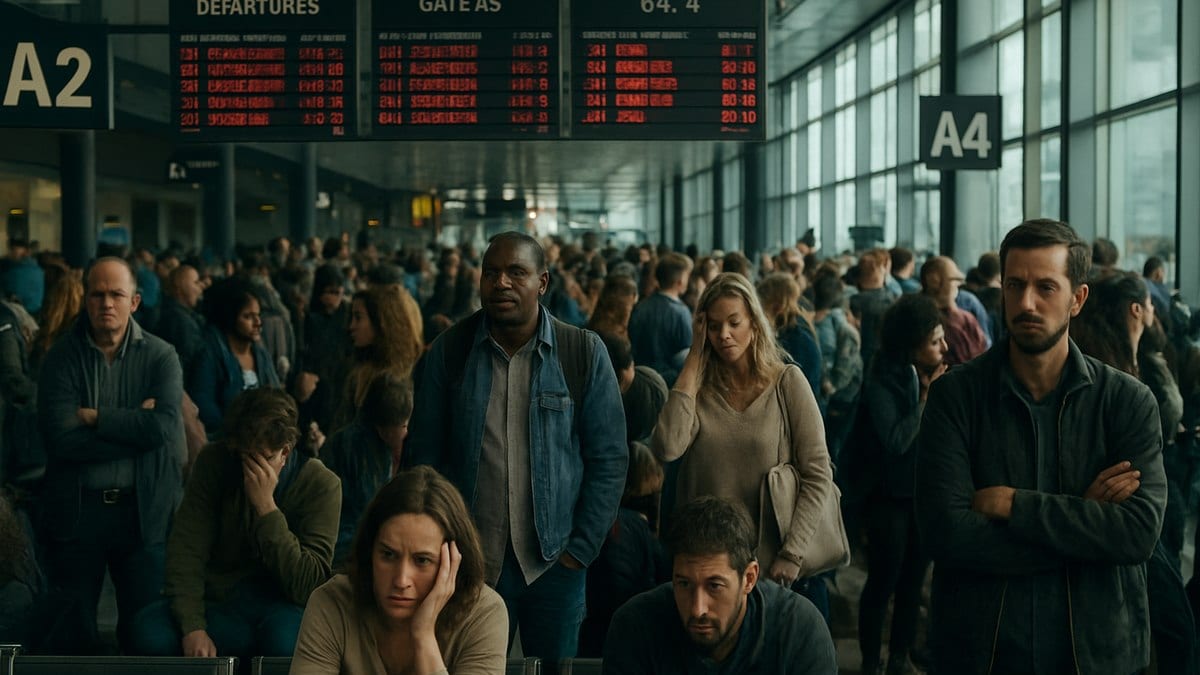
Coordinated airport and air traffic control strikes across multiple European countries have plunged air travel into fresh turmoil this week, with more than 90,000 passengers stranded and thousands of flights disrupted at the height of the spring holiday rush.
Get the latest news straight to your inbox!
Wave of Walkouts Hits Major European Hubs
The latest round of disruption has been driven by overlapping industrial actions affecting ground staff, cabin crew, and air traffic controllers in several key aviation markets, including Germany, Italy, the United Kingdom, France, and Spain. Reports from flight-tracking services and travel-industry outlets indicate that cancellations and long delays have rippled through major hubs such as Frankfurt, Munich, Rome Fiumicino, Milan Malpensa, London Heathrow, Paris Charles de Gaulle, Madrid Barajas, and Amsterdam Schiphol.
In Germany, a 24-hour cabin crew strike at a leading network carrier on April 10 led to the cancellation of more than 500 flights and left an estimated 100,000 passengers facing disrupted itineraries over the broader Easter and spring holiday window. Parallel actions by airport ground workers and security staff in Frankfurt and other German cities compounded the impact, forcing airlines to consolidate schedules, rebook travelers, and operate with significantly reduced capacity.
Italy has simultaneously faced a concentrated air traffic control walkout, with the national navigation service imposing a four-hour shutdown window on April 10 that triggered more than 1,000 cancellations and diversions. Short-haul routes linking Rome and Milan with European capitals were among the hardest hit, but knock-on effects extended well beyond Italian airspace as carriers adjusted routings and crew sequences across the continent.
Similar labor disputes in the United Kingdom, France, and Spain, some linked to pay and staffing concerns and others to broader cost-of-living pressures, have created rolling pockets of disruption across the European network. Even where strikes have been limited to a few hours, the tight turnaround of short-haul operations has meant that delays and cancellations cascaded through the day and into subsequent rotations.
More Than 90,000 Travelers Left in Limbo
The combined effect of these actions is a sharp spike in stranded passengers. Published tallies from airport authorities, airline advisories, and aviation data providers suggest that well over 90,000 people have been left stuck in terminals or forced to make last-minute changes to travel plans since the beginning of the latest strike wave.
Large concentrations of disrupted travelers have been reported at Frankfurt, Rome Fiumicino, Milan Malpensa, London Heathrow, and Paris Charles de Gaulle, where long queues formed at check-in and ticket desks as passengers sought rerouting options. Secondary airports, including Berlin, Hamburg, Naples, and Barcelona, have also seen crowds build as carriers repositioned aircraft and crews to protect core routes.
Travel platforms tracking day-of-travel performance note that in several recent 24-hour periods across early and mid-April, European airports collectively recorded more than 1,000 cancellations and well over 1,000 delays in a single day. The numbers vary by source and date, but the broad picture is one of an already strained system buckling under the added pressure of industrial action.
The disruption has been especially acute for long-haul travelers connecting through European hubs on journeys between North America, the Middle East, Africa, and Asia. Missed connections have forced some passengers into overnight stays in transit cities, while others have had to accept rerouting via alternative hubs with limited remaining seat availability.
Underlying Tensions Over Pay, Staffing, and Workload
Publicly available statements from unions and industry groups show that the strikes share common themes across borders. Worker representatives in ground handling, security screening, cabin crew, and air traffic control have highlighted inflation, staffing shortages, and rising workloads as key triggers, arguing that wages and rosters have not kept pace with post-pandemic traffic recovery and a surge in operational complexity.
Airports and airlines, in turn, emphasize the financial and operational strain of recent years, pointing to higher fuel costs, shifting traffic patterns linked to geopolitical tensions, and continued pressure to keep fares competitive. Some carriers have indicated that they are seeking multi-year labor agreements to stabilize staffing, but negotiations in several countries remain contentious, resulting in repeated threats of walkouts.
Air navigation service providers across Europe have also faced scrutiny, with recent analyses from international aviation organizations warning that chronic underinvestment in staffing and systems is contributing to mounting delay minutes attributed to air traffic control constraints. When controllers strike or impose capacity limits, the network has little slack to absorb the shock, making large-scale disruption almost inevitable.
Industry observers note that the current wave of strikes is unfolding just as airlines ramp up capacity for late spring and summer schedules. This timing raises concerns that without swift resolutions to the disputes, similar or even more severe disruption could recur in the peak holiday months when airports and airlines operate near full utilization.
Knock-On Effects Across Europe’s Fragile Air Network
The industrial actions are not occurring in isolation. They come on top of a season of weather-related disruption, technical outages, and airspace constraints that have already stretched European aviation operations. Recent storms in parts of northwestern and central Europe, as well as wider rerouting linked to regional security tensions, have reduced the margin for error in daily scheduling.
When airport or air traffic control strikes coincide with adverse weather or technical incidents, delays can multiply rapidly. Flight-tracking data and passenger-rights platforms show that on some recent days, a combination of strikes and other constraints has pushed delay totals into the thousands of flights, with average late departures extending well beyond half an hour at several major hubs.
These stressors are felt beyond the immediate strike locations. French or Italian air traffic control capacity reductions, for example, can affect flights between two other countries that rely on overflight permissions, while disruptions at a large hub such as Frankfurt or London often cascade into neighboring markets as aircraft and crews fail to arrive on time for onward sectors.
Regional carriers and low-cost airlines with dense point-to-point networks are particularly vulnerable to such disturbances, as a single grounded aircraft can upset multiple short-haul rotations in a day. Network airlines have more options to reroute traffic via alternative hubs, but they face their own limits on aircraft availability and crew legal working hours, which can force last-minute cancellations when delays stack up.
What Stranded Passengers Can Expect Under EU Rules
For travelers caught up in the turmoil, European regulations provide a framework for support and, in some cases, financial redress. Under the EU’s air passenger rights regime, when flights departing from or arriving in the European Union with EU carriers are cancelled or subject to long delays, airlines are generally required to offer rerouting or refunds, as well as care such as meals, refreshments, and hotel accommodation if an overnight stay becomes necessary.
Compensation, however, depends on the cause of the disruption. Strikes by an airline’s own staff, such as cabin crew or directly employed ground workers, are often treated by courts and regulators as events within the carrier’s control, potentially opening the door to fixed-sum compensation payments in addition to refunds or rerouting. By contrast, actions by independent airport staff, third-party handlers, or national air traffic controllers may be classified as extraordinary circumstances, in which case compensation is less likely even though basic care and assistance obligations still apply.
Consumer advocates advise passengers to keep detailed records of their disruption, including boarding passes, booking confirmations, receipts for expenses, and any written communication from airlines regarding the cause of delay or cancellation. These documents can be crucial when filing claims directly with carriers or through passenger-rights services once travel is complete.
With the current wave of strikes showing little sign of an immediate, across-the-board resolution, travel specialists are urging passengers with near-term European itineraries to build in extra buffer time for connections, monitor flight status closely in the days and hours before departure, and consider flexible booking options where possible. Airlines and airports are continuing to adjust schedules on short notice as negotiations unfold, meaning conditions for travelers may remain volatile in the days ahead.