

More news on this day
As the latest U.S. government shutdown stretches into spring travel season, mounting delays at airport checkpoints are reviving a once-quiet question in U.S. aviation: should more airports replace federal Transportation Security Administration screeners with private contractors?
Get the latest news straight to your inbox!
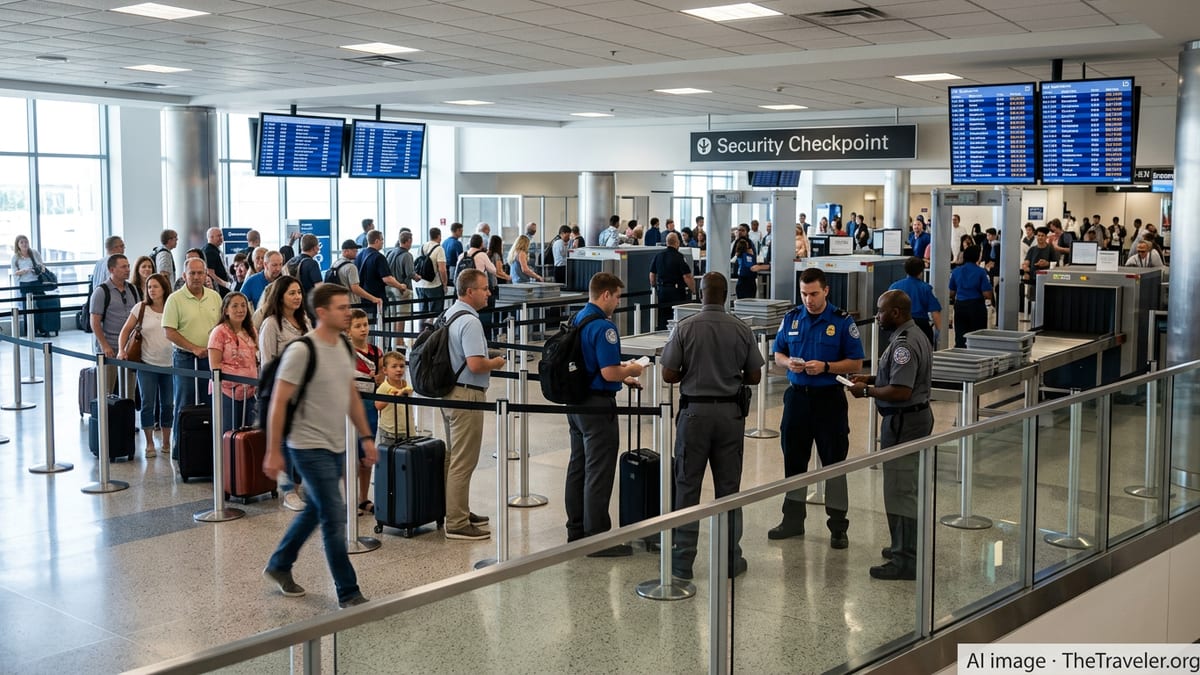
Shutdown Fallout Hits Airport Checkpoints
Across parts of the United States this week, travelers have confronted serpentine security lines that spill into baggage halls and even parking garages, a visible sign of how the partial shutdown of the Department of Homeland Security is straining the Transportation Security Administration’s front line. In Houston, standard wait times at William P. Hobby Airport reached around three hours at one point, prompting the airport to urge passengers to arrive as much as five hours before departure.
Similar scenes have been reported at airports in New Orleans and other busy hubs where TSA relies on a large workforce of federal officers. With paychecks delayed and uncertainty over when back pay will arrive, union leaders say some officers are calling in sick or seeking other work, leading to fewer open lanes and longer queues just as airlines head into one of the busiest spring break periods on record.
While TSA insists that security standards remain intact, agency officials acknowledge that shutdowns introduce real operational volatility. Staffing levels can shift day to day and even hour to hour as screeners juggle unpaid work with personal financial pressures, leaving airports and passengers to absorb the cascading impacts.
The disruption comes on the heels of confusion in late February, when Homeland Security initially said it would suspend trusted traveler programs like TSA PreCheck and Global Entry before reversing course for most airport operations after a public outcry. The episode underscored how swiftly political stalemates in Washington can ripple through airport security.
Private Screening Offers a Different Model
Against this backdrop, attention is turning to a little-known option inside the U.S. security system: the Screening Partnership Program. Created in the years after the September 11 attacks, the program allows airports to apply to use private security companies, hired under federal contracts, to staff checkpoints while TSA retains control over standards, technology and oversight.
Roughly two dozen U.S. airports participate today, ranging from small regional fields to San Francisco International Airport, the largest facility currently using private contractors for its passenger checkpoints. At those airports, screeners’ pay flows from multi year contracts that typically continue even when federal appropriations lapse, insulating them from some of the paycheck uncertainty that plagues federal officers during shutdowns.
Airport executives who favor the approach argue that privatized screening can offer more flexibility in hiring and scheduling while still operating under the same security rulebook. They note that during past shutdowns, airports in the program reported fewer staffing disruptions and more stable wait times than many of their federally staffed peers.
San Francisco officials have cast their experience as a kind of case study, pointing to their ability to maintain throughput during earlier funding lapses. Aviation security specialists say that track record at a major international gateway challenges the perception that private screening works only at small, low traffic airports.
Pressure Builds for More Airports to Opt Out
The current shutdown has reignited interest from some airport leaders who see private contracts as a way to buffer their operations from political gridlock in Washington. As spring break crowds swell and tempers fray in winding queues, boards and city officials that oversee airports are facing new questions from airlines and local tourism industries about how to avoid repeat crises.
Industry groups say they have fielded more calls in recent days from airports seeking information on how the Screening Partnership Program works and how long it takes to switch. The application and transition process is not quick, often stretching for many months, but for airports that have endured multiple shutdown related slowdowns in a single year, the calculus is changing.
Some aviation experts frame the debate in pragmatic terms, arguing that if private contracts can stabilize staffing and preserve throughput without diluting security, they deserve a closer look. They emphasize that privatization in this context does not mean loosening standards: contractors must meet TSA’s training, testing and performance benchmarks, and the agency can revoke contracts that fall short.
For local travel economies that depend heavily on seamless air service, the stakes are high. Prolonged delays at a home airport can steer both leisure and business travelers toward competing hubs, potentially eroding an area’s appeal as a gateway for tourism and meetings.
Unions and Critics Warn of New Risks
Not everyone is convinced that expanding private security is the right answer. Labor unions representing TSA officers have long opposed broader privatization, warning that shifting jobs from the federal workforce to contractors could erode pay, benefits and job stability over time. They argue that chronic underfunding and political brinkmanship are the real culprits, and that fixing those issues would do more to protect travelers than changing who signs screeners’ paychecks.
Security advocates also caution that introducing more private players can complicate oversight. While TSA sets uniform standards, they say, management cultures and employment practices can vary widely from one contractor to another, raising concerns about uneven performance across airports. Some critics fear a race to the bottom on costs as companies compete for contracts in a highly price sensitive environment.
There are also questions about accountability in the event of serious lapses. When screeners are federal employees, Congress and inspectors general can scrutinize the agency directly. With a patchwork of private firms, watchdogs must navigate additional layers of corporate structure and confidentiality.
These critics maintain that a more straightforward solution would be to shield essential security personnel from the direct financial impacts of shutdowns, for instance by designating their pay as mandatory spending. That would keep experienced officers in place during funding battles without requiring airports to overhaul their security models.
What Travelers Can Expect in the Near Term
For now, travelers are unlikely to see an immediate wave of airports switching to private screeners. Any move into the Screening Partnership Program requires TSA approval, contract bidding and extensive planning to ensure a seamless handover with no security gaps, a process measured in months rather than weeks.
In the short run, passengers will continue to feel the effects of the shutdown in longer lines and sporadic lane closures at some airports that rely on federal officers. Travel experts advise arriving earlier than usual, particularly at peak periods, and making use of tools offered by airlines and airports to monitor checkpoint wait times before heading to the terminal.
Yet the current turmoil is likely to shape the security landscape long after funding is restored. As airport operators, lawmakers and unions sift through the lessons of repeated shutdowns, the once niche idea of privatized screening is moving closer to the center of the policy debate. Whether it becomes a widespread reality or remains a limited alternative, it is poised to influence how Americans experience the airport journey in the years ahead.