

More news on this day
Air travel across Iraq was thrown into disarray on February 28 as the country’s civil aviation authority ordered an immediate shutdown of national airspace, triggering at least 53 flight cancellations and multiple delays for passengers traveling through Baghdad, Erbil, Basrah and Al Najaf on major international carriers including Qatar Airways, Turkish Airlines and Emirates.
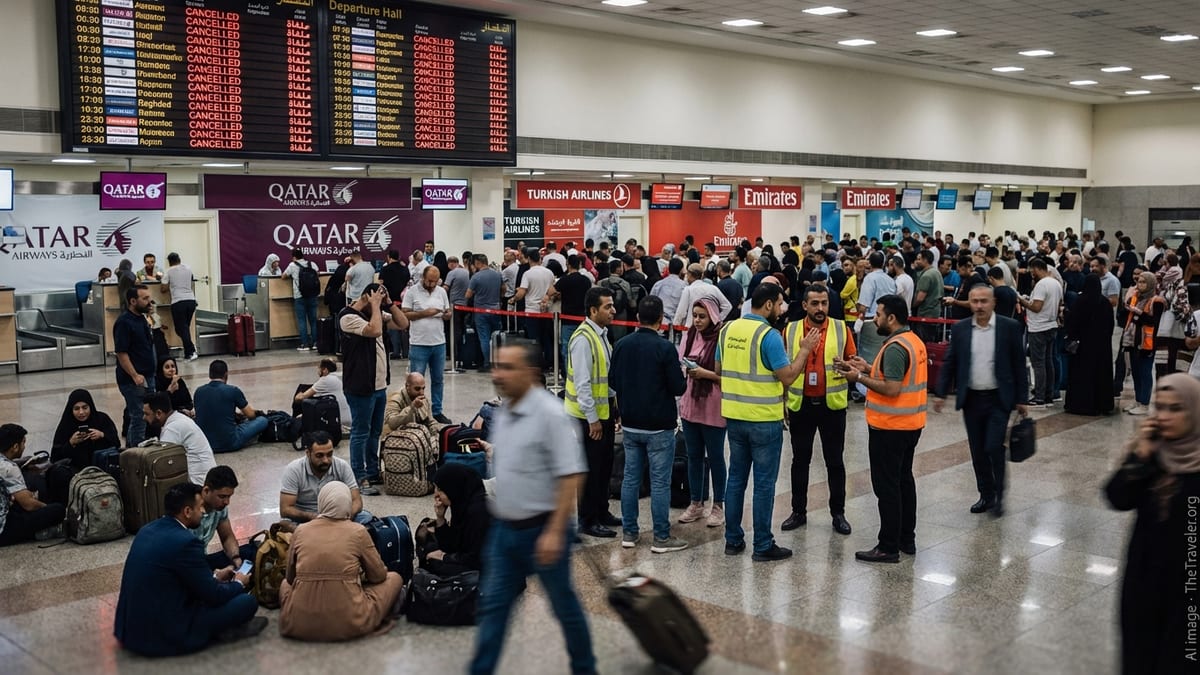
Iraq Closes Its Skies After Regional Strikes
The Iraqi Civil Aviation Authority announced the suspension of all air traffic on Saturday following coordinated military strikes by the United States and Israel on targets inside Iran and subsequent regional retaliation. Authorities in Baghdad said the move was a precautionary safety measure, taken after Iraqi skies were cleared of aircraft and inbound flights were diverted or turned back.
Operations at Baghdad International Airport slowed to a standstill as arrival and departure boards rapidly filled with red cancellation notices. Similar scenes were reported at Erbil International Airport in the Kurdistan Region, as well as at Basrah and Al Najaf, where airport officials confirmed that all commercial services were halted until further notice, leaving transit passengers stuck in terminals and thousands more grounded before they could even begin their journeys.
Aviation officials indicated that the current tally of 53 cancellations and three significant delays affecting Iraq’s four main international gateways is expected to rise if airspace closures across neighboring countries remain in place. Airlines were instructed to keep aircraft and crews on the ground while security assessments continue and regional air traffic controllers coordinate potential alternative routing corridors.
Major International Airlines Suspend and Reroute Services
The Iraqi airspace ban quickly rippled through global airline networks. Qatar Airways confirmed a full suspension of services to and from Doha as Qatari airspace was temporarily closed in parallel with Iraq, disrupting a key long haul connection point for travelers originating in Baghdad, Erbil, Basrah and Al Najaf. Many passengers who had planned to transfer in Doha on routes to Europe, Asia and North America suddenly found their itineraries invalid.
Emirates and other United Arab Emirates based carriers, already impacted by restrictions in UAE airspace, also halted or rerouted services that would normally overfly Iraq on routes between Dubai and destinations in Europe and the Indian subcontinent. With Dubai operating at sharply reduced capacity, regional travelers faced an added layer of uncertainty, as aircraft were repositioned, flights consolidated and itineraries reworked on short notice.
Turkish Airlines, a major operator into Iraq’s northern cities, adjusted schedules as regional airspace corridors narrowed and security advisories were upgraded. While the carrier had previously maintained operations into Iraq during earlier, more limited airspace disruptions, Saturday’s full closure forced the airline to cancel or delay multiple rotations serving Baghdad and Erbil. Other global brands, from European flag carriers to Gulf low cost operators, followed suit, publishing rolling updates that pointed to “extraordinary circumstances” and “force majeure” language in their disruption notices.
Scenes of Confusion at Iraqi Airports
Inside Iraq’s terminals, the decision to shut the skies translated into long queues at airline desks, crowded seating areas and growing frustration among families and business travelers unable to rebook quickly. At Baghdad International Airport, passengers reported being told to remain in the building until further information could be provided, with some international carriers temporarily lacking local staff or ground handling partners to manage the surge in requests.
In Erbil, where international connectivity to Europe and the Gulf is a key lifeline for residents and the expatriate community, stranded travelers scrambled to contact airlines through mobile apps and overseas call centers. Many described difficulty securing clear timelines for when flights might resume, as carriers avoided committing to new departure times while military and political developments remained fluid.
Basrah and Al Najaf, each serving significant flows of religious pilgrims and energy sector workers, saw similar disruption. Hoteliers near the airports reported a spike in last minute bookings as travelers realized they could be stuck for at least one night. Taxi operators and local transport firms, meanwhile, benefited from a rush of people abandoning their trips altogether and heading back to city centers to wait out the uncertainty.
Global Knock On Effects for Transit Passengers
The closure of Iraqi airspace added another critical choke point to an already pressured regional aviation map. With Iran, Iraq and several Gulf states simultaneously restricting or shutting their skies, many long haul flights between Europe and Asia lost two of their primary corridor options in a single morning. Airlines were forced to send aircraft on lengthy detours to the north or south, increasing flight times, fuel burn and crew duty hours.
For travelers booked on multi leg itineraries that included Iraqi cities, this meant missed connections, rapid rebookings and in some cases outright trip cancellations. Passengers connecting through hubs such as Istanbul, Doha and Dubai faced cascading delays as aircraft arrived out of sequence and ground operations struggled to keep pace with revised slot times and overnight aircraft parking limitations.
Travel agents and corporate travel managers reported a surge in urgent change requests, particularly from companies with staff due to transit Iraq or the surrounding region in the coming days. Many firms moved to suspend non essential travel, while others began looking at more circuitous routings via Central Asia or southern Africa to keep essential journeys operating, accepting longer travel times as a trade off for avoiding unstable airspace.
What Travelers Should Do Now
With no firm end time announced for the Iraqi airspace shutdown, airlines and travel authorities are urging passengers to monitor their bookings closely and avoid heading to the airport without confirmed, updated itineraries. Carriers have begun publishing flexible rebooking policies, allowing affected customers to change travel dates or reroute tickets without additional change fees, although fare differences may still apply on some routes.
Travelers currently in Iraq are being advised to maintain close contact with their airline or travel agent and to ensure that contact details on their reservations are up to date so they can receive notification of any schedule changes. Those with urgent travel needs are exploring overland alternatives to neighboring countries that still have limited air links open, though such options remain subject to rapid change as the regional security picture evolves.
For passengers yet to depart from their home countries on journeys involving Iraq or nearby hubs, industry experts recommend a cautious approach. Where possible, they suggest postponing discretionary trips or seeking itineraries that avoid the most affected airspace zones, while recognizing that airlines themselves may alter routings at short notice as additional government directives are issued.