

More news on this day
Turkish low-cost carrier AJet has inaugurated nonstop flights between Istanbul’s Sabiha Gökçen Airport and Tirana International Airport, a move expected to stimulate tourism, business travel and broader regional connectivity between Türkiye and Albania.
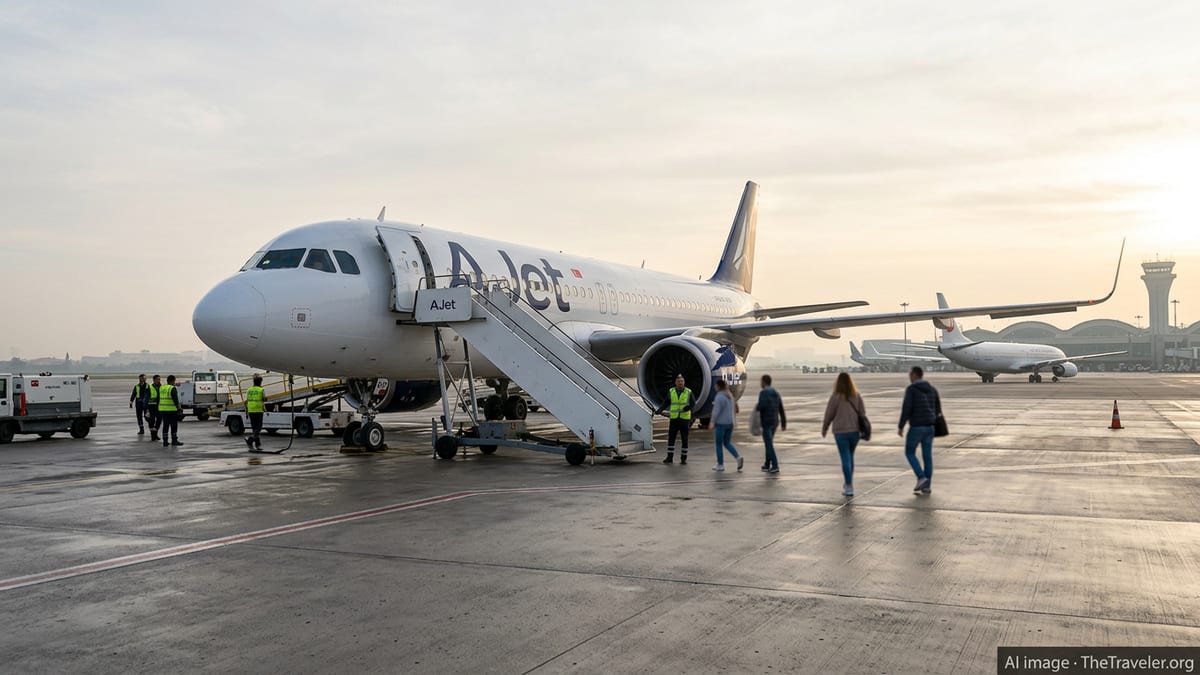
New Daily Route Anchors Growing Balkan Network
AJet’s new Istanbul–Tirana service launched with its inaugural flight on March 2, 2026, landing at Tirana International Airport Nënë Tereza with the customary water-cannon salute and a terminal ceremony attended by aviation and tourism officials from both countries. The service initially operates five times per week before ramping up to a daily schedule later in March, with further frequency growth planned for the summer season.
The route is operated from Istanbul Sabiha Gökçen Airport, AJet’s main base on the Asian side of the city, to Tirana, Albania’s primary international gateway. Flight times average around one hour and 45 minutes, using a mix of Boeing 737-800 and Airbus A320-family aircraft configured for high-density short-haul operations, reflecting strong expectations for leisure and visiting-friends-and-relatives demand.
Air service specialists note that AJet intends to double daily frequencies from June 2026, effectively providing morning and afternoon departures in both directions. This schedule is designed to appeal to both weekend city-break travelers and passengers using Istanbul as a transfer point to onward destinations across Türkiye and beyond.
The new connection forms part of a broader AJet expansion strategy in the Balkans and Eastern Mediterranean, where the carrier has been steadily adding low-fare links from Istanbul and Ankara to key regional capitals. Industry observers view Tirana as a particularly important addition, given Albania’s fast-rising tourism profile and growing diaspora communities in Türkiye and Western Europe.
Tourism Boost for Both Albania and Türkiye
Tourism officials in Tirana expect the additional seat capacity from AJet to support another strong year for inbound arrivals, particularly from Türkiye, which has become one of Albania’s most important source markets. Easier access from Istanbul is also likely to encourage more transit visitors from the Middle East and Asia, who can now pair an Albanian beach holiday or cultural tour with a brief stopover in Türkiye.
Albania has spent the past decade repositioning itself as a Mediterranean alternative to more crowded destinations, highlighting the Adriatic and Ionian coastlines, mountain landscapes and historic Ottoman and Roman heritage sites. Direct low-cost links from major hubs such as Istanbul are seen as essential to sustaining double-digit growth in international visitors and attracting year-round city-break traffic to Tirana.
On the Turkish side, the route opens further opportunities for Albanians to explore Istanbul’s cultural, shopping and medical tourism offerings. Travel agents in Tirana report rising interest in short stays in Istanbul for concerts, football matches, and specialist medical treatments, all of which become more accessible with daily low-cost flights and competitive one-way fares.
Airline analysts add that AJet’s pricing strategy, combined with promotional fares around the launch period, is expected to pressure existing operators on the corridor and could lower average ticket prices, making cross-border travel more affordable for both leisure and migrant-worker segments.
Enhanced Connectivity Through Istanbul’s Sabiha Gökçen Hub
By operating from Sabiha Gökçen rather than Istanbul’s larger main airport, AJet is positioning Tirana as part of its low-cost hub-and-spoke model. The airport already serves as a primary base for several budget carriers and offers a growing network of domestic Turkish destinations such as Antalya, Izmir and Gaziantep, as well as international routes to cities in Europe, the Middle East and North Africa.
For Albanian travelers, this means the new nonstop Tirana–Istanbul leg can function as a first segment in a wider itinerary, connecting via Sabiha Gökçen to resort destinations on Türkiye’s Mediterranean and Aegean coasts or to major cities such as Ankara. Multicity bookings enable passengers to construct flexible itineraries at relatively low cost, supporting both outbound tourism and labor mobility.
The schedule has been structured to allow convenient same-day connections in both directions, with morning arrivals from Tirana feeding mid-morning departures from Istanbul, and afternoon Tirana-bound flights capturing inbound traffic from around the AJet network. Airport authorities at Sabiha Gökçen say they have worked with the airline to streamline minimum connection times, a key factor in attracting connecting passengers away from rival hubs in the region.
AJet’s move also strengthens İstanbul’s position as a gateway for Balkan travelers linking to long-haul flights on other carriers. While AJet itself focuses on short and medium-haul routes, the increased frequency between Istanbul and Tirana gives Albanian travelers more options to reach onward flights to North America, the Gulf and Asia with a single transfer.
Competitive Dynamics on the Istanbul–Tirana Corridor
The launch of AJet’s service adds a new low-cost competitor on a corridor historically dominated by full-service operations and a limited number of carriers. Industry data indicate that the Istanbul–Tirana market has expanded steadily in recent years, driven by Albania’s tourism boom, deepening business ties and significant Albanian communities living and working in Türkiye.
With AJet’s entry, capacity on the city-pair increases significantly, and analysts predict that seat growth will outpace short-term demand, leading to a period of competitive fares. This environment is likely to benefit price-sensitive passengers, including students, migrant workers and family visitors, who have traditionally relied on a mix of scheduled and seasonal charter flights.
Airport representatives in Tirana have welcomed the competitive pressure, arguing that more choice and higher frequencies help ensure resilience during peak summer travel and reduce the risk of disruption for travelers who previously had limited alternatives. They also point out that additional airlines tend to invest more in local marketing, effectively promoting Albania as a destination across their broader networks.
For AJet, the Istanbul–Tirana launch is part of a strategy to fill gaps left by other carriers scaling back or restructuring regional operations. By leveraging lower operating costs and a simplified fleet, the airline aims to secure a foothold early in markets where passenger numbers are rising but capacity remains constrained outside the summer high season.
Regional Impact and Future Growth Prospects
Beyond point-to-point traffic, the new connection is expected to contribute to deeper economic links between Türkiye and Albania, especially in sectors such as construction, energy, education and retail. Business groups on both sides have lobbied for more regular and affordable air links, arguing that faster travel encourages investment, project visits and cross-border partnerships.
Tourism boards in neighboring Balkan countries are also watching the development closely. As Tirana strengthens its role as a regional gateway, improved links to Istanbul can support multi-country itineraries that combine Albania with nearby destinations in Montenegro, Kosovo or North Macedonia, using overland transfers from Tirana.
AJet executives have signaled that, if load factors meet expectations in the first operating season, the airline could consider further capacity increases or seasonal adjustments, particularly during peak summer months when demand for coastal holidays on both the Albanian and Turkish Rivieras is at its highest. Additional early-morning or late-night rotations would increase flexibility for weekend travelers and boost aircraft utilization.
For now, the new nonstop Istanbul–Tirana flights underscore how low-cost carriers are reshaping connectivity across Southeast Europe, linking emerging tourist hotspots with major hubs and helping smaller markets tap into global travel flows. As AJet beds in its latest route, both countries are banking on fuller hotels, busier restaurants and stronger people-to-people ties in the months ahead.