

More news on this day
India’s Akasa Air has introduced a dedicated fuel surcharge on tickets, aligning with IndiGo, SpiceJet, Air France, KLM, Cathay Pacific and other carriers that are adjusting fares in response to sharply higher global jet fuel costs and operational pressures.
Get the latest news straight to your inbox!
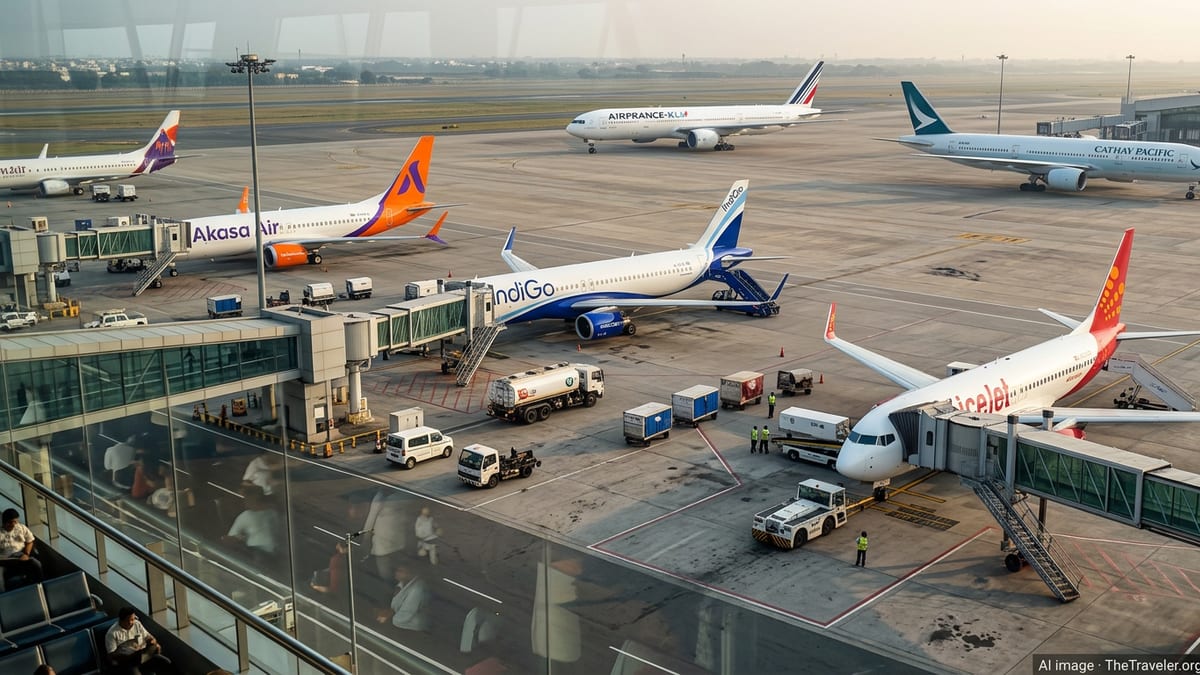
Akasa Air Formalises Fuel Charge Amid Volatile Jet Fuel Prices
Akasa Air has moved to a clearer fuel surcharge structure as global jet fuel prices rise rapidly in early 2026, reshaping cost models for airlines across Asia and beyond. Publicly available fare documents show a separate fuel charge line item now embedded in Akasa’s pricing, in addition to base fares and ancillary fees, signalling that the airline is seeking to more transparently pass a portion of escalating fuel costs to passengers.
The updated fare sheet indicates a defined “Fuel Charge” applied on a per-sector basis, consistent with practices at many regional and global carriers that separate volatile fuel components from core ticket pricing. While the airline continues to promote discounted base fares through limited-time sales and promotional campaigns, the presence of a distinct fuel-related element means that the headline ticket price is increasingly influenced by commodity markets and currency movements.
Akasa’s decision comes at a time when aviation fuel benchmarks have spiked, with industry trackers reporting prices nearly doubling between January and early March 2026. This trend is pressuring full-service and low-cost operators alike, particularly on longer routes where fuel can represent a substantial share of total operating costs.
For travellers, the change will most likely be felt as a modest but noticeable increase in final checkout totals, even where base fares appear unchanged or discounted. Travel search results may still list competitive lead-in prices, but the full impact becomes clear once taxes, fees and fuel-related charges are itemised during the booking process.
IndiGo, SpiceJet and Indian Carriers Turn Back to Fuel Surcharges
Akasa’s move places it alongside IndiGo and SpiceJet in India’s intensely competitive domestic and regional market, where airlines have been revisiting fuel surcharges in response to higher input costs. IndiGo previously removed a fuel charge in January 2024 after a period of softer aviation turbine fuel prices, but recent public discussions and traveller reports indicate that the airline is once again introducing a structured “fuel charge” on both domestic and international routes.
Shared fare information circulating among passengers points to a slab-based IndiGo surcharge, with different amounts applied depending on sector length. For domestic itineraries within India, the new fee reportedly starts at a few hundred rupees per one-way journey, with higher tiers on longer legs. On international sectors, the additional fee appears larger, reflecting higher fuel burn and exposure to global price swings.
SpiceJet, which has been working to stabilise its finances and restore capacity, has historically made use of fuel surcharges as a tool to manage sudden movements in jet fuel prices. While specific current amounts vary by route and booking channel, publicly available fare breakdowns suggest that the airline, like its peers, is relying more heavily on variable surcharges to close the gap between rising operating costs and price-sensitive demand.
The broader Indian market is seeing similar steps from other players, including full-service brands that have either introduced fresh fuel-related line items or adjusted existing ones. For travellers within and from India, the result is a landscape where base fares may still fluctuate on competition and demand, but a growing portion of the ticket is explicitly tied to fuel dynamics.
Air France, KLM and European Carriers Adjust Sustainable Fuel and Fuel Fees
In Europe, Air France and KLM have also refined their fuel-related pricing in recent months, layering sustainability considerations onto traditional fuel cost recovery. According to recent financial communications and market reporting, the Air France-KLM group has implemented and then increased a specific surcharge linked to the use of sustainable aviation fuel, which is generally more expensive than conventional jet fuel.
This sustainable fuel surcharge sits alongside existing fare components that already reflect underlying fuel prices. As the group seeks to balance environmental goals with financial discipline, the surcharge is designed to help fund greater uptake of low-carbon fuels while acknowledging that customers are sensitive to headline fares.
Although overall fuel expenditure projections for the group in 2025 are lower than in 2024 due to hedging and efficiency gains, the shift towards sustainable fuels, currency movements and capacity adjustments mean that surcharges remain a key pricing instrument. Passengers flying long-haul routes on Air France and KLM increasingly encounter a detailed breakdown of taxes, fees and surcharges, with fuel and sustainability-related items playing a prominent role.
Other European and transatlantic carriers are using similar mechanisms, either through explicit fuel surcharges or by embedding fuel-related components into carrier-imposed charges that rise and fall with oil markets. The net effect for long-haul travellers is that even when base fare promotions are advertised, total ticket prices can remain elevated compared with periods of lower fuel costs.
Cathay Pacific and Asia-Pacific Airlines Respond to Cost Pressures
Across the Asia-Pacific region, Cathay Pacific provides a clear illustration of how fuel surcharges have become a standard component of long-haul pricing. The airline publishes regular updates detailing fixed fuel surcharge amounts by point of sale and region, with recent schedules indicating surcharges in the range of roughly 70 to 100 US dollars or local-currency equivalents for many long-haul itineraries.
These surcharges are applied per flight sector and are included in the total fare quoted on the airline’s direct channels, which means passengers may not always see them as a separate add-on during booking, but they are a significant underlying driver of the final price. The airline reviews these amounts periodically, adjusting them in line with market fuel prices and broader operating conditions.
Other Asia-Pacific carriers, from Japanese full-service airlines to Southeast Asian and Korean operators, are following comparable frameworks. Many publish tables that link specific surcharge levels to rolling averages of jet fuel prices, ensuring that charges can rise rapidly when fuel spikes and fall when markets ease. Recent notices show that some airlines have kept surcharges steady going into 2025 and 2026, while others have nudged them higher in response to renewed volatility.
For customers booking multi-sector itineraries across the region, this can translate into a patchwork of surcharge levels depending on origin, destination and airline. A single journey may include sectors priced with different fuel add-ons, making final totals more complex and sometimes harder to compare at a glance.
What Rising Fuel Surcharges Mean for Travellers Worldwide
The rapid escalation in jet fuel costs since the start of 2026 has become a central factor shaping airfare trends worldwide. Industry monitoring points to benchmark jet fuel prices that have nearly doubled within a matter of weeks, driven by supply constraints, refining bottlenecks and geopolitical tensions affecting key production and transit routes.
As a result, airlines operating on thin margins, particularly low-cost and leisure-focused carriers, have limited room to absorb the shock. Introducing or increasing fuel surcharges allows them to respond relatively quickly, adjusting ticket structures without fully rewriting base fare strategies or long-term pricing commitments. For full-service airlines, surcharges offer flexibility to manage both traditional fuel spending and the incremental cost of sustainable aviation fuels that are gradually entering the mainstream.
For travellers, the most immediate impact is higher all-in fares, especially on long-haul and connecting itineraries that cross multiple regions. Short-notice bookings, peak-season travel and routes exposed to airspace restrictions or extended flying times are particularly vulnerable to combined effects of higher base fares and fuel-related fees. Passengers may still find promotional offers and sales events, but real savings now depend on examining complete fare breakdowns rather than simply comparing headline prices.
The addition of Akasa Air to the growing list of carriers deploying explicit fuel surcharges underscores how widespread this trend has become. From India to Europe and the wider Asia-Pacific region, airlines are converging on similar tools to cope with an unpredictable fuel environment, leaving travellers facing more complex pricing and a renewed emphasis on timing, route selection and flexible planning when shopping for flights.