

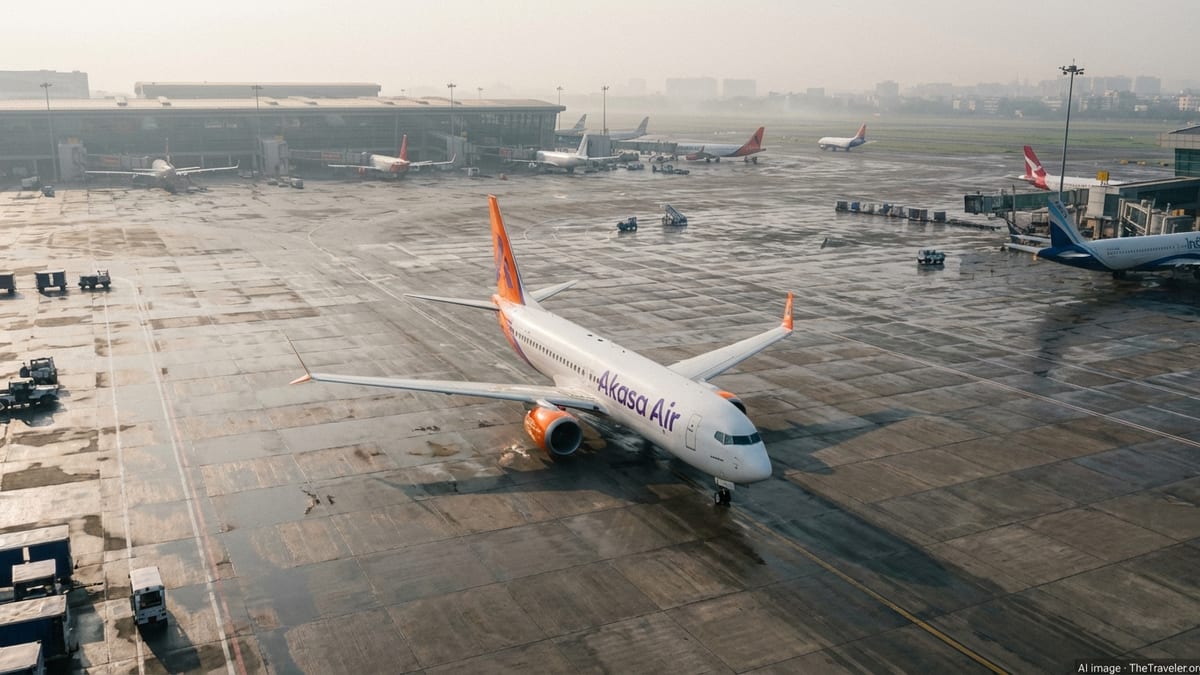
Akasa Air has inducted its 34th aircraft and third new jet of 2026 in under two months, underscoring the Mumbai based carrier’s rapid scale up as it chases a place among the world’s top 30 airlines by the end of the decade.
Third Aircraft of 2026 Cements Early Year Momentum
The latest Boeing 737 MAX delivery, confirmed by the airline on February 17, brings Akasa Air’s fleet to 34 aircraft and caps a brisk start to the year in which three jets have joined the roster since January. For a carrier that only launched commercial operations in August 2022, the pace highlights how aggressively it is converting a sizeable order book into operational capacity.
The new aircraft arrivals follow a period of delayed deliveries linked to production constraints at Boeing, which had slowed the airline’s expansion tempo through much of 2024 and early 2025. Akasa executives have repeatedly said they remain in close contact with the US manufacturer and expect the delivery profile to improve as regulatory and industrial bottlenecks ease.
With each incremental jet now entering service, the airline is restoring the cadence it originally envisioned, focused on adding capacity in markets where demand is outstripping supply. Industry analysts say the early 2026 additions will allow Akasa to fortify its schedule on trunk domestic routes and steadily expand international flying while maintaining high aircraft utilisation.
Fleet Strategy Aligned With Long Term Growth Targets
The three new aircraft delivered since the start of 2026 slot into a long term fleet plan that calls for a dramatic build up over the remainder of the decade. Akasa has firm orders for 226 Boeing 737 MAX family aircraft, including the MAX 8, the denser MAX 8 200 variant and the stretched MAX 10, with deliveries running through 2032. Senior executives have guided to compounded annual fleet and capacity growth in the 25 to 30 percent range over the next several years as those jets arrive.
By some estimates, the airline is targeting an almost eightfold increase in fleet size between now and 2032, when the last of its current order pipeline is due. Akasa’s financial disclosures and public commentary suggest that capacity, measured in available seat kilometres, grew by nearly 50 percent in the financial year ending March 2025, with another 30 percent increase planned for the current fiscal period.
For 2026 specifically, the three early inductions are expected to be followed by at least two more aircraft, taking the fleet to around 35 jets before the next financial year. That would be consistent with earlier briefings from the carrier’s chief financial officer, who has said Akasa aims to add several aircraft each year despite near term delivery constraints, then accelerate the pace in the second half of the decade as Boeing’s output normalises.
Building Toward a Top 30 Global Carrier Ambition
The rapid fleet growth is central to Akasa Air’s stated ambition to rank among the world’s 30 largest airlines by fleet size by around 2030. Founder and chief executive Vinay Dube has repeatedly framed the airline’s strategy in those terms in internal communications and public interviews, arguing that India’s underpenetrated air travel market and rising middle class create room for a new scale player beyond the established incumbents.
In its first few years of operations the carrier has already carved out a mid single digit share of India’s domestic market, surpassing some older competitors on both fleet size and traffic. Executives say the top 30 target is not merely symbolic but reflects the critical mass needed to compete for connecting traffic, negotiate global partnerships, and sustain a broad network of domestic and international routes.
To reach that threshold, Akasa will need to steadily induct aircraft at a pace far above the sector’s historic norm, while keeping load factors, yields and cost discipline intact. The early 2026 additions, though modest in absolute numbers, are being watched as a bellwether of whether the airline can translate its large order book and fresh capital into tangible scale on the ground and in the air.
Network Expansion Spans Domestic Hubs and New International Links
Each aircraft joining the fleet gives Akasa incremental flexibility to deepen its presence on key domestic routes and to widen its international footprint. By mid 2025 the airline was serving more than two dozen destinations, including several short haul international points, and operating close to 1,000 flights a week. Management has signalled that the share of capacity deployed on overseas routes, currently in the mid teens as a percentage of total operations, could rise toward one quarter of the network by the 2025 to 2026 fiscal year.
New capacity from the 2026 aircraft is expected to support that shift, with additional frequencies on Gulf and Southeast Asian routes that tap strong outbound demand from Tier 1 and Tier 2 Indian cities. At the same time, Akasa continues to highlight opportunities on underserved domestic sectors where rising incomes and new infrastructure, including Navi Mumbai and Noida International airports, are reshaping travel patterns.
The airline has previously committed to launching flights from Navi Mumbai as soon as the new airport opens, using it as an anchor for both domestic and international services. Extra aircraft delivered this year will be critical in seeding those operations and in sustaining growth at existing hubs such as Mumbai, Bengaluru and Delhi, where slot availability remains tight and airlines that can offer robust schedules enjoy a competitive advantage.
Financial Backing and Cost Focus Support Rapid Scale Up
Underpinning the fleet expansion is a capital structure that has been strengthened over the past year through new equity infusions from marquee investors. Funding from entities linked to Premji Invest, Ranjan Pai and other asset managers, alongside additional capital from the family of late investor Rakesh Jhunjhunwala, has given Akasa the balance sheet flexibility to firm up its aircraft orders and invest in technology, people and infrastructure.
The airline has reported revenue growth approaching 50 percent year on year and significant improvements in operating margins, even as it continues to post net losses typical of a fast growing young carrier. Management has indicated that operational profitability is within reach, pointing to reductions in non fuel unit costs and the growing contribution of ancillary revenues, which include seat selection, priority services and cargo.
With nearly 100,000 tonnes of freight handled by early 2025 and a suite of more than two dozen ancillary products in the market, Akasa is betting that a diversified revenue mix will help buffer it against fuel price volatility and fare competition. The three new aircraft added in 2026 expand belly cargo capacity and create more inventory for ancillary services, deepening those revenue streams without significant additional fixed cost.
Operational Challenges Amid Leadership Changes and Boeing Headwinds
The growth narrative has not been without headwinds. In recent days Akasa has seen the resignation of another senior co founder, its chief commercial officer, following an earlier leadership exit in the international division. The airline has moved to reassign responsibilities internally and has described the transition as structured and orderly, but the departures add a layer of complexity at a time when execution demands are rising.
On the operational front, while the induction of the 34th aircraft signals progress, Akasa is still navigating the after effects of Boeing’s production slowdowns and regulatory scrutiny of the 737 MAX programme. Executives have acknowledged that the carrier received fewer aircraft than initially planned over the past two years, forcing adjustments to capacity plans and delaying some route launches.
Industry observers note that the airline has managed to sustain high load factors and stable on time performance metrics despite those constraints, in part by carefully sequencing growth and avoiding overly stretched schedules. The early 2026 additions offer some breathing room, allowing maintenance windows and crew rostering to be managed with less strain while still supporting new flying.
Positioning Within a Fast Growing Indian Aviation Market
Akasa’s sprint to its 34th aircraft is also a reflection of broader dynamics in Indian aviation, where demand for air travel is rising faster than overall fleet additions. Analysts estimate that while industry capacity has been growing at roughly 6 percent annually, passenger demand has been increasing at more than double that pace, creating a structural demand supply gap that supports higher fares and strong load factors for carriers able to add seats.
Against that backdrop, Akasa’s plan to grow its fleet by 25 to 30 percent a year through most of the decade would see it outpace the domestic market and gradually capture a larger share of traffic. The airline has already crossed a 5 percent domestic market share and has signalled that it is aiming for mid teens share over the next five to seven years, primarily by deepening frequencies on existing routes and entering new city pairs underserved by incumbents.
As more aircraft arrive, including higher capacity MAX 10 jets from 2027 onward, Akasa will be able to compete more aggressively with IndiGo and the Air India group on busy trunk routes, while using smaller variants to stimulate demand in emerging markets. The three aircraft inducted in early 2026 are an initial step in that direction, adding density on high demand sectors in time for the busy summer and festival travel peaks.
What the 34th Aircraft Means for Passengers
For travellers, the immediate impact of Akasa’s third aircraft addition of 2026 is likely to be felt through more flight options, particularly on routes where the carrier has been operating limited daily services. Additional frequencies can make same day return trips more viable for business travellers, while more seats in the market may help temper fare spikes during peak periods.
The airline has consistently emphasised a service proposition built around warm, contemporary hospitality, relatively generous legroom in economy, and a focus on on time performance. As the fleet grows, maintaining that consistency becomes more challenging but also more critical to differentiation, especially for an airline that does not operate a separate premium cabin.
Akasa is also using new aircraft to showcase incremental cabin and product upgrades, from refreshed lighting schemes and cabin finishes to fine tuned in flight menus. The latest Boeing 737 MAX deliveries are expected to carry the airline’s newest interior specification, offering a slightly enhanced onboard experience even as the basic single class configuration remains unchanged.