

More news on this day
Akasa Air is maintaining its India to Jeddah services even as parts of the Middle East aviation network remain disrupted, extending generous refund and rescheduling waivers while highlighting ongoing safety assessments on the busy India–Saudi Arabia corridor.
Get the latest news straight to your inbox!
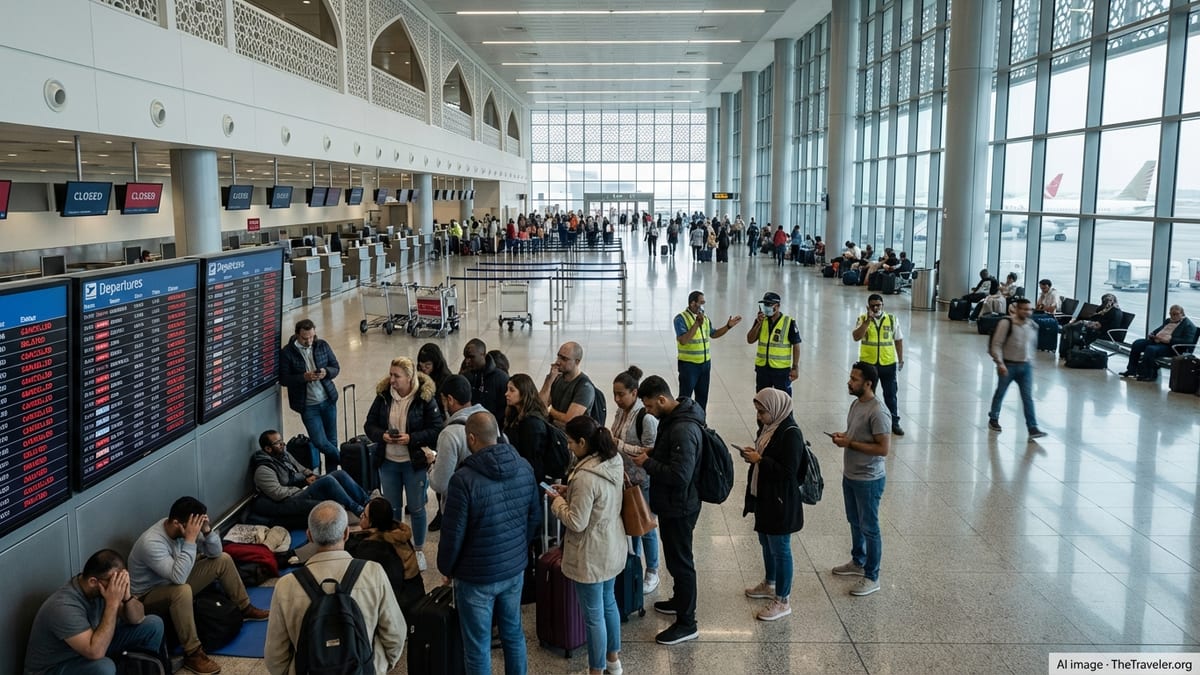
India Aligns With Gulf States to Keep Jeddah Link Active
Publicly available information shows that Akasa Air has decided to continue operating flights between India and Jeddah at a time when regional airspace closures and political tensions have led to widespread disruptions across West Asia. The carrier’s stance effectively places India alongside Saudi Arabia, the United Arab Emirates, Qatar, Kuwait and Oman in keeping a key gateway to the Red Sea city accessible for travelers.
Reports indicate that Middle East operations have been significantly affected in recent weeks, with multiple international airlines suspending or rerouting services to destinations across the region. Against this backdrop, Akasa Air’s continued India–Jeddah operations offer an important connectivity lifeline for business travelers, religious pilgrims and members of the large Indian diaspora living in Saudi Arabia and neighboring Gulf countries.
Coverage in Indian business and travel media describes Jeddah as one of Akasa Air’s strategically important overseas destinations, connected to major Indian cities such as Ahmedabad, Bengaluru, Mumbai, Kochi and Kozhikode. By keeping these routes active, India joins other Gulf hubs in sustaining a limited but steady flow of passengers and essential travel, even as airlines elsewhere in the region trim or temporarily halt services.
The decision also reflects a broader pattern of selective continuity within Middle East aviation, where certain corridors judged operationally feasible and sufficiently secure are being maintained, while others face temporary suspension. For travelers planning near-term journeys between India and Saudi Arabia, Akasa Air’s Jeddah services are emerging as a key option in an otherwise volatile schedule environment.
Refunds, Free Rescheduling and Waivers for Impacted Travelers
According to published coverage, Akasa Air has paired its decision to keep flying to Jeddah with an expanded package of customer-friendly waivers. The airline has extended options for full refunds and free rescheduling for passengers booked on affected Middle East routes, aiming to give travelers flexibility as conditions evolve across the region.
Recent reports note that these waivers apply to itineraries involving Jeddah as well as other Middle Eastern destinations where services have been curtailed or temporarily suspended. Passengers whose travel plans fall within defined impact periods can choose to cancel for a full refund or change their dates without incurring additional charges, a policy framed by the airline as a gesture of reassurance amid uncertainty.
Travel industry analysis points out that these measures bring Akasa Air in line with a wider wave of waivers introduced by carriers across the Gulf and South Asia. Airlines based in India and the Gulf have broadly offered similar flexibility, reflecting the difficulty for passengers in planning trips when airspace availability, local restrictions and security assessments can change with limited notice.
For Indian outbound travelers using Jeddah as a gateway to Saudi Arabia or onward destinations, the combination of continued operations and generous change policies reduces the risk of being locked into inflexible bookings. It also signals that while Akasa Air is willing to fly where feasible, it recognizes that some passengers may prefer to postpone or reroute journeys until the regional situation stabilizes further.
Safety Assessments at the Core of Operational Decisions
Reports from Indian news outlets and airline communications emphasize that Akasa Air’s decision-making is anchored in recurring safety and security assessments. Publicly available statements attribute the continued India–Jeddah flights to ongoing reviews of airspace conditions, route safety and operational viability across Saudi Arabia and adjoining regions.
Industry observers note that such assessments typically consider several factors, including airspace notices, risk advisories, overflight permissions and the status of airports along primary and alternate routes. In the current context of Middle East tensions, these evaluations have become more frequent and granular, with airlines adjusting schedules route by route rather than applying blanket approaches to the entire region.
India’s broader aviation posture toward West Asia, as seen through updates from other carriers, outlines a similar pattern of selective operations. Public documents from Indian airlines show that services to Jeddah and other specific points such as Muscat have been maintained where local airspace remains open and operational parameters are deemed acceptable, while flights to locations closer to active trouble spots have faced suspensions or reductions.
For travelers, this means that Jeddah currently sits within a subset of Middle Eastern destinations still served from India under carefully monitored conditions. While the details of risk evaluations are not fully disclosed, the continued operation of these flights suggests that airlines see a manageable balance between demand for travel and the precautionary measures needed to protect passengers and crew.
Impact on Pilgrimage, Work Travel and Gulf Connectivity
The decision to keep India–Jeddah services active carries particular weight for pilgrimage and labor traffic, two pillars of the air corridor between India and Saudi Arabia. Travel reports highlight that Jeddah remains a primary gateway for religious travelers heading toward the holy cities, as well as for Indian professionals and workers commuting to jobs across the western provinces of Saudi Arabia.
Seasonal peaks in pilgrimage-related travel mean that any prolonged suspension of flights could significantly affect thousands of passengers, especially those who plan trips months in advance. By sustaining operations while extending refund and rescheduling flexibility, Akasa Air offers a degree of continuity for travelers who still wish to proceed with journeys, while also accommodating those who decide to defer visits in light of regional developments.
Beyond religious travel, continued flights support the economic and social links between India and the wider Gulf region. Millions of Indian nationals live and work in Saudi Arabia, the UAE, Qatar, Kuwait and Oman, relying on regular air connections for periodic home visits and family reunions. Travel analyses observe that keeping at least some routes functional, even with reduced frequencies, helps preserve these ties at a time when mobility in parts of the Middle East remains constrained.
At the network level, Jeddah’s role as a regional node also means that ongoing flights from India can feed into onward connectivity offered by other carriers within Saudi Arabia and the Gulf. While schedules and connections remain subject to change, travelers who reach Jeddah still have options to connect to domestic Saudi destinations or neighboring countries that maintain open airspace and active services.
What Passengers Should Expect in the Coming Weeks
Travel industry coverage advises passengers booked on Akasa Air’s India–Jeddah flights to closely monitor airline updates, as operational decisions are subject to rapid revision if regional conditions shift. Even with current assurances on continued services, schedules may be adjusted to reflect evolving safety assessments, airport capacities or changes in airspace permissions across West Asia.
Passengers are being encouraged in public advisories to review the latest flight status before departing for the airport, allow additional time for check-in and security processes, and keep their contact details updated with the airline for any last-minute notifications. For those whose trips are time-sensitive, such as work assignments or religious obligations, travel planners recommend building in extra buffer days where possible, given the residual volatility in the region’s aviation network.
Analysts also point out that while full refunds and free rescheduling are currently available to many affected travelers, waiver windows typically come with defined end dates that may be revised as the situation evolves. Passengers who prefer not to travel under current conditions may benefit from acting within the announced timelines to secure the most flexible options.
In the near term, India’s alignment with Saudi Arabia, the UAE, Qatar, Kuwait and Oman in keeping the Jeddah corridor open through Akasa Air and other carriers underscores both the importance of this route and the complex balancing act for airlines. As regional turbulence continues, travelers can expect a combination of maintained connectivity, heightened safety oversight and ongoing booking flexibility to define the India–Jeddah air link.