

More news on this day
Akasa Air is moving to stabilize its Middle East network by restoring Riyadh–Mumbai services even as flights touching the United Arab Emirates, Qatar and Kuwait remain curtailed across multiple Indian carriers, giving travelers an additional route option at a time of continued airspace disruption and shifting schedules.
Get the latest news straight to your inbox!
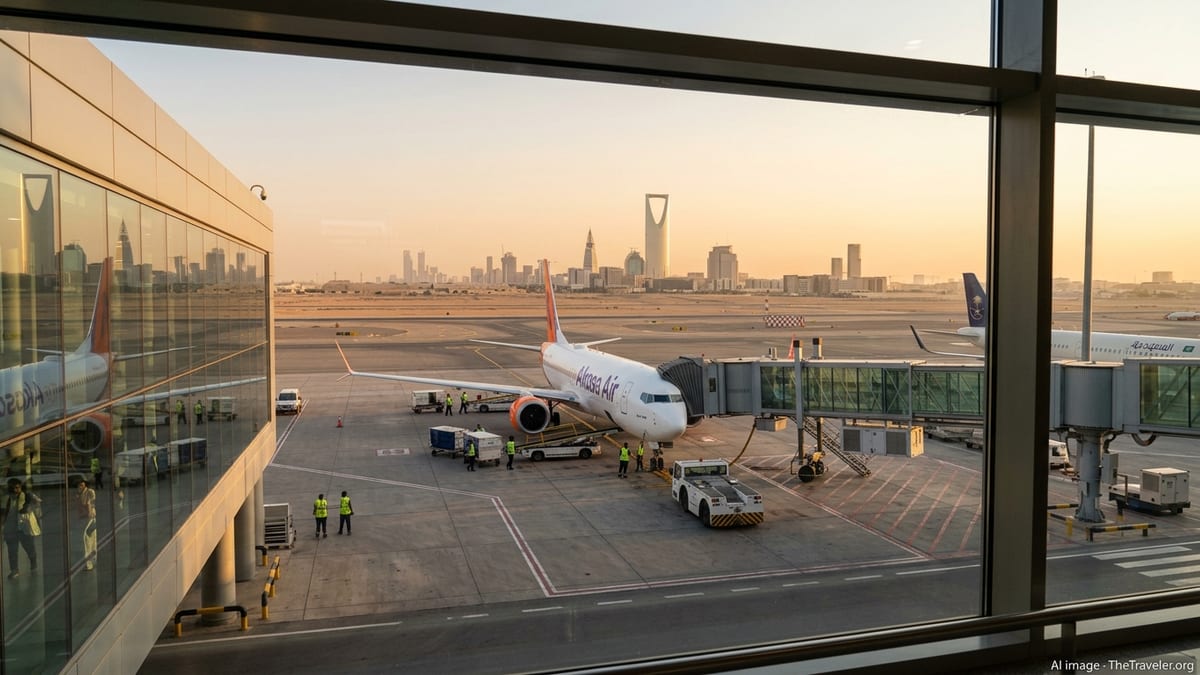
Riyadh–Mumbai Returns as Gulf Corridors Stay Fragile
Following weeks of turbulence across West Asian airspace, publicly available information shows that Akasa Air has begun reinstating select Saudi operations, including services between Riyadh and Mumbai, after an earlier blanket suspension affecting several Gulf destinations. The move comes as carriers across the region gradually reintroduce capacity in response to evolving safety assessments and regulatory advisories.
Reports indicate that while Akasa resumed limited flights to Saudi Arabia, especially Jeddah and now Riyadh, its services touching hubs in the UAE, Qatar and Kuwait remain more restricted, mirroring a wider industry pattern in which airlines are prioritizing specific corridors with clearer operational visibility. This tiered approach allows carriers to re-establish critical links for labor traffic and visiting friends-and-relatives travel, while keeping a tight rein on routes exposed to more complex airspace closures.
Travel industry coverage suggests that the Riyadh–Mumbai pairing is particularly significant, given strong demand from India’s sizable expatriate community in Saudi Arabia and the route’s role as a feeder for onward domestic and international connections. By reintroducing this link, Akasa is positioning itself to capture pent-up traffic while other parts of its Gulf network remain on hold.
The measured restart also signals a shift from emergency cancellations toward more calibrated scheduling, with airlines seeking to balance safety constraints, commercial viability and traveler expectations. For passengers, Riyadh–Mumbai’s return offers a concrete sign that connectivity across the India–Gulf corridor is beginning to rebuild, even as other destinations remain constrained.
Suspensions Across UAE, Qatar and Kuwait Reshape Regional Networks
Coverage in regional and Indian media shows that Akasa Air was among several carriers that temporarily suspended services to major Gulf gateways such as Abu Dhabi and Dubai in the UAE, Doha in Qatar and Kuwait City as authorities implemented airspace restrictions in early March. These suspensions, overlapping with similar moves by Air India, Air India Express and other regional airlines, sharply reduced direct capacity between India and key transit and employment hubs.
The pause in operations to the UAE, Qatar and Kuwait has had a ripple effect on itinerary planning, particularly for budget-conscious travelers reliant on low-cost connections for work, family visits and religious travel. With many point-to-point and connecting options curtailed, passengers have faced longer routings, last-minute rebookings and competition for seats on the limited services still operating.
Published reports suggest that Indian airlines have concentrated their remaining Middle East capacity on a smaller number of destinations, including select Saudi gateways, as they monitor ongoing risk assessments and wait for more predictable airspace access. Within this context, Akasa’s focus on restoring Riyadh–Mumbai stands out as a deliberate choice to anchor its presence in one of the region’s most resilient origin-destination pairs.
At the same time, the continued suspension of certain UAE, Qatar and Kuwait routes underscores the uneven nature of the recovery. While some corridors are opening faster than others, the broader Gulf network remains in flux, with schedules subject to rapid revision as advisories change.
Enhanced Flexibility and Options for India–Gulf Travelers
By restarting the Riyadh–Mumbai route while maintaining a cautious stance on other Gulf points, Akasa Air is attempting to offer travelers a measure of flexibility in an otherwise constrained environment. Publicly available schedules and airline updates show that affected passengers on suspended routes have generally been offered refunds, free date changes or rerouting where capacity permits, although the practical ease of securing new seats varies by carrier and sector.
The addition of Riyadh–Mumbai frequencies gives Indian travelers in Saudi Arabia an extra option amid widespread cancellations to and from the UAE, Qatar and Kuwait. For many, this can mean regaining access to Mumbai’s extensive domestic network and onward long-haul services operated by other airlines, effectively restoring a multi-stop journey that had temporarily become unviable.
Travel analysts quoted in recent coverage note that airlines emerging from large-scale suspensions often prioritize routes with strong underlying demand and minimal operational ambiguity. In this case, Riyadh–Mumbai fits that profile, serving both high-volume labor traffic and business and leisure segments, while relying less on complex multi-country overflight patterns than some transit-heavy routes via the UAE or Qatar.
For passengers, the practical takeaway is that options are reappearing, but with less predictability than before the disruption. Travelers are being encouraged by carriers and travel platforms to monitor schedules closely, remain flexible with dates and consider alternative gateways such as Riyadh or Jeddah when traditional hubs in the UAE, Qatar or Kuwait face intermittent suspensions.
Strategic Positioning and Commitment to Regional Connectivity
Industry observers see Akasa Air’s Riyadh–Mumbai restart as part of a broader strategy to maintain its foothold in the competitive India–Gulf market despite temporary constraints. Since launching international operations in 2024, the airline has steadily added Gulf destinations, and its response to recent disruptions suggests an emphasis on preserving brand presence and customer trust in key corridors rather than retreating entirely until conditions normalize.
According to published coverage on airline network changes, Akasa has framed its Middle East adjustments as precautionary and temporary, linked to evolving safety reviews rather than long-term commercial withdrawals. Resuming Riyadh–Mumbai while continuing to operate select Jeddah services demonstrates that the carrier is prepared to scale up or down dynamically based on real-time assessments, reinforcing its stated commitment to regional connectivity.
This approach aligns with a wider trend among Indian and Gulf airlines, which are using selective resumptions and targeted capacity increases to rebuild networks around core city pairs. By choosing Riyadh–Mumbai as an early candidate for restoration, Akasa is signaling confidence in the route’s resilience and its importance within the airline’s international portfolio.
In the longer term, the effectiveness of this strategy will likely be measured by how quickly the carrier can bring back its suspended UAE, Qatar and Kuwait flights once conditions permit. For now, Riyadh–Mumbai serves as a bridgehead in a region where demand remains strong, but operational certainty is still emerging.
What Travelers Should Watch in the Weeks Ahead
With schedules and suspensions changing at short notice across the Gulf, travelers planning journeys between India and Middle Eastern destinations face an environment that remains fluid. Reports from airlines and travel platforms consistently emphasize the importance of checking flight status shortly before departure, verifying transit rules and being prepared for reroutings through alternative hubs such as Riyadh or Jeddah.
Akasa Air’s decision to bring back Riyadh–Mumbai underscores that incremental progress is underway, even as services touching the UAE, Qatar and Kuwait evolve more cautiously. Other carriers are following similar patterns, selectively reinstating routes as airspace restrictions ease and coordination with local authorities improves.
For now, Akasa’s Riyadh–Mumbai operations provide an additional lifeline for travelers seeking to reconnect with India from Saudi Arabia while larger structural questions about regional airspace stability are still being resolved. As more data becomes available and advisories are updated, further adjustments to route maps across the Gulf are likely, with airlines continuing to balance safety, economics and traveler demand.