

More news on this day
Akasa Air has inducted its 34th aircraft, a new Boeing 737 MAX 8-200 delivered via Iceland and the Middle East to Bengaluru, underscoring the Indian carrier’s rapid expansion in early 2026 as it deepens international links with the United Arab Emirates, Saudi Arabia, Thailand and beyond.
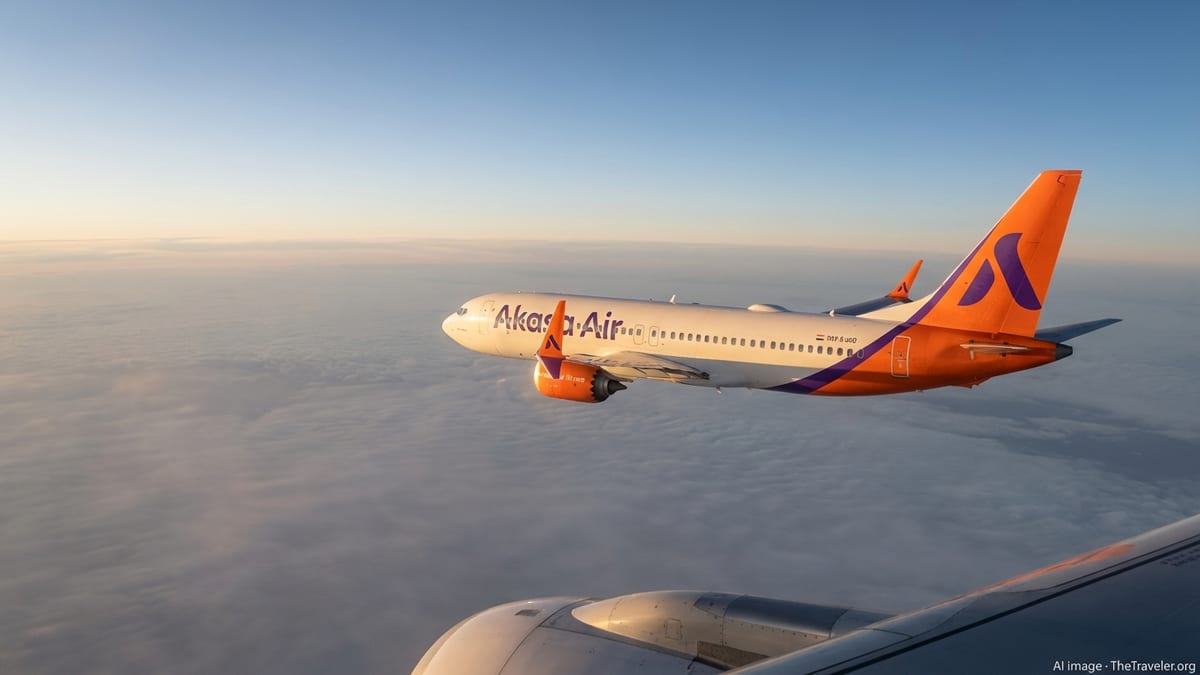
A Milestone Delivery on a Transcontinental Ferry Route
The newest Boeing 737 MAX 8-200 in Akasa Air’s fleet, registered as VT-YBL, touched down at Kempegowda International Airport in Bengaluru on February 16, 2026, becoming the airline’s 34th aircraft and its third induction in less than two months this year. The delivery highlights both the carrier’s accelerating fleet growth and the increasingly global footprint of its operations.
The aircraft’s ferry routing itself reflected Akasa’s widening international horizons. The jet departed Boeing’s facility in Everett near Seattle, crossed the North Atlantic via Keflavik in Iceland, and continued through the Eastern Mediterranean hub of Larnaca in Cyprus before arriving in southern India. While these technical stops were planned primarily for fuel and crew considerations, they symbolically placed the young Indian airline in the same long-haul delivery corridors regularly used by established global carriers linking North America, Europe and Asia.
Configured in a high-density 737 MAX 8-200 layout, the aircraft is equipped with Safran Z200 seats featuring a four‑inch recline, contoured backrests, enhanced cushioning and both USB‑C and USB‑A charging at every seat. The cabin fit underscores Akasa’s attempt to position itself as a value-focused airline that still competes aggressively on comfort and onboard experience within the low‑cost model.
With this induction, Akasa’s all‑MAX fleet climbs to 34 aircraft, all powered by CFM LEAP‑1B engines. The airline has placed firm orders for 226 Boeing 737 MAX jets, with 192 of those scheduled for delivery over the next six years, providing a clear runway for network expansion across India and into key short‑ and medium‑haul international markets.
India’s New Challenger Reaches 24 Million Passengers
Since launching commercial services in August 2022, Akasa Air has grown from a start‑up challenger with just four routes into one of India’s fastest‑expanding airlines. By early 2026, the carrier reports that it has flown more than 24 million passengers, a striking achievement in a little over three years in a market dominated by incumbents such as IndiGo and Air India.
Akasa’s network now spans 26 domestic points in India, including major metros such as Mumbai, Delhi, Bengaluru, Chennai, Hyderabad and Kolkata, as well as important secondary cities like Pune and Ahmedabad. This domestic footprint provides the backbone for its international push, feeding overseas flights with a mix of business travelers, migrant workers, leisure tourists and increasingly, connecting traffic from foreign partners.
The airline’s strategy has been to focus on reliability, dense frequencies on trunk routes and a consistent onboard product, while using the efficiency advantages of the 737 MAX to keep unit costs in check. As more aircraft arrive through 2026, Akasa is expected to add frequencies on high‑demand domestic sectors and explore new city pairs that can support both point‑to‑point traffic and connections onto international services.
With India projected to become the world’s third‑largest aviation market within the decade, Akasa’s rapid scale‑up is also a signal of confidence in the country’s long‑term demand environment. The fleet build‑up through 2026 comes as new airports at Navi Mumbai and Noida prepare to open, promising additional slots and connectivity opportunities for growth‑oriented carriers.
Emerging International Network Across the Gulf and Thailand
Akasa Air’s 34th aircraft arrives at a time when the airline is consolidating and gradually widening its international network. After the launch of its first overseas service from Mumbai to Doha in March 2024, the carrier has moved quickly to add destinations in the Middle East and Southeast Asia, leveraging strong India‑Gulf and India‑Thailand travel flows.
By 2026, Akasa operates flights to six international destinations: Doha in Qatar; Jeddah and Riyadh in Saudi Arabia; Abu Dhabi in the United Arab Emirates; Kuwait City; and Phuket in Thailand. The Gulf routes target a large base of Indian expatriates and business travelers, while Phuket caters to one of India’s fastest‑growing leisure markets, particularly among young urban travelers from Mumbai, Delhi and Bengaluru.
The Gulf expansion has been closely aligned with policy shifts and airspace conditions. Akasa progressively restored Middle East services in 2025 as regional airspace restrictions eased, rebuilding links to key hubs that had briefly been constrained by geopolitical tensions. The resumption allowed the airline to reposition itself as a competitive option on high‑volume India‑Gulf corridors at a time when demand recovered strongly.
In Thailand, Akasa’s presence in Phuket adds another layer of competition for Indian carriers and international rivals alike. The airline is banking on its relatively young fleet, customer‑friendly ancillary options and a recognizable brand identity to win share in a segment where price sensitivity is high but expectations for reliability and comfort are also rising.
Saudi Arabia and the UAE as Strategic Gateways
Among Akasa Air’s international points, Saudi Arabia and the United Arab Emirates have emerged as especially strategic gateways. The airline first entered Saudi Arabia with flights to Jeddah, later adding Riyadh with a daily Mumbai service. The expansion dovetails with the Saudi government’s ambition to triple passenger volumes and develop the kingdom as a global transit and tourism hub by 2030.
Riyadh’s growing profile as a financial and business center, together with Saudi Arabia’s push into leisure and cultural tourism, has created new opportunities for Indian carriers with the right fleet and cost base. For Akasa, tapping into this demand via non‑stop services allows it to serve both origin‑destination travelers and those connecting onward on other carriers from the kingdom’s airports.
In the UAE, Akasa has built up a presence in Abu Dhabi, which it serves from Mumbai as well as from Bengaluru and Ahmedabad. These routes are particularly significant because they form the backbone of a nascent partnership with Etihad Airways, giving Akasa access to a powerful global hub that connects India not just with the Gulf, but with Europe, North America and Africa.
As more 737 MAX aircraft join the fleet in 2026 and beyond, industry observers expect Akasa to sharpen its focus on such Gulf gateways, using them as springboards for deeper cooperation with local carriers and as magnets for Indian travelers seeking one‑stop connections to destinations far beyond the range of a narrow‑body fleet.
Codeshares and Alliances: Etihad and a Pathway to the United States
While Akasa Air does not operate its own flights to North America, the airline’s growing web of partnerships is quietly opening up India‑United States connectivity for its customers. A codeshare and interline agreement with Etihad Airways, which began to take shape in late 2024 and ramped up in 2025, allows passengers to book through‑journeys linking Akasa’s domestic and Gulf flights with Etihad’s long‑haul network from Abu Dhabi.
Under the arrangement, Etihad places its code on select Akasa flights between India and Abu Dhabi, while Akasa in turn gains exposure on Etihad’s global sales channels. For travelers in cities such as Bengaluru, Ahmedabad and Mumbai, that means the ability to connect onto Etihad services to major U.S. gateways including New York, Chicago, Washington and other North American cities, all on a single itinerary.
This form of “virtual expansion” into the United States complements Akasa’s physical growth across India and the Middle East. By strengthening its presence in Abu Dhabi and offering timed connections, the airline is effectively positioning itself as a feeder carrier for long‑haul traffic, a role traditionally filled by larger Indian competitors in collaboration with Gulf super‑connectors.
The strategy is further reinforced by Akasa’s recent entry into the International Air Transport Association and successful completion of the IOSA safety audit in January 2026. The achievement gives the airline a globally recognized operational credential, making it easier to negotiate additional codeshares and interline deals, and boosting its credibility among overseas partners that may consider tapping Akasa for India feed in the years ahead.
Iceland, Cyprus and the Quiet Signs of Global Ambition
The mention of Keflavik in Iceland and Larnaca in Cyprus in Akasa’s latest aircraft delivery may seem like mere technical footnotes, but they hint at the increasingly global scope of the airline’s operations. While the carrier remains a narrow‑body operator focused on short‑ and medium‑haul sectors, its aircraft routinely traverse intercontinental routings during deliveries, maintenance events and one‑off positioning flights.
For aviation industry watchers, these ferry routes illustrate how Akasa is inserting itself into the same global leasing, maintenance and training ecosystems that support more established international airlines. Each new aircraft delivery involves coordination across multiple jurisdictions, and successful execution helps build a track record with lessors, financiers and regulators that will be crucial as the fleet grows beyond 200 jets.
Iceland’s Keflavik airport, a familiar refueling point on transatlantic ferry missions, symbolically links Akasa’s Indian base to the North Atlantic corridor used by carriers connecting Europe and North America. Larnaca, in turn, forms a bridge between Europe and the Middle East, reinforcing the notion that Akasa’s hardware and crews are increasingly at home on global routes, even if its commercial network remains regionally concentrated.
These operational footprints, combined with international partnerships and a disciplined fleet plan, suggest that Akasa is quietly laying the groundwork for a future in which it could contemplate longer‑range variants of the 737 MAX or even wide‑body aircraft should market conditions and regulatory approvals make such moves attractive.
Customer Experience, Reliability and Growing Pains
As the fleet expands and the network becomes more complex, Akasa Air faces the twin challenges of maintaining reliability and delivering a customer experience that lives up to its early reputation. The airline has earned plaudits for its relatively young fleet, fresh cabin interiors and digital‑first approach, but like many fast‑growing carriers, it has also encountered operational hiccups in the form of delays and disruptions.
Recent reports of extended delays on some domestic sectors, including a widely discussed protracted journey on the busy Mumbai to Goa route, have placed a spotlight on how Akasa handles irregular operations. Passengers have voiced concerns about communication during disruptions, onboard amenities during long tarmac waits and the timeliness of compensation or rebooking options.
Akasa’s leadership has acknowledged that growing an airline at this pace in India’s congested airspace and infrastructure environment is not without friction. Industry analysts note that the induction of additional aircraft in 2026 should provide more scheduling flexibility, additional standby capacity and improved resilience when weather, air traffic control constraints or technical issues arise.
Balancing scale with service quality will be critical as Akasa competes not only on fares, but also on the reliability and predictability that corporate travelers and high‑spending leisure passengers increasingly demand when choosing between multiple Indian and foreign carriers on the same routes.
Outlook: A Bigger Role in India’s Global Connectivity Story
With 34 aircraft now in service and nearly two hundred more on firm order, Akasa Air is poised to play a much larger role in shaping how Indian travelers connect with the wider world. Its growing presence in Gulf hubs, integration into the network of a major Middle Eastern carrier and expanding reach into leisure markets like Thailand position the airline as a key player in India’s outbound travel ecosystem.
For travelers in the United States and other long‑haul markets, Akasa will increasingly appear as a regional link in multi‑carrier itineraries, particularly via Abu Dhabi and other Gulf gateways. While wide‑body aircraft and non‑stop India‑U.S. flights remain the domain of full‑service giants, the economics of narrow‑body flying and the power of partnerships give Akasa a meaningful role in the end‑to‑end journey.
In 2026, the addition of the 34th aircraft and the steady roll‑out of new routes mark more than just incremental capacity. They signal that India’s newest major carrier is settling in for a long contest over market share, connectivity and customer loyalty, from domestic trunk routes to the far‑flung cities that lie just one or two stops away on its growing network map.