

More news on this day
Saudi Arabia has joined a growing chorus of Muslim-majority countries condemning the continued closure and tight restrictions at Jerusalem’s Al-Aqsa Mosque during this year’s holy month of Ramadan, a rare step that is drawing fresh attention to religious freedom at one of Islam’s holiest sites and adding new uncertainty for faith-based travel to the region.
Get the latest news straight to your inbox!
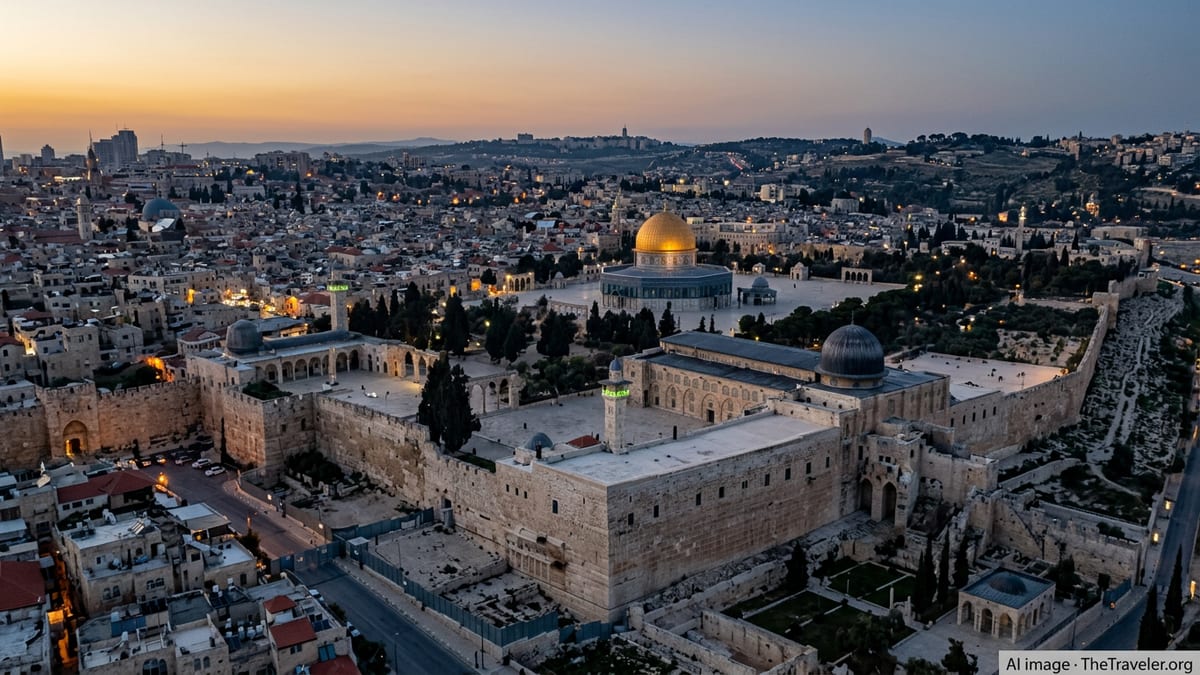
Coordinated Diplomatic Push Against Al-Aqsa Restrictions
A joint statement issued on March 11 by the foreign ministers of Saudi Arabia, Turkey, Jordan, Qatar, the United Arab Emirates, Indonesia, Pakistan and Egypt denounced what it described as the “continued closure” of Al-Aqsa Mosque and its gates to Muslim worshippers during Ramadan. The ministers warned that these measures threaten the historical and legal status of the compound and risk further escalation at a site already central to regional tensions.
According to publicly available information from regional ministries and international media, Israel has enforced sweeping security measures around the Old City of Jerusalem since late February in the context of a wider regional conflict, including a war involving Iran. Local reports from Jerusalem indicate that, for several days in early and mid-Ramadan, ordinary worshippers were prevented from entering the Al-Aqsa compound for key nightly prayers, with only very limited access allowed for small groups of officials and staff.
The latest condemnations from Riyadh and other capitals build on a longer pattern of criticism over access restrictions at Al-Aqsa during religious holidays. Human rights organizations and Jerusalem-based observers have documented years of age limits, permit regimes and sudden closures affecting Palestinian worshippers, but faith advocates say the breadth and duration of this year’s shutdown set a new and worrying precedent.
For Saudi Arabia, whose custodial role over Islam’s two holiest mosques in Mecca and Medina is closely tied to its global religious standing, aligning publicly with other Muslim-majority states over Al-Aqsa underscores the symbolic weight of the issue and its resonance with Muslim travelers worldwide.
What Is Different About This Ramadan Closure
Reports from Jerusalem and international coverage describe the current restrictions as among the most severe since Israel captured East Jerusalem in 1967. Commentaries focusing on the situation argue that the effective closure of Al-Aqsa for extended periods of Ramadan, including the suspension or banning of key night prayers such as Taraweeh and the spiritual retreat of Itikaf, marks a significant break with practice in recent decades.
While Al-Aqsa has periodically seen tightened entry controls or short-term shutdowns in past years, observers note that this Ramadan’s policy has combined physical closures at multiple gates, strict limitations on the number and age of Palestinians allowed in, and a heavier security presence on surrounding streets. Local Palestinian institutions have warned that such restrictions are eroding the long-standing “status quo” arrangement that has governed worship and access at the compound.
Muslim communities across the region view the timing as especially sensitive. Ramadan is traditionally the period when tens of thousands of worshippers from Jerusalem, the occupied Palestinian territories and abroad converge on Al-Aqsa for nightly prayers and communal gatherings. Community organizers and religious leaders quoted in regional media describe the silence of closed courtyards on Fridays as emotionally jarring, with images of empty prayer areas circulating widely on social media.
The closures have also unfolded alongside reports of continued non-Muslim visits to parts of the compound and religious celebrations elsewhere in the city, fueling perceptions among many Muslims that the restrictions fall disproportionately on their ability to worship at Al-Aqsa during the holiest month of the Islamic calendar.
Shockwaves for Religious Tourism to Jerusalem
The unfolding situation at Al-Aqsa is adding to an already challenging year for religious tourism in Jerusalem. Travel industry coverage indicates that pilgrim numbers to the city had already fallen sharply due to the broader security crisis and the ongoing conflict involving Israel and Iran. The effective closure of the compound for much of Ramadan has further discouraged group organizers, families and independent travelers who might otherwise have planned faith-based trips.
Tour operators specializing in Islamic heritage itineraries report that clients are increasingly reluctant to commit to Jerusalem packages when access to the city’s most important Muslim site cannot be guaranteed. Some agencies have paused marketing of Ramadan and Eid-focused tours to Jerusalem altogether, redirecting customers to alternative destinations such as Istanbul, Cairo or domestic pilgrimage and heritage sites within their own countries.
For visitors who are already in the region, rapidly changing rules around access and movement are complicating travel plans. Travelers interviewed in regional media describe sudden roadblocks, shifted prayer arrangements and long detours around closed gates and security checkpoints. Combined with airspace concerns and fluctuating flight schedules linked to the wider conflict, the sense of unpredictability is reshaping how and when travelers consider approaching Jerusalem.
Industry analysts caution that even if restrictions at Al-Aqsa are eased later in the year, the images of locked gates during Ramadan may cast a long shadow over demand. For many would-be pilgrims, the central motivation for visiting Jerusalem is to pray freely at Al-Aqsa; uncertainty around that experience can be enough to delay or cancel a trip.
How Key Muslim Destinations Are Responding
The response from Muslim-majority tourism and transit hubs has gone beyond diplomatic statements. Publicly available information suggests that countries such as Saudi Arabia, Qatar, the United Arab Emirates, Jordan, Turkey, Indonesia, Malaysia and Iran are recalibrating messaging around religious travel and regional connectivity in light of the crisis.
Saudi Arabia, which continues to expand capacity for Hajj and Umrah under its broader tourism strategy, has emphasized Mecca and Medina as open and fully prepared to receive pilgrims. State-linked tourism campaigns and official briefings highlight upgraded infrastructure, heritage restoration projects and streamlined visa procedures, potentially absorbing some of the demand that might otherwise have flowed toward Jerusalem during Ramadan and the months that follow.
In the Gulf, major aviation and tourism gateways including Doha, Dubai and Abu Dhabi are closely monitoring security conditions and passenger flows. Travel trade reporting notes that carriers are adjusting frequencies on routes touching Israel and nearby hotspots, while continuing to promote connections to other Islamic heritage destinations in North Africa, the Levant and Southeast Asia. For these hubs, the disruption around Al-Aqsa is part of a wider rebalancing of regional travel patterns triggered by conflict and uncertainty.
Elsewhere, countries such as Turkey, Indonesia and Malaysia, which host prominent mosques and historical sites tied to Islamic civilization, are portraying themselves as stable alternatives for spiritual journeys and religious conferences. While these destinations cannot replicate the unique religious significance of Al-Aqsa, tourism boards and local operators see an opportunity to welcome travelers who still wish to mark Ramadan, Eid and other Islamic occasions through travel but prefer to avoid active flashpoints.
What Travelers Need to Know Right Now
For travelers and tour planners, the situation around Al-Aqsa in March 2026 underscores the need for flexibility, timely information and careful risk assessment. Entry conditions to the compound and the wider Old City area can change on short notice, driven by security developments and policy decisions taken in Jerusalem and beyond. Prospective visitors are being advised by many travel providers to check the latest guidance from their own governments, monitor reputable news outlets and maintain regular contact with local partners on the ground.
Travel experts recommend that anyone considering a religious trip to Jerusalem this year build contingency plans into itineraries. This may include allocating extra days in case of closures, arranging alternative worship locations in nearby cities, or combining a shorter stay in Jerusalem with longer visits to other regional destinations that offer Islamic heritage experiences with more predictable access.
Insurance coverage and booking flexibility are also becoming more important. Policies that cover trip interruption, itinerary changes and emergency evacuation are being highlighted by agents who operate in the region. At the same time, accommodation providers and airlines are more frequently offering flexible or refundable options, acknowledging that travelers may need to pivot quickly if access to Al-Aqsa tightens again.
Above all, the controversy over Al-Aqsa’s closure during Ramadan is a reminder that religious tourism is highly sensitive to shifts in political and security conditions. While the spiritual draw of Jerusalem remains profound for millions of Muslims worldwide, this year’s events are likely to reshape how, and when, many of them decide to make the journey.