

Alabama often slips beneath the radar of U.S. travelers, overshadowed by glitzier neighbors along the Gulf and bigger-name Southern cities. Yet for those willing to look beyond old stereotypes, the state reveals a surprisingly layered mix of white-sand beaches, world-changing Civil Rights history, wild river deltas, quirky small towns, and emerging food and arts scenes. This guide explores an Alabama most people overlook and helps you plan a thoughtful, up-to-date trip that balances relaxation, culture, and outdoor adventure.
Why Alabama Belongs on Your Travel Radar Now
Alabama has been quietly evolving into one of the South’s most interesting destinations. Tourism has grown steadily in the past few years, with the Alabama Tourism Department reporting record visitation and traveler spending in 2024 and launching a multi-year “Year of Alabama Trails” initiative in 2025. Rather than leaning only on beaches or ballgames, the state is focusing on its blend of natural landscapes, Civil Rights heritage, and accessible outdoor recreation. For travelers, that means more curated trail networks, better interpretation at historic sites, and a growing network of small businesses that cater to visitors while keeping local character intact.
Unlike some better-known Southern destinations, Alabama still feels largely uncommercialized away from a few beach and college football hubs. Hotel towers have not swallowed every inch of waterfront, family-run cafes still anchor downtowns, and it remains common to be one of a handful of visitors on a trail, boardwalk, or in a small museum. You will find polished experiences, especially in Birmingham, Huntsville, and on the Gulf Coast, but just as often you will encounter local volunteers, church groups, and neighborhood organizers shaping the way history and nature are presented. That grassroots energy is part of what makes travel here feel personal.
For first-time visitors, the biggest surprise is often the sheer range of experiences packed into a relatively compact state. Within a half-day’s drive you can move from Appalachian foothills and wild canyons in the north to cypress-tangled coastal wetlands and sugar-sand beaches on the Gulf, with the Black Belt’s prairie landscapes and Civil Rights landmarks in between. Add in a moderate cost of travel compared to many coastal states, and Alabama becomes one of the country’s better values for a weeklong trip that mixes city and nature.
At the same time, traveling responsibly matters here. Many of the most compelling destinations are living communities that have endured deep historical trauma, particularly around slavery and the Civil Rights Movement. Others are fragile ecosystems, from rare cave systems to the Mobile-Tensaw Delta. Approaching Alabama with curiosity, respect, and a willingness to listen will reward you with conversations and insights that rarely make the brochure racks.
Civil Rights Cities: Walking Where History Happened
For many travelers, the most powerful reason to come to Alabama is to engage directly with the places where the modern Civil Rights Movement unfolded. The state contains more sites on the official U.S. Civil Rights Trail than any other, and recent economic impact studies show visitors are spending hundreds of millions of dollars each year at these landmarks. That investment has supported expanded exhibits, new memorials, and better visitor services, especially in Birmingham, Montgomery, and Selma.
In Birmingham, the Civil Rights District remains a sobering but essential stop. The 16th Street Baptist Church, Kelly Ingram Park, and the Birmingham Civil Rights Institute create a walkable loop that traces the 1963 campaign against segregation. Allow several hours in the museum, which continues to update its storytelling and multimedia exhibits. From there, newer urban greenways and rail trails now tie the Civil Rights District into a wider, bikeable Birmingham, making it easier to connect reflection with time outdoors.
Montgomery has emerged as one of the country’s most important destinations for learning about slavery and its legacy. The Equal Justice Initiative’s Legacy Museum and National Memorial for Peace and Justice have drawn visitors from around the world, and in 2024 the organization opened the riverfront Freedom Monument Sculpture Park. Set on 17 acres along the Alabama River, the park uses art, historic structures, and carefully interpreted landscapes to explore the history of slavery in a way that is immersive and emotionally direct. Many visitors pair these sites with stops at the Rosa Parks Museum and the recently installed statues of Rosa Parks and Helen Keller on the Capitol grounds, which mark a shift in how Alabama’s public spaces tell its story.
Selma, while smaller and quieter, remains a key stop. Walking across the Edmund Pettus Bridge, the site of the 1965 “Bloody Sunday” voting rights march, can be a deeply moving experience, especially when paired with time in the local interpretive centers and churches that still anchor the community. Infrastructure remains modest here, so expect simple accommodations and independent restaurants rather than polished tourism districts. What Selma offers in return is a chance to spend unhurried time in a town where history is not abstract but embedded in everyday life.
Gulf Coast Calm: Beaches, Bays, and Safer Shorelines
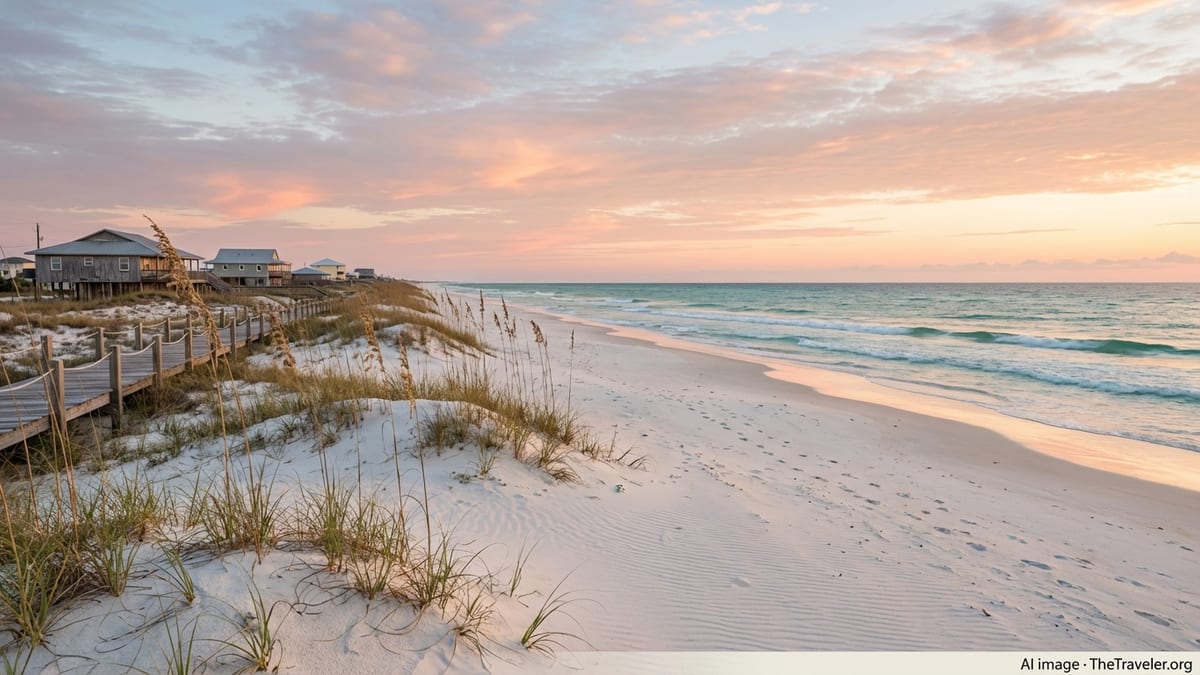
Alabama’s coastline is short compared to Florida’s, but its beaches punch far above their weight. Gulf Shores, Orange Beach, and nearby Fort Morgan have earned a string of recent destination awards from national travel magazines and online rankings, regularly appearing on lists of top family beaches, best small coastal towns, and most affordable U.S. beach getaways. Visitors come for wide stretches of white quartz sand, gentle surf under typical summer conditions, and a family-focused atmosphere that feels less chaotic than some spring break hotspots in neighboring states.
The region has been investing in both access and safety. In recent years, officials have added hundreds of new rental units and expanded visitor services while promoting a beach safety text alert system that delivers daily surf and flag-condition updates to phones. Alabama also passed a shark bite alert law named after a teen survivor from a neighboring state, creating a system to notify the public when a verified shark bite occurs along its coast. Serious incidents remain rare, but these measures speak to a broader emphasis on transparent safety communication to keep the beaches family-friendly.
Gulf Shores has also implemented strict rules during peak spring break weeks, including temporary bans on alcohol containers and certain gear on public beaches, with fines for violations. Travelers who are expecting a party scene may find the policies restrictive, but families and quieter visitors generally appreciate the calmer atmosphere. If you are planning a March or early April visit, review the latest local regulations and pack accordingly to avoid surprises once you arrive at the sand.
Beyond the beachfront condos and seafood shacks, the coastal region offers quieter escapes that many out-of-state travelers simply miss. West of Gulf Shores, the long spit of Fort Morgan mixes Civil War history with birding hotspots and views of Dauphin Island. To the north, Meaher State Park sits on an island in the Mobile Bay estuary near Spanish Fort, surrounded by wetlands threaded with boardwalks, fishing piers, and canoe routes. Staying at a cabin or campsite here offers a different take on the Alabama coast: one centered on sunrise over the marsh, the calls of wading birds, and the slow rhythm of tides rather than bar menus and souvenir shops.
Wild Alabama: Canyons, Caves, and the Year of Trails
If you imagine Alabama as flat farmland, the state’s northern half will quickly change your mind. Here, the last ripples of the Appalachian Mountains sink into deep sandstone gorges, forested plateaus, and clear streams. Recognizing how much these landscapes appeal to hikers and paddlers, the Alabama Tourism Department launched the “Year of Alabama Trails” campaign in 2025, highlighting what it calls “must-tread” routes for walking, biking, and paddling. For travelers, the campaign is a practical invitation to explore the state’s growing web of greenways, backcountry paths, and blueways.
Cane Creek Canyon Nature Preserve in Colbert County might be the single best example of a place that remains beloved by locals yet virtually unknown nationally. Once owned and stewarded by a local couple and now managed by the Land Trust of North Alabama, this roughly 700-acre preserve protects a sandstone canyon laced with waterfalls, cliffs, wildflower-rich glades, and more than 25 miles of marked hiking trails. Access is free, but visitors are asked to sign in at a small kiosk and respect the land. There are no ticket booths or trams here; a day at Cane Creek still means packing your own snacks, following color-coded blazes, and finding overlooks where you may be entirely alone.
Underground, Alabama protects an impressive network of caves that offer respite from summer heat and a glimpse into an ancient geological world. Cathedral Caverns State Park, near the small community of Grant, is known for its massive entrance and a “cathedral room” that ranks among the largest publicly accessible cave chambers in the country. Daily guided tours follow a paved path, making this one of the more accessible cave experiences in the Southeast. Closer to Birmingham, Rickwood Caverns State Park offers another show cave, complete with towering limestone formations, an underground pool, and seasonal events that draw families from across the region.
Even in more developed parts of the state, trails are reshaping how visitors experience cities. In Birmingham, greenways like the Kiwanis-Vulcan Trail, Five Mile Creek, and the Rail-Trail network link neighborhoods, parks, and cultural sites into bikeable loops. Around Lake Guntersville, trail segments highlighted during statewide outdoor recreation summits have drawn attention to the economic role of hiking and mountain biking. For travelers, the practical takeaway is simple: wherever you are staying in Alabama, there is likely a trailhead or greenway closer than you expect. Pack shoes you can walk in, and plan at least a half-day outdoors, even on a primarily urban trip.
The Black Belt and Small-Town Alabama: Culture Between the Coasts
Stretching roughly across the middle of the state, Alabama’s Black Belt takes its name from dark, fertile soil that once supported some of the South’s richest cotton plantations. Today, the region is a patchwork of small towns, rolling prairies, and pine forests that see far fewer visitors than either the beaches or the big cities. What the Black Belt offers is depth: traces of Indigenous and African American history, traditional crafts, and foodways that remain closely tied to the land.
One window into this culture is the Pepper Jelly Festival in Thomaston, held each year on the last Saturday in April. Hosted by the Alabama Rural Heritage Center, the event mixes live music, food stalls, and craft vendors with a celebration of the region’s distinctive pepper jelly, a sweet-heat preserve that locals pair with everything from cream cheese to grilled meats. Events like this are small by big-city standards, but they showcase the creativity of rural communities and give visitors a chance to support local artisans directly. Plan ahead for lodging, as many small towns have limited rooms and festivals can quickly fill nearby inns and bed-and-breakfasts.
Beyond festivals, the Black Belt is dotted with historic courthouses, churches, and main streets that still serve as gathering places. Many communities are working with universities and nonprofits to preserve aging buildings and expand heritage tourism. Travelers with a flexible schedule can turn a drive between Selma, Demopolis, and Monroeville into a multi-day ramble that mixes literary history, blues and gospel traditions, and stops at small cafes where the daily plate lunch still defines the menu.
Because infrastructure can be sparse, it is wise to travel the Black Belt with patience and preparation. Top off your gas tank when you can, research hours for small museums and visitor centers, and understand that some of the most rewarding moments may be unscripted conversations with residents who are surprised and pleased you chose to visit. If you approach these towns with humility rather than a checklist, you are likely to leave with stories and impressions no guidebook can fully capture.
Urban Alabama: Reinvented Cities and Emerging Food Scenes
While Alabama’s small towns and wild spaces are a major draw, its cities have been undergoing quiet reinventions of their own. Birmingham, once known primarily as an industrial and Civil Rights city, has developed into a regional hub for food, craft beer, and the arts. Former steel and rail yards now house restaurants, markets, and lofts, while the downtown and Southside neighborhoods mix historic architecture with galleries and music venues. Travelers can spend a full weekend without repeating a restaurant and still feel they have only scratched the surface.
Montgomery’s evolution has been driven in part by its growing national role as a center for historical reckoning. The success of institutions like the Legacy Museum and the National Memorial for Peace and Justice has drawn a wave of new hotels, cafes, and tour operators catering to visitors who arrive for a heavy theme but still appreciate a good meal and a comfortable place to decompress afterward. Recent additions, such as the Freedom Monument Sculpture Park and the statues of Rosa Parks and Helen Keller at the Capitol, give returning visitors new reasons to extend their stay.
Huntsville, long associated with rocket science and the U.S. Space & Rocket Center, has embraced its identity as a high-tech city in a largely rural state. Breweries, food halls, and adaptive reuse projects have sprung up in former textile mills and warehouses, creating walkable districts that appeal to both engineers and weekend visitors. The city’s location at the edge of Monte Sano and other natural areas also makes it an ideal base for travelers who want to blend hiking and mountain biking with museums and dining.
Across these cities, Alabama’s food scene reflects both tradition and experimentation. Travelers will still find plenty of barbecue, meat-and-three cafeterias, and fried seafood platters, but they will also encounter chefs who are reinterpreting Southern staples through global influences. It is increasingly common to see menus featuring local greens, Gulf fish, and heritage grains alongside Korean, West African, or Latin American flavors. Prices tend to be lower than in larger coastal metros, making Alabama’s cities a good value for travelers who build their itineraries around where they plan to eat.
Practical Tips, Safety, and When to Go
Alabama spans several climate zones, but in general you can expect hot, humid summers, mild winters, and shoulder seasons that can be glorious. For many travelers, the prime time to visit is late March through May and late September through early November, when temperatures are more moderate and outdoor activities are comfortable. Along the Gulf, summer is classic beach season but also the most crowded and storm-prone. If you are aiming for Gulf Shores or Orange Beach, consider May or early October for warm water with fewer crowds and slightly lower prices.
Reaching Alabama has become easier, particularly along the coast. Allegiant Air and other carriers have been adding low-cost routes into the Gulf Shores area, including new nonstop flights from Midwestern and Southern cities scheduled to start in 2026. Birmingham, Huntsville, and Montgomery also offer regular commercial service, and the state’s compact size means that flying into one city and driving a few hours can unlock very different landscapes. Renting a car remains the most practical option for exploring beyond urban centers, as public transportation is limited outside a few metro systems.
Safety considerations are similar to those in other Southern states but worth taking seriously. On the Gulf Coast, pay attention to official flag systems, local text alerts about surf conditions, and any advisories about marine life. During peak spring break periods, expect stepped-up enforcement of beach rules in Gulf Shores and neighboring communities, especially around alcohol and glass containers on the sand. Inland, heat and humidity can turn modest hikes into strenuous efforts; carry more water than you think you need, wear sun protection, and avoid the hottest midday hours, especially in summer.
Traveling through Civil Rights and Black Belt communities brings a different sort of responsibility. These are not theme parks but places where living residents carry generational memories of violence, displacement, and struggle. Dress respectfully for visits to churches and memorials, follow photography guidelines, and consider supporting local organizations through donations or purchases from community-owned businesses. If you join guided tours, listen more than you speak. The goal is not to consume history but to bear witness and learn.
The Takeaway
Alabama is often summarized by outsiders in a handful of clichés, yet the reality on the ground is more complicated, more beautiful, and more moving than those shortcuts allow. It is a place where you can spend the morning tracing the footsteps of Rosa Parks or crossing the Edmund Pettus Bridge, then find yourself that same evening watching pelicans skim the Gulf at sunset or listening to tree frogs in a mountain canyon. The contrast is not accidental; it reflects a state still negotiating its own story in public, in ways visitors can see and feel.
For travelers, Alabama works best as a destination for meaningful engagement rather than box-checking. Come prepared to slow down, to mix well-known sites with little-publicized trails and town squares, and to accept that some of your most lasting memories may come from a conversation with a museum docent, a park ranger, or a cook in a roadside cafe. With recent investments in trails, Civil Rights interpretation, and beach safety, the state is better equipped than ever to welcome curious visitors who want more than a tan.
If you are looking for a Southern trip that combines affordability, depth, and variety, Alabama deserves a place near the top of your list. It is not a finished product or a polished theme park, and that is precisely the point. In its evolving cities, quiet river deltas, and resilient small towns, you will find a version of the American South that is still being written, one conversation and one journey at a time.
FAQ
Q1. What is the best time of year to visit Alabama for a first trip?
The most comfortable months for a first visit are generally late March through May and late September through early November, when temperatures are milder, humidity is lower, and outdoor activities from hiking to beachgoing are more enjoyable.
Q2. Are Alabama’s Gulf Coast beaches family-friendly?
Yes, Gulf Shores, Orange Beach, and Fort Morgan are strongly oriented toward families, with lifeguarded areas, clear flag and safety systems, and seasonal rules that limit rowdy spring break behavior in favor of a calmer, more family-focused atmosphere.
Q3. How many days do I need to experience Alabama’s Civil Rights sites?
Plan at least three to four full days if you want to spend meaningful time in Birmingham, Montgomery, and Selma, allowing for museum visits, guided tours, and quiet reflection rather than rushing from site to site.
Q4. Do I need a car to travel around Alabama?
In most cases, yes. Major cities have rideshare options and limited public transit, but reaching state parks, small towns, and many Civil Rights and Black Belt sites is far easier and more flexible with a rental car.
Q5. Is it safe to swim in the ocean along Alabama’s coast?
Swimming is generally safe when you follow local guidance, heed the beach flag system, and pay attention to any text or public alerts about surf conditions, rip currents, or rare marine incidents.
Q6. What should I wear when visiting Civil Rights landmarks and churches?
Opt for modest, comfortable clothing such as long shorts or pants and shirts with sleeves, and avoid loud or beachwear-style outfits out of respect for the commemorative and often sacred nature of these spaces.
Q7. Are there good options for hiking and outdoor activities for beginners?
Yes, many state parks and preserves, including places like Cane Creek Canyon, Cathedral Caverns, and urban rail-trails, offer clearly marked, relatively easy routes suitable for beginners and families.
Q8. How affordable is Alabama compared to other Southern destinations?
Overall costs for lodging, dining, and attractions in Alabama tend to be lower than in many coastal metros or major tourist hubs, making it an attractive option for travelers watching their budgets.
Q9. Can I combine a beach vacation with Civil Rights and cultural sites in one trip?
Absolutely. With a rental car, it is straightforward to split a week between the Gulf Coast and cities like Montgomery, Birmingham, or Selma, creating a trip that balances relaxation with deeper historical exploration.
Q10. What is one overlooked area of Alabama you recommend adding to an itinerary?
The Black Belt region, including small towns like Thomaston and stretches between Selma and Demopolis, is often overlooked yet offers rich rural heritage, festivals, and landscapes that reveal a quieter, more intimate side of the state.