

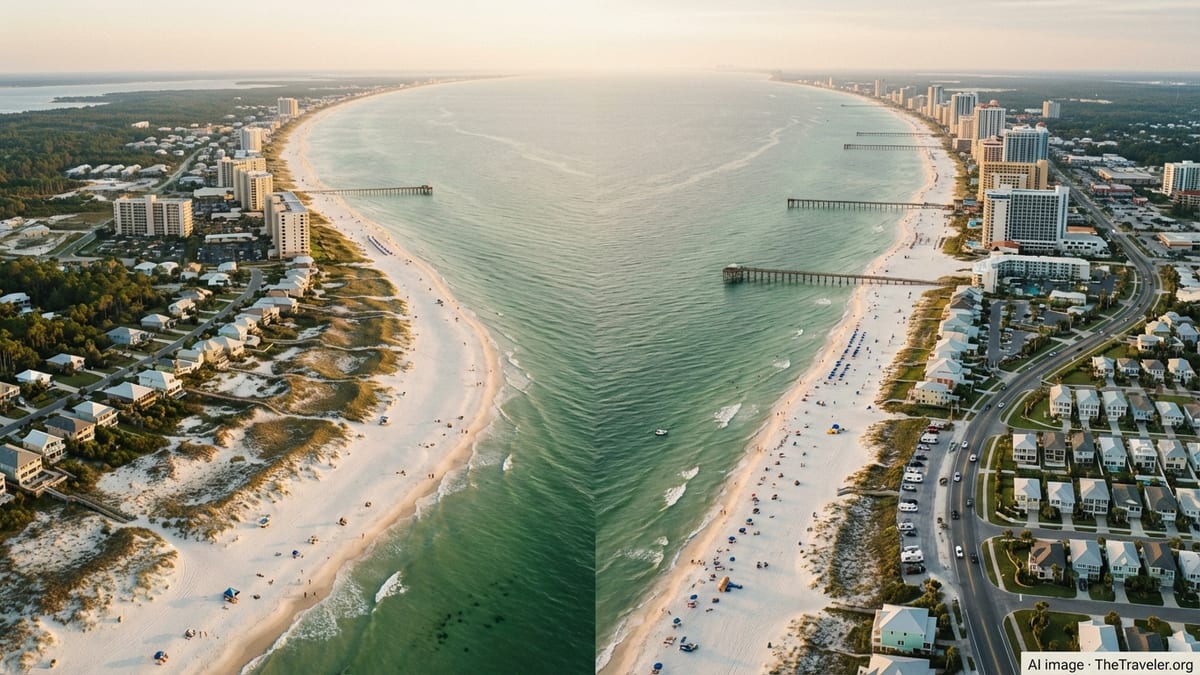
The northern Gulf of Mexico delivers some of America’s most dazzling sand and sea, and two neighboring stretches of shoreline compete hardest for vacation time and travel dollars: Alabama’s compact Gulf Coast and Florida’s sprawling Panhandle. Both offer sugar white sand, emerald water, family friendly attractions, and easy access from much of the United States. Yet they feel distinctly different once you settle in on the beach. Choosing between them is less about finding a clear winner and more about matching each coast’s personality to your travel style, budget, and timing.
Getting Oriented: Two Coasts, One Shared Gulf
Alabama’s Gulf Coast is short but concentrated, roughly 32 miles of shoreline centered on Gulf Shores, Orange Beach, and the Fort Morgan peninsula. This small footprint makes the destination feel cohesive. Most accommodations, restaurants, marinas, and attractions line a compact corridor, so first time visitors quickly learn their way around. Gulf State Park, the main public green space, anchors the area with dunes, trails, and a long fishing pier, while the Intracoastal Waterway adds a quieter, bayside atmosphere.
The Florida Panhandle stretches far wider. It runs from the Alabama state line near Perdido Key east through Pensacola Beach, Navarre, Destin, the Highway 30A communities, Panama City Beach, and all the way toward Mexico Beach and beyond. Distances between hubs can be significant, and each town feels like its own small world. You can road trip this shoreline over a week and never repeat the same vibe twice, from historic Pensacola to upscale, master planned beach towns along 30A and the high rise skyline of Panama City Beach.
Both coasts share the same luminous sand, largely made of weathered quartz that washed down from the Appalachian Mountains and settled along the Gulf. The water color can shift daily based on wind, surf, and recent storms, but on calm days it is famously clear and turquoise. Where they diverge is not in basic beauty but in scale, development patterns, and how each destination has evolved to serve different types of travelers.
Access is improving to both regions. Alabama’s Gulf Shores and Orange Beach rely heavily on regional airports in Pensacola and Mobile and on long distance driving from the Midwest and South. In recent seasons, budget carriers have added more seasonal routes into Gulf Shores itself, reflecting rising demand along this relatively small slice of coastline. The Florida Panhandle already benefits from several established airports, including Pensacola, Destin Fort Walton Beach, and Panama City Beach, with a wider range of airlines and connections.
Beach Quality, Water, and Natural Scenery
On first glance, the beaches of Alabama and the Florida Panhandle are remarkably similar. Powder fine, nearly blinding white sand squeaks underfoot, and on a sunny day the water glows electric green or blue. That consistency is part of the region’s draw. Travelers who care most about sand and surf will be satisfied on either coast, and many beach rankings routinely feature both Alabama locations such as Orange Beach and Florida Panhandle favorites such as Pensacola Beach and Destin among the best in the country.
Alabama’s advantage lies in its relatively narrow strip of development framed by significant protected land. Gulf State Park preserves more than two miles of undeveloped beach and extensive back dunes, while the Bon Secour National Wildlife Refuge on the Fort Morgan peninsula protects maritime forest, wetlands, and some of the last truly wild beachfront in the state. Spend a day here and you can easily forget you are only a short drive from high rise condos and busy seafood restaurants.
The Florida Panhandle, by contrast, offers a wider canvas of natural settings. Gulf Islands National Seashore preserves long, undeveloped barrier islands near Pensacola, where you can walk for ages with only shorebirds for company. East of Destin, a string of state parks and preserves protects both beach and rare coastal dune lakes. Highway 30A’s communities are interspersed with pine forest, dune lakes, and boardwalk lined dunes that give the shoreline a distinctly sculpted yet still natural feel. Travelers willing to explore beyond the central resort areas can find remote, quiet stretches even in peak season.
In terms of water clarity, Florida Panhandle destinations a bit farther from large river outflows often see slightly more consistent “emerald” days, especially around Destin and the eastern part of the Panhandle. Alabama’s water can be just as beautiful, but after heavy rain the nearby Mobile Bay and other waterways may briefly cloud the near shore Gulf. For most visitors, these variations are subtle and short lived, and both regions generally deliver the clear, swimmable water people expect of the northern Gulf.
Atmosphere and Vibe: Laid Back vs Lively
Atmosphere is where the two coasts begin to separate more clearly. Alabama’s Gulf Coast tends to feel like one big, friendly beach town. Gulf Shores retains a classic, family beach vibe, with low key souvenir shops, mini golf, and familiar chain restaurants alongside local spots. Orange Beach leans a bit more upscale with newer condos, marinas, and waterfront dining, yet it remains approachable. Even at busy times, the overall mood is relaxed rather than showy, and nightlife, while present, rarely dominates the scene.
The Florida Panhandle offers more pronounced contrasts. Pensacola Beach mixes historic charm from nearby downtown Pensacola with a strong festival culture and live music, including an active calendar of art and food events. Destin and neighboring Miramar Beach are decidedly lively in peak months, filled with family attractions, boat rentals, and crowded harbors that feel almost theme park like at times. Panama City Beach, long known as a major spring break hub, has diversified its appeal but still offers a high energy atmosphere with amusement parks, large scale entertainment complexes, and busy beachfront strips.
Then there is scenic Highway 30A, often considered the Panhandle’s most distinctive corridor. Here, meticulously planned communities such as Seaside, Rosemary Beach, and WaterColor deliver manicured streets, pastel or New Urbanist architecture, boutique shops, and a polished, sometimes exclusive, ambiance. The vibe here is more curated and design conscious than anywhere on the Alabama coast. Travelers who love walkable neighborhoods, café lined promenades, and bikeable boardwalks often gravitate to 30A.
If you want a beach trip that feels casual, straightforward, and grounded in traditional family fun, Alabama has the edge. If you prefer a pick your mood coastline, where you can move from a quiet state park to a trendy town square to a high rise nightlife zone in one vacation, the Florida Panhandle offers far more variety within a short drive.
Costs, Crowds, and Seasonality
Costs fluctuate year to year and vary by exact town, but some general patterns hold. Alabama’s Gulf Coast often represents slightly better value in peak season, particularly on lodging. Condo rentals, mid range hotels, and beach houses in Gulf Shores and Orange Beach can price below similar properties in marquee Panhandle communities, especially 30A, Destin waterfront, and certain parts of Panama City Beach. Dining prices tend to be broadly similar, with both coasts offering everything from budget friendly seafood shacks to upscale waterfront restaurants.
Crowds align with school breaks, holidays, and summer on both coasts, but the Florida Panhandle absorbs far more overall visitors simply because it is larger and more heavily developed. Destin, Panama City Beach, and popular 30A towns can feel very congested in June and July, with traffic backups, packed grocery stores, and limited same day restaurant availability. Alabama’s Gulf Coast certainly fills up, yet its smaller scale and limited road network mean visitors usually confine their driving to shorter distances once they arrive, which can feel less overwhelming.
In shoulder seasons, roughly April through early May and late September through October, both regions shine. Weather is often warm enough for swimming, humidity is more tolerable, and pricing softens. Snowbirds from the Midwest and Canada favor winter on both coasts, bringing a quieter but steady occupancy that still keeps restaurants and attractions open. If you travel in off peak months and book early, you can often find strong deals in both Alabama and less famous Panhandle towns.
One factor to consider is the lingering perception of the Panhandle as a major spring break destination. While many communities have introduced rules to curb disruptive party behavior and broaden their appeal to families and couples, some towns still attract large numbers of college students in March. Alabama’s Gulf Coast sees spring break visitors as well, yet its image and regulations tend to emphasize family oriented travel more consistently, which can result in a calmer atmosphere during that period.
Weather, Hurricanes, and Environmental Factors
Weather patterns across Alabama’s Gulf Coast and the Florida Panhandle are nearly identical. Summers are hot and humid, with daytime highs often in the upper 80s to low 90s Fahrenheit and warm water temperatures suitable for long swims. Winters are generally mild, with frequent sunny days and cooler nights. Both coasts sit within a hurricane prone region of the Gulf, so late summer and early fall bring a higher risk of tropical systems. Travel insurance, flexible plans, and close monitoring of forecasts are prudent for trips scheduled from August through October.
Beach conditions can change rapidly, and both states use colored flag systems to signal surf and current risks. Double red flags can close the water to swimming when rip currents are dangerous. Visitors sometimes underestimate these warnings because the Gulf can appear deceptively gentle on the surface. Whether you stay in Alabama or Florida, plan to follow local advisories and build in non beach backup activities in case conditions temporarily reduce water access.
The Florida Panhandle occasionally contends with harmful algal blooms such as red tide, which can cause respiratory irritation and fish kills along stretches of coast. These events are episodic and vary in intensity and location from year to year. Certain areas in Florida see them more often than others, and not every season brings significant impacts. Alabama’s shoreline can also be touched by regional blooms, although it tends to experience fewer high profile episodes. Because these environmental conditions are dynamic, checking recent beach reports in the weeks leading up to your trip is wise for either destination.
On the positive side, both coasts are increasingly focused on conservation. Beach nourishment projects, dune restoration, sea turtle protection programs, and expanded parklands reflect a recognition that the natural environment is the foundation of the tourism economy. Travelers who prioritize sustainability can find eco focused accommodations, nature tours, and volunteer opportunities in both Alabama and Florida, although the Panhandle’s larger network of parks and preserves offers more formal hiking and paddling routes.
Family Fun, Culture, and Things To Do Off the Sand
Families often choose between these coasts based on what there is to do beyond building sandcastles. Alabama’s Gulf Coast packs a surprising number of attractions into a small area. Gulf State Park’s extensive trail system invites cycling and wildlife watching, while its fishing pier is a favorite for both anglers and casual strolls at sunset. Waterville USA and other water parks offer slides and lazy rivers for kids who need a break from saltwater. The Alabama Gulf Coast Zoo, relocated to a larger site inland, gives families a half day outing with animals and shaded walking paths.
Entertainment districts such as The Wharf in Orange Beach combine shopping, dining, a marina, and a concert venue that draws major touring acts. Deep sea and inshore fishing charters depart from several marinas, and dolphin cruises remain a perennial favorite. Historic sites, while fewer than in some Florida cities, include nearby forts and small museums that interpret coastal history and the region’s maritime heritage.
The Florida Panhandle, by virtue of its size, naturally offers a deeper bench of attractions. Destin’s harbor is lined with excursion companies offering everything from snorkeling trips and sunset sails to pirate themed cruises and parasailing. Panama City Beach adds marine attractions, amusement parks, and large scale family entertainment complexes within a short drive of most accommodations. Pensacola introduces a robust arts scene and historic core, with walkable streets, galleries, and seasonal festivals that give trips a richer cultural dimension.
Highway 30A adds yet another layer, particularly for travelers who enjoy biking and strolling. Miles of multiuse paths connect beach communities, lakes, and state parks, making it easy to spend days without getting in a car. Outdoor concerts, farmers markets, and food truck gatherings pop up throughout the year. For culture seekers, the Panhandle’s combination of historic districts, art driven beach towns, and event calendars weighted toward music and food festivals can make the coastline feel more varied and sophisticated than Alabama’s still largely resort centered scene.
Accommodations, Dining, and Nightlife
Where you stay and what you eat shape any beach vacation as much as the shoreline itself. On Alabama’s Gulf Coast, condos and beach houses dominate the front row, with a selection of mid range hotels and a few full service resorts sprinkled in. The overall look is practical rather than glamorous: large buildings, broad balconies, and straightforward amenities like pools and grills. For many families and groups, this no nonsense lodging mix is a strength, providing kitchens and multiple bedrooms at more approachable prices than some Florida hot spots.
Dining in Gulf Shores and Orange Beach focuses on fresh Gulf seafood, barbecue, and casual Southern fare. Iconic open air bars and restaurants along the Intracoastal Waterway serve as gathering places for live music and sunset views. While there are upscale options, the overall food scene feels relaxed and unpretentious. Nightlife centers on a handful of well known venues, seasonal concerts, and waterfront bars that stay lively without turning the destination into an all night party zone.
The Florida Panhandle’s lodging options run a wider spectrum. Beachfront high rises in Destin and Panama City Beach cater to families and groups seeking resort style pools, on site restaurants, and organized activities. Along 30A, carefully designed neighborhoods offer vacation rentals with walkable access to carefully curated town centers and beach clubs. There are also smaller inns, boutique hotels, and traditional motels tucked into older communities and state park cabins for travelers who prefer simpler surroundings.
Culinary experiences mirror this diversity. Classic Gulf seafood joints stand side by side with chef driven restaurants, wine bars, artisan bakeries, and coffee shops, particularly in and around 30A and downtown Pensacola. Food festivals and special dining events dot the calendar, drawing regional attention. Nightlife ranges from family friendly live music venues and beachfront tiki bars to more polished lounges and rooftop spots. Travelers who enjoy exploring different dining styles and evening atmospheres throughout a weeklong stay often find the Panhandle especially rewarding.
Who Should Choose Alabama and Who Belongs in the Panhandle
After weighing beaches, budgets, activities, and ambiance, the better coastline for you comes down to priorities. Alabama’s Gulf Coast shines for travelers seeking a straightforward, family first destination with excellent beaches, concentrated attractions, and slightly lower overall trip costs. It is particularly well suited to multi generational groups who value convenience, want everything within a short drive, and prefer a friendly, unpretentious environment that still offers enough restaurants, shops, and off beach entertainment to fill a week.
The Florida Panhandle better serves travelers who prize variety and are willing to navigate a larger, sometimes busier region to enjoy it. Beach lovers who like to sample different towns and parks over the course of a single trip, food enthusiasts chasing standout restaurants, and couples seeking both quiet natural escapes and lively evenings are likely to prefer Florida’s options. Those who appreciate carefully designed, walkable beach communities with a strong sense of place may gravitate toward 30A in particular.
Both coasts work well for road trip itineraries. You might even split a longer vacation, spending a few days in Gulf Shores or Orange Beach before moving east into the Panhandle, or vice versa. Experiencing them back to back underscores how much they share, and how distinct they can feel once you step off the sand and into local neighborhoods.
Ultimately, neither Alabama nor the Florida Panhandle holds an absolute advantage in beauty. The question is not which coastline is objectively superior but which one aligns more closely with your travel style, tolerance for crowds, budget, and appetite for exploration. Keep those factors in focus, and you are unlikely to be disappointed on either shore.
The Takeaway
Alabama’s Gulf Coast and the Florida Panhandle sit side by side on the map, yet they offer meaningfully different experiences once you arrive. Alabama concentrates its appeal into a compact stretch of shore where families can settle in easily, enjoy a classic beach town atmosphere, and take advantage of an impressive roster of attractions and parks woven into a relatively small geographic area. It is approachable, friendly, and often a bit easier on the wallet in peak season than some of Florida’s marquee spots.
The Florida Panhandle, by contrast, invites you to think of the coastline as a series of chapters. Historic urban energy near Pensacola, high octane fun in Destin and Panama City Beach, and polished, village like charm along Highway 30A collectively create a destination that can morph from serene to bustling in the space of a short drive. Its larger selection of airports, accommodations, cultural offerings, and dining experiences give travelers more ways to tailor a trip, at the cost of occasionally heavier traffic and higher prices in the most coveted neighborhoods.
If you want a simple choice, pick Alabama when you crave a relaxed, family oriented beach escape where logistics are easy and the trip revolves around sand, surf, and nearby attractions. Pick the Florida Panhandle when you want a dynamic vacation that blends beach time with town hopping, food and music, and a wider menu of landscapes and experiences. The good news is that the two coasts complement rather than compete with each other, and many travelers eventually discover that the best answer to which coastline is better is to experience both.
FAQ
Q1. Which coast has better beaches, Alabama or the Florida Panhandle?
The sand and water are similar on both coasts, with sugar white beaches and clear Gulf water. The Florida Panhandle offers more miles of shoreline and a wider mix of beach types, while Alabama concentrates its beauty into a shorter, highly accessible stretch.
Q2. Is Alabama generally cheaper than the Florida Panhandle for a beach vacation?
Alabama’s Gulf Coast often provides slightly better value, especially on condos and family sized rentals, though prices vary by season and property. High demand areas in the Panhandle, such as popular 30A towns and central Destin, frequently command higher peak season rates.
Q3. Which destination is better for families with young children?
Both are excellent, but Alabama’s compact layout, family focused attractions, and calmer overall vibe make it especially easy with younger kids. The Florida Panhandle adds more variety and theme park style attractions for older children and teens who want a busier scene.
Q4. How do crowds compare between Alabama and the Florida Panhandle?
Both get busy in summer and during school breaks, but the Florida Panhandle sees larger overall numbers and heavier traffic in popular hubs. Alabama still feels lively yet typically less overwhelming, partly because visitors spread across a smaller, more defined area.
Q5. Are there significant differences in weather or hurricane risk?
Weather patterns and hurricane risk are very similar. Both coasts share hot, humid summers, mild winters, and a higher chance of tropical systems from late summer into fall, so trip planning considerations are nearly the same.
Q6. Which coast offers more nightlife and dining options?
The Florida Panhandle has the broader range, from casual beach bars to upscale restaurants and lively harbors. Alabama has a solid dining scene and some busy venues, but its nightlife is generally more low key and concentrated in a few districts.
Q7. Is it easier to fly into Alabama’s Gulf Coast or the Florida Panhandle?
The Florida Panhandle currently offers more airports and flight options, including Pensacola, Destin Fort Walton Beach, and Panama City Beach. Alabama relies on nearby regional airports and growing seasonal service into Gulf Shores, so choices are improving but remain more limited.
Q8. Which destination is better if I want a quieter, nature focused trip?
Both coasts have excellent parks and preserves. Alabama’s Bon Secour National Wildlife Refuge and Gulf State Park provide easy access to wild dunes and trails, while the Florida Panhandle offers additional options like Gulf Islands National Seashore and multiple state parks and dune lakes for extended exploration.
Q9. Does the Florida Panhandle still feel like a spring break party zone?
Some towns retain a strong spring break presence in March, especially certain parts of Panama City Beach, though many communities now emphasize family and couples travel. Alabama’s Gulf Coast also hosts spring breakers but tends to maintain a more consistently family oriented atmosphere.
Q10. If I have one week, should I split time between Alabama and the Florida Panhandle?
Splitting a week can work well if you like to move around and sample different vibes. A few nights in Gulf Shores or Orange Beach followed by time in Pensacola, Destin, or along 30A creates a varied itinerary, though it does mean packing up at least once during your stay.