

More news on this day
Alaska Airlines is adding Tulsa to its growing network of midcontinent gateways, with new year-round daily nonstop flights to Seattle and San Diego designed to give Oklahomans easier access to the West Coast and beyond.
Get the latest news straight to your inbox!
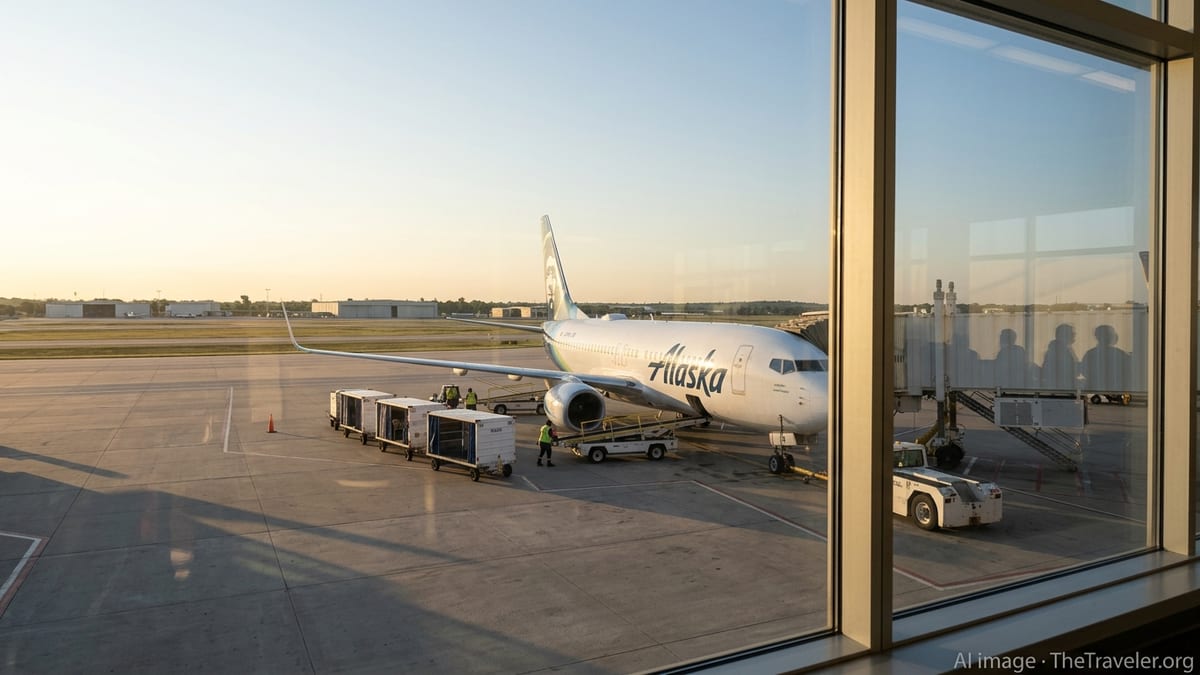
New Daily Routes Put Tulsa on Alaska’s Map
The new service links Tulsa International Airport with Seattle-Tacoma International Airport and San Diego International Airport on daily nonstop flights scheduled to operate year-round. Publicly available schedule data indicates that the additions are part of Alaska Airlines’ broader strategy of deepening its presence in key coastal markets while tapping demand from midsize cities in the central United States.
The Tulsa to Seattle route is expected to plug travelers directly into Alaska’s primary hub, where passengers can connect to destinations across the Pacific Northwest, Alaska, Hawaii and an expanding roster of international cities. The Tulsa to San Diego flight, meanwhile, ties Oklahoma to a fast-growing West Coast focus city that has become an increasingly important part of the carrier’s domestic network.
Airline filings and schedule services show that both routes are planned as daily operations, providing consistent options for business travelers, visiting friends and relatives traffic, and leisure passengers heading in both directions. The year-round designation signals confidence that demand will extend beyond traditional summer peaks.
With the launch, Tulsa gains its first nonstop links to both Seattle and San Diego on Alaska Airlines, reducing travel times that previously required a connection through other hubs. The new nonstop options are positioned to compete for travelers who might otherwise connect on larger legacy carriers.
Strategic Play in Seattle and San Diego
The Seattle flight strengthens Alaska’s position at Seattle-Tacoma, where the airline has steadily expanded its long-haul and international offerings. By feeding passengers from Tulsa directly into Seattle, the carrier can support load factors on routes to Asia, the Pacific and major domestic markets while offering Tulsa travelers a one-stop option to a wider global network through alliance and codeshare partners.
San Diego has emerged as a key growth market for Alaska Airlines in recent years, with published coverage highlighting a sharp increase in departures and new routes from the Southern California city. The new Tulsa service adds another spoke to that growing hub, giving San Diego travelers a direct link into the Oklahoma market and onward connectivity through interline partners.
Industry observers note that San Diego’s expanding role within Alaska’s system helps diversify the airline’s network away from a single dominant hub. The addition of Tulsa to San Diego’s route map aligns with that approach, creating more point-to-point connectivity that can appeal to travelers seeking to avoid major coastal hubs.
The paired launches also reflect a broader trend in U.S. airline planning, in which carriers look to connect secondary and midsize cities directly to coastal hubs to capture both business traffic and the increasingly important leisure and “bleisure” segment.
Benefits for Tulsa Travelers and Regional Economy
For Tulsa-area travelers, the new nonstops are expected to cut hours from typical itineraries to the Pacific Northwest and Southern California by eliminating connections. Nonstop flights often provide more predictable travel times, fewer missed connections and a more straightforward experience for families and infrequent flyers.
Tourism and business interests in the Tulsa region are likely to highlight the service as a tool for attracting investment and visitors from West Coast technology, energy, defense and creative industries concentrated around Seattle and San Diego. More direct air service can also support convention and event planners looking to draw attendees from across the western United States.
Regional mobility stands to improve for students and professionals as well, with easier access to universities, research centers and corporate campuses located in and around the two coastal cities. The ability to reach those markets in a single flight can be a selling point for companies considering Tulsa for expansion or relocation.
In addition, residents in smaller communities across eastern Oklahoma may benefit indirectly, using Tulsa as a more convenient gateway for West Coast trips rather than driving or connecting through more distant hubs.
Connectivity and Schedule Highlights
According to publicly accessible schedule information, the Tulsa to Seattle and Tulsa to San Diego flights are structured to support both local and connecting traffic. Typical timings are designed so that departures from Tulsa reach the coastal hubs early enough in the day to enable onward same-day connections, while return trips aim to arrive back in Oklahoma at practical evening times.
In Seattle, the new Tulsa flight is expected to interface with Alaska’s departures to major markets such as Anchorage, Portland, the San Francisco Bay Area and select international destinations. Travelers connecting onward to Hawaii and other long-haul leisure routes may also find the new schedule attractive.
In San Diego, the Tulsa arrival is positioned within Alaska’s expanding bank of departures to western and central U.S. cities. This allows Oklahoma-based travelers to use San Diego as a jumping-off point for trips throughout the Southwest and West Coast, while giving San Diego residents a new nonstop option to reach the central plains.
While specific aircraft assignments can vary, similar midcontinent routes in Alaska’s network are typically operated by single-aisle jets configured with premium and economy cabins, Wi-Fi and streaming entertainment, reflecting the carrier’s standard domestic product.
Competitive Landscape and Traveler Takeaways
The move into Tulsa with nonstops to Seattle and San Diego places Alaska Airlines more directly in competition with other major carriers that currently rely on hub connections for Oklahoma-to-West Coast itineraries. The availability of new nonstop options may prompt fare adjustments and schedule changes from competitors serving overlapping markets.
For travelers, the additions increase choice and may create opportunities to earn and redeem loyalty currency on a new set of routes. Passengers already enrolled in Alaska’s frequent flyer program can integrate the Tulsa flights into broader trip planning that includes partner airlines.
Travel analysts suggest that the Tulsa routes will be closely watched as an indicator of how well Alaska’s strategy of pairing coastal hubs with midsize interior cities continues to perform. Strong demand could encourage similar additions from other midcontinent airports looking for direct ties to Seattle and San Diego.
For now, the new year-round daily nonstops from Tulsa to Seattle and San Diego provide an additional option for Oklahomans seeking easier access to the Pacific coast, while reinforcing Alaska Airlines’ efforts to build out its network reach in both of its key West Coast centers.