

More news on this day
Travel to Italy is poised for another record-breaking year in 2026 as Alaska Airlines joins Delta, United, American, Air Canada and Italy’s ITA Airways in unveiling a wave of new and expanded routes that will give North American travelers more nonstop options than ever to Rome and beyond.
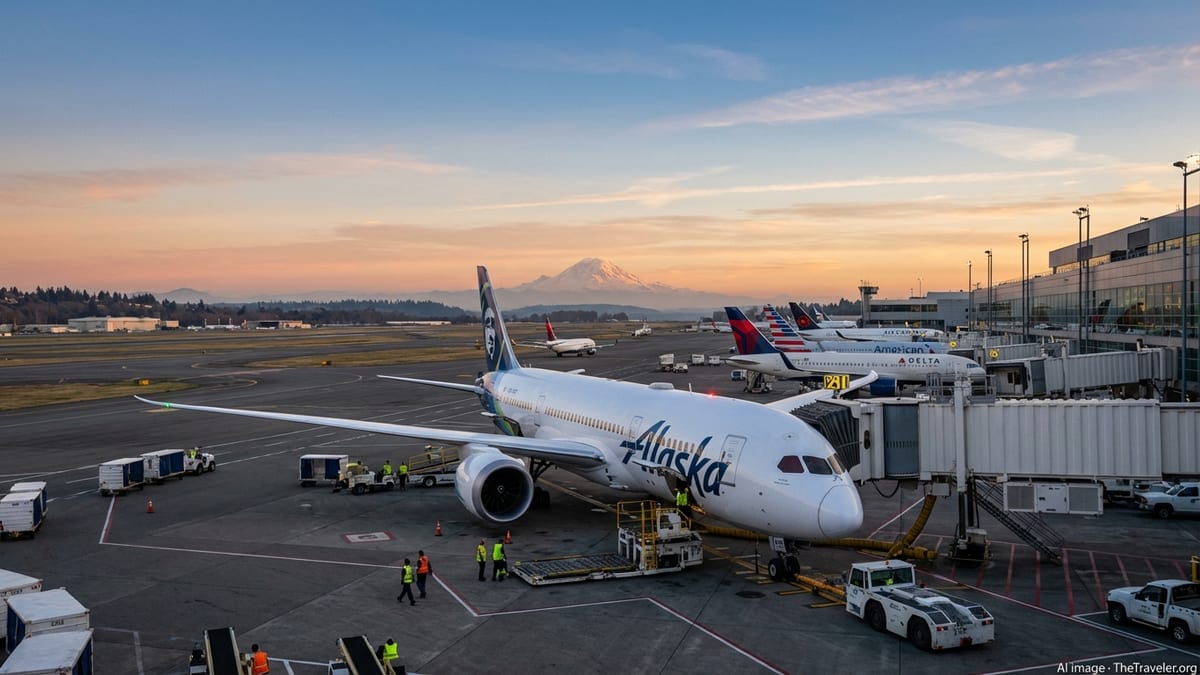
Alaska Airlines Bets Big on Rome From Its Seattle Hub
Alaska Airlines, long focused on West Coast and domestic flying, is making its boldest international move yet with a new nonstop service between Seattle–Tacoma International Airport and Rome–Fiumicino, set to launch on April 28, 2026. Tickets are already on sale, with introductory roundtrip fares that are intended to lure both leisure and business travelers looking for a direct path from the Pacific Northwest to Italy’s capital.
The daily, seasonal flight will be operated by Alaska’s new Boeing 787-9 aircraft, marking the carrier’s first European destination and signaling a shift toward true long-haul operations. The twin-aisle jets bring lie-flat suites in business class, a refreshed premium economy cabin and upgraded inflight entertainment and connectivity, aiming to compete head-to-head with the global network airlines that have dominated the route map until now.
For Seattle, the new Rome link deepens the city’s role as a transpacific and now transatlantic gateway. The service will plug into Alaska’s extensive West Coast network, allowing one-stop Rome access from secondary cities across Washington, Oregon, California and Alaska that have historically required at least one connection on another carrier to reach Italy.
The Rome launch also dovetails with Alaska’s broader 2026 expansion, including new long-haul service from Seattle to London Heathrow and additional Asia routes using widebody aircraft gained through its acquisition of Hawaiian Airlines. Together, these moves mark a strategic bid to evolve from a largely domestic player into a more globally connected airline anchored in Seattle.
Delta, United and American Deepen Their Italian Footprints
Alaska’s Rome debut lands in the middle of an aggressive push into Italy by the three largest U.S. network carriers, which are steadily growing their share of transatlantic capacity to the country. Delta Air Lines, already a major player in the Italy market, is adding new seasonal flights to secondary Italian destinations, including service from New York–JFK to Olbia on the island of Sardinia. The route targets upscale leisure travelers seeking beach resorts and coastal escapes that go beyond Rome, Venice and Florence.
United Airlines is also leaning into Italy’s regional appeal. In its summer 2026 schedule, United will launch the first nonstop link between the United States and Bari in Puglia, giving American travelers direct access to the country’s Adriatic coast and whitewashed hill towns. The new Bari service joins an already robust United Italy portfolio that includes multiple daily flights to Rome and Milan as well as seasonal service to Venice and other cities.
American Airlines, for its part, continues to build a network that funnels Italy-bound travelers through its hubs in Dallas–Fort Worth, Philadelphia and Miami. The carrier is expanding its summer offerings to Milan and other European gateways, positioning itself as a key option for travelers from the southern and central United States who prefer to connect through American’s own domestic network rather than via competing hubs in the Northeast.
Combined, the additional capacity from Delta, United and American means more departure times, more regional gateways and a broader mix of cabins and price points. For travelers, that is likely to translate into increased competition on fares, particularly outside peak summer holiday periods, and more chances to reach smaller Italian cities without lengthy train rides or intra-Europe connections.
Air Canada and ITA Airways Add New Gateways Into Italy
The surge in Italy service is not limited to U.S. carriers. Air Canada is preparing its own slate of new routes into the country, including fresh service from Montreal to Catania in Sicily. The move will create one of the first direct links between Quebec and southern Italy, catering to both leisure travelers and members of the large Italian diaspora in Canada who have family roots in the region.
Air Canada’s broader 2026 network plan reinforces Montreal and Toronto as transatlantic gateways, pairing Italy with other Mediterranean destinations such as Palma de Mallorca and offering travelers in Eastern Canada more one-stop access to sunny European coastlines. These additions come as Canadian demand for Europe travel continues to climb, especially during shoulder seasons when milder weather and lower crowds make Italy particularly attractive.
Italy’s flag carrier ITA Airways is also leaning harder into the North American market. In summer 2026 the airline will debut Rome–Houston service, the first-ever nonstop connection between the Texas hub and Italy. The flights will run several times a week initially, using Airbus A330-900neo aircraft and timed for onward connections across Italy and the wider Mediterranean.
For U.S. travelers in the central and southern states, Houston’s addition to ITA’s map offers an alternative to East Coast hubs, reducing total journey time and giving new one-stop access to cities beyond Rome via ITA’s domestic network.
What Travelers Should Know About Schedules, Seasons and Aircraft
While the headlines focus on new city pairs, the details of dates, seasonality and aircraft type will matter for travelers planning 2026 trips to Italy. Alaska’s Seattle–Rome route is set up as a daily seasonal service, beginning April 28, 2026 and expected to run through the peak spring and summer months. Flights are scheduled to connect with Alaska’s busiest bank of West Coast departures and arrivals to streamline same-day connections in Seattle.
Most of the new Italy routes being rolled out by Delta, United, American and Air Canada follow a similar pattern: summer-focused schedules, typically starting in late April or May and wrapping up by early fall. Many operate three to five times a week rather than daily, which means flexibility with travel dates will be key to finding nonstop options and competitive pricing, especially to secondary cities such as Bari, Catania or Olbia.
Onboard, travelers will see a mix of modern widebody jets like the Boeing 787-9 and Airbus A330-900neo, alongside more traditional transatlantic workhorses such as the Boeing 767-300ER. These long-haul aircraft allow carriers to offer lie-flat business class seats, premium economy sections and upgraded inflight connectivity, standardizing the long-haul experience across more of their networks.
However, not every route will feature the exact same product. Prospective passengers should look closely at seat maps, cabin layouts and amenity descriptions when booking, especially if they are using points or paying a premium for business or premium economy. Differences in seat width, bed length, privacy doors and entertainment systems can be significant from one aircraft type to another, even within the same airline.
How the 2026 Italy Boom Changes Trip Planning
For North American travelers eyeing Italy in 2026, the wave of new routes will open options that were previously complicated or time-consuming. Nonstop access from Seattle to Rome, Houston to Rome, Montreal to Sicily and other city pairs means fewer connections, shorter total travel times and less risk of missed flights or misplaced baggage during tight European transfers.
The growth in secondary Italian gateways also allows travelers to design more targeted itineraries. Instead of flying into Rome or Milan and doubling back on domestic flights or long train journeys, visitors can start their trips closer to Puglia’s coastline, Sicily’s baroque towns or Sardinia’s beaches. For repeat visitors, that makes it easier to explore regions that have long been popular with Europeans but harder to reach from North America.
At the same time, expanded capacity into Italy’s main hubs is likely to keep pressure on fares, especially outside the peak window from late June through August. Savvy travelers willing to depart from nontraditional hubs, or to fly shoulder-season dates in May, early June or September, may benefit from promotional pricing as airlines work to fill new seats on freshly launched routes.
With schedules still being fine-tuned and additional announcements possible as summer 2026 approaches, experts recommend booking early for peak summer travel, monitoring fare changes and being prepared to adjust dates or departure airports to capture the best combinations of price, schedule and onboard product across this rapidly expanding North America–Italy corridor.