

More news on this day
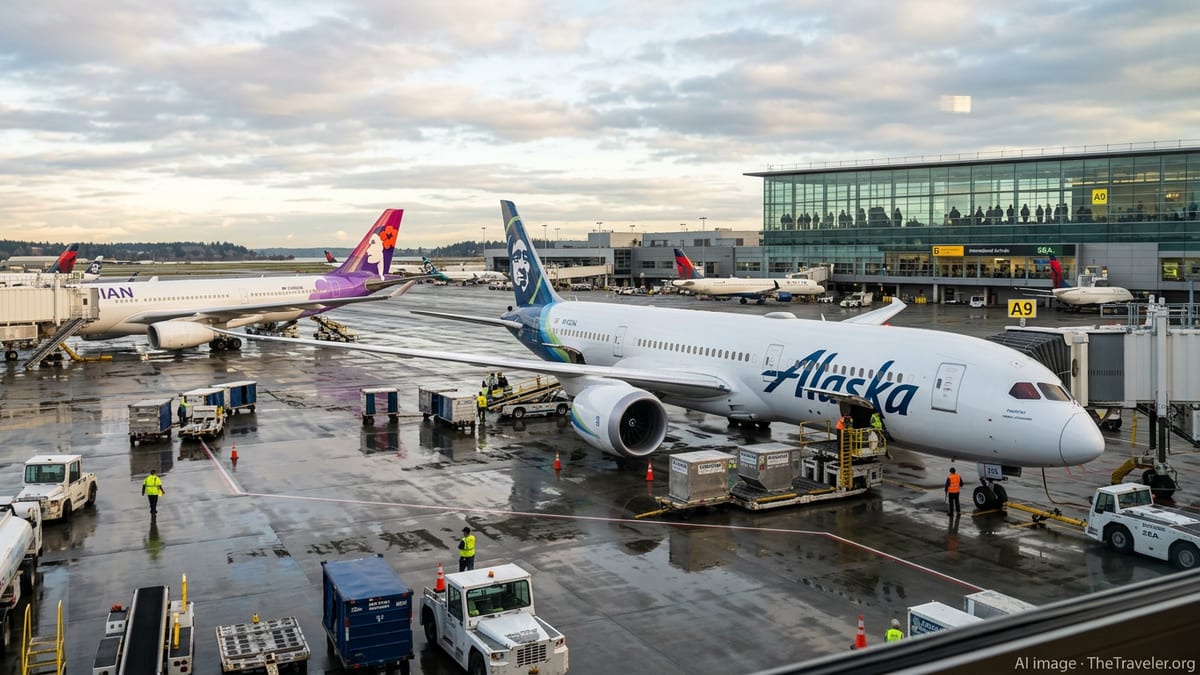
Alaska Airlines has created three new regional leadership roles spanning Europe, Asia and the South Pacific, appointing seasoned aviation executives to accelerate its international expansion and refine a more premium long-haul experience as the carrier prepares new routes and products across the globe.
Veteran Leaders Tapped for Europe, Asia and South Pacific
In a move that underscores its global ambitions, Alaska Airlines has named three aviation veterans to newly defined regional leadership posts covering Europe, Asia and the South Pacific. The roles are designed to knit together the carrier’s growing international passenger and cargo networks as it integrates Hawaiian Airlines operations and prepares for expanded long-haul flying from its Seattle hub.
Cees Verkerk, a long-time Alaska executive with a background in station operations and airport services, has been tasked with steering the airline’s commercial and operational strategy across Europe. His remit includes supporting new long-haul routes from Seattle and ensuring ground operations, partnerships and cargo flows are aligned with the carrier’s premium-focused vision for transatlantic flying.
In Asia, Alaska has appointed an experienced regional leader with deep ties to Pacific Rim markets to oversee sales strategy, local partnerships and brand positioning. The Asia director will be closely involved in building out connectivity from the U.S. West Coast and Hawaii to key business and leisure destinations across Northeast and Southeast Asia as the combined Alaska and Hawaiian network matures.
For Australia and the broader South Pacific, a director with prior leadership experience at Hawaiian Airlines has been tapped to integrate existing South Pacific routes and prepare for new services that leverage Hawaii and Seattle as dual gateways. That role will span both passenger and cargo development, with a focus on high-yield traffic and tourism flows between North America, Australia, New Zealand and the islands of the Pacific.
Supporting a Rapidly Expanding Global Network
The appointments come as Alaska Airlines moves beyond its traditional focus on North American and intra-Pacific flying to build a more globally balanced network. In recent quarters, the airline has detailed plans for new nonstop service from Seattle to major European capitals and secondary hubs, alongside expanded transpacific flying made possible by Hawaiian’s widebody fleet and a growing order book of Boeing 787 aircraft.
New European routes from Seattle, including planned service to Rome and additional northern European gateways, are slated to begin from 2026, positioning Seattle as a convenient one-stop entry point into North America for travelers from Italy, the United Kingdom and the Nordic region. The European regional director will coordinate closely with airport authorities, tourism boards and cargo partners as Alaska works to fill widebody cabins year-round.
Across Asia, the combined Alaska and Hawaiian networks are being reshaped to emphasize connectivity between Honolulu, Seattle and major cities such as Tokyo and Seoul, with an eye toward additional markets as aircraft and regulatory approvals come online. The new Asia regional director will play a central role in balancing point-to-point demand with connecting traffic, especially for premium cabins and high-value cargo.
In Australia and the South Pacific, the strategy hinges on deepening the airline’s long-standing brand recognition in Oceania, inherited in part from Hawaiian’s decades of service, while introducing a more seamless product for travelers connecting onward to the U.S. mainland and Alaska. That regional leader will be responsible for optimizing schedules, alliances and distribution strategies to ensure new capacity is profitably deployed.
Premium Experience and Fleet Investments Drive Strategy
The leadership reshuffle is paired with a significant push to elevate the onboard experience on long-haul flights. Alaska and Hawaiian executives have been detailing a program to modernize widebody cabins, particularly the Airbus A330 fleet and incoming Boeing 787 aircraft, with emphasis on lie-flat business-class suites, improved privacy, refreshed interiors and an expanded premium economy product.
Alaska is positioning these upgrades as a competitive differentiator as it goes head-to-head with global network carriers on some of the most hotly contested transatlantic and transpacific routes. The new regional directors will be responsible for tailoring the premium service proposition to local expectations in Europe, Asia and Australia, from wine selections and catering to language skills, lounge access and ground handling standards.
The airline has also been rolling out enhancements to its loyalty ecosystem, including a new premium co-branded credit card and a unified rewards program spanning Alaska and Hawaiian flights. These changes are intended to appeal to frequent flyers who expect seamless recognition and benefits when flying across continents, and will be a key tool for regional leaders as they court corporate travel accounts and high-spend leisure customers.
On the ground, Alaska is leaning on long-term catering and onboard service partnerships to support consistent delivery of its upgraded product. Regional directors will work with airport operations teams to align lounge offerings, priority services and irregular-operations handling with the airline’s promise of a more polished global experience.
Cargo, Partnerships and New Revenue Streams
Beneath the passenger-facing headlines, cargo is a central part of Alaska’s international growth plan. Recent agreements with specialist general sales agents in Europe, including new representation for its United Kingdom and Italian markets, are intended to ensure the belly capacity of its long-haul widebody aircraft is fully utilized.
The European regional director will coordinate closely with these cargo sales partners, seeking to build eastbound and westbound flows that complement passenger demand. Pharmaceuticals, e-commerce shipments and high-value perishables are among the target segments, particularly on routes linking industrial centers in Europe with tech, aerospace and agricultural hubs around Seattle and the broader West Coast.
In Asia and Oceania, Alaska will lean on Hawaiian’s long experience moving cargo across the Pacific, with the new regional leaders tasked with harmonizing rates, handling standards and distribution across multiple countries. The objective is to develop a network where freight can move efficiently between Europe, Asia, Australia and North America using Alaska’s hubs as through points, rather than treating each region as a standalone end market.
At the same time, alliances and codeshare relationships remain crucial. Alaska’s membership in the oneworld alliance gives it access to established global partners, but the new directors are expected to pursue deeper bilateral arrangements where they can improve schedule coordination, lounge reciprocity and corporate contracting in their regions. Those efforts are particularly critical in Europe and Asia, where competition from established global players remains intense.
What Travelers Can Expect Next
For travelers, the immediate impact of the new regional director appointments will be felt in how quickly Alaska translates its global ambitions into concrete schedule changes, new destinations and consistent service standards. Customers in Europe can expect additional long-haul announcements from Seattle and potentially from West Coast secondary cities as aircraft become available and regulatory approvals are secured.
In Asia, the focus in the near term is likely to be on strengthening existing gateways like Tokyo and Seoul with better timed connections and an improved premium product, while evaluating opportunities in markets such as Taiwan and key Southeast Asian cities. The Asia regional director’s mandate includes building local brand awareness so that Alaska becomes a recognizable option for travelers who may be more familiar with legacy Asian or European carriers.
For Australia and the South Pacific, the new leadership structure aims to provide more seamless journeys between Oceania, Hawaii and the continental United States. That could mean additional frequencies on popular leisure routes, refined schedules for business travelers and improved coordination of lounge and ground services in major Australian and New Zealand airports.
While specific route and product announcements will roll out over the coming months and years, Alaska’s decision to install regionally focused leadership across Europe, Asia and Australia signals that its international expansion is shifting from concept to execution. For passengers watching the West Coast carrier evolve into a global player, the newly appointed regional directors will be among the key figures shaping how and where they fly next.