

More news on this day
A United States passenger who tried to open a cabin door on an Alaska Airlines flight mid-flight has pleaded guilty in federal court, highlighting ongoing concerns about disruptive behavior in the air and the serious criminal penalties that can follow.
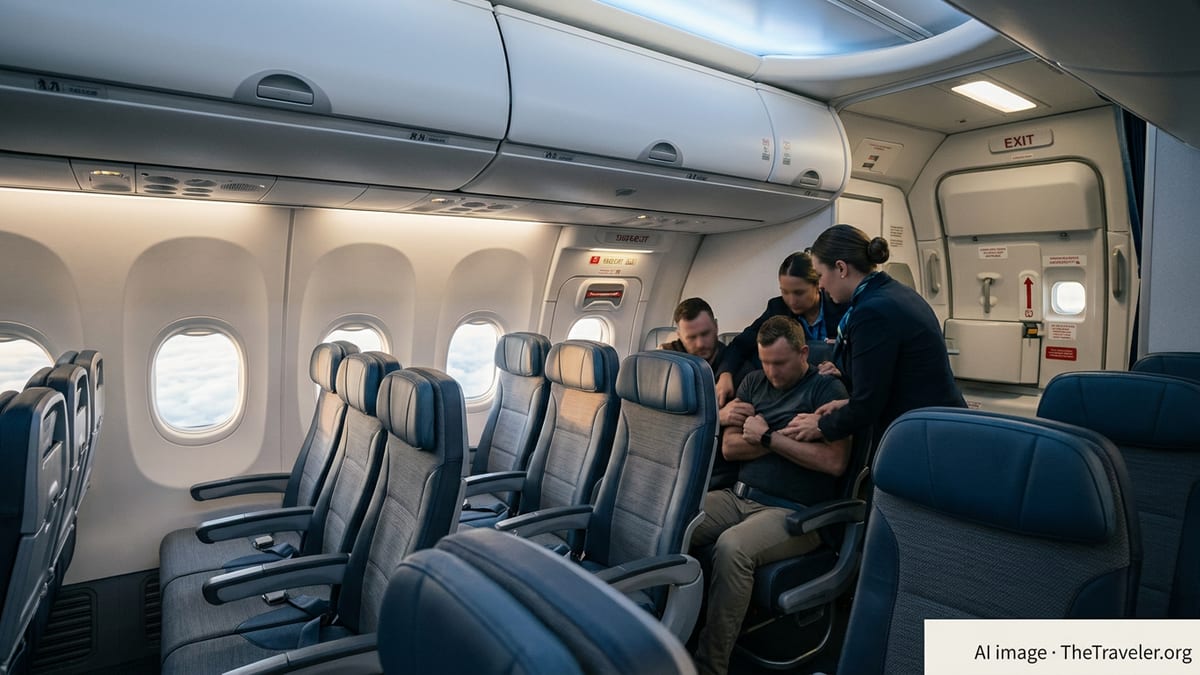
Guilty Plea Follows Alarming In-Flight Struggle
Court records describe a chaotic scene aboard the Alaska Airlines service when the passenger left his seat and moved toward a rear cabin door while the aircraft was at cruising altitude. Flight attendants and nearby travelers intervened as the passenger manipulated the door hardware, fearing he might succeed in triggering the exit system.
Prosecutors said the passenger ignored repeated verbal commands from crew and continued to handle the door until multiple people restrained him in the aisle. The flight later diverted so law enforcement could meet the aircraft at the gate, where the passenger was taken into custody without further incident.
In a recent hearing, the defendant entered a guilty plea to interfering with flight crew members, a federal offense that carries the possibility of a substantial prison term and fines. The plea avoided a trial but left the passenger facing a sentencing hearing where a judge will weigh the disruption, risk to others, and the man’s personal history.
Federal Charges Underscore Seriousness of Aircraft Interference
The case has again drawn attention to the way the United States treats threats to aviation safety, even when an aircraft’s design makes it highly unlikely that a passenger could physically open a main cabin door at altitude. Under federal law, attempting to interfere with the duties of pilots or cabin crew is itself a serious crime, regardless of whether an actual breach of the door occurs.
Legal experts note that prosecutors typically focus on three key elements in such incidents: the fear instilled in crew and passengers, the disruption to the safe operation of the flight, and any physical contact or threats made during the struggle. In this Alaska Airlines case, the diversion of the flight and the force needed to restrain the passenger are expected to weigh heavily when the court considers a sentence.
Sentencing guidelines in comparable cases have produced outcomes that range from probation to several years in prison, depending on a defendant’s prior record, level of cooperation, substance use, and willingness to accept responsibility. The guilty plea signals some degree of cooperation, but the final penalty will rest with the judge, who can also order restitution for costs tied to the diversion.
Cabin Door Design and Why Passengers Cannot Open Them at Altitude
Although reports of passengers trying to open doors in flight often stir alarm, aviation specialists continue to emphasize that main external doors are engineered so that they cannot be opened at cruising altitude on a pressurized aircraft. The pressure differential between the cabin and the outside air effectively holds the door in place with force far beyond what any individual could overcome.
On modern jets like those operated by Alaska Airlines, door mechanisms are designed as plug-type systems that seal tighter as pressure increases. Only when the aircraft is on the ground, or at very low altitude with little pressure difference, can the door be moved into the initial open position. Even then, multiple mechanical steps must be completed in sequence before an exit can fully deploy.
Despite this engineering reality, attempts to force doors mid-flight still trigger full emergency responses, because improper manipulation can damage components, risk deployment of slides into the cabin, or distract crew from other safety-critical duties. For airlines and regulators, the key concern is less about a passenger actually decompressing the aircraft and more about protecting order and control in the cabin.
Rise in Unruly Passenger Cases Worries Airlines
The Alaska Airlines incident comes amid several years of heightened scrutiny of unruly passenger behavior in the United States. While some of the pandemic-era peaks in disruptive conduct have eased, federal data still show hundreds of reports each year involving assaults, threats, and attempts to interfere with crew responsibilities.
Flight attendants interviewed in the wake of the latest case describe a lingering sense of vigilance, noting that they now train extensively on de-escalation and physical restraint techniques. Many carriers stock additional restraint devices and emphasize coordinated responses among crew, off-duty law enforcement officers and able-bodied volunteers when a passenger becomes a safety risk.
Aviation unions continue to press for strict enforcement of existing rules, arguing that consistent prosecution and meaningful sentences are essential to deter would-be offenders. The guilty plea in the Alaska Airlines case will likely be cited by advocates as evidence that federal authorities are willing to pursue and resolve such cases aggressively.
What Travelers Should Know About Legal Consequences
For ordinary travelers, the case serves as a reminder that behavior viewed as a momentary outburst on the ground can have life-changing legal consequences in the air. Any attempt to open a door, enter the flight deck, or physically interfere with crew members is treated as a potential threat to the entire aircraft and can result in arrest, federal charges and a permanent criminal record.
In addition to prison time and fines, passengers convicted in such cases may be ordered to reimburse airlines for costs tied to diversions, including extra fuel, crew duty complications and overnight accommodations for fellow travelers. Airlines can also impose long-term or lifetime bans, effectively cutting off future travel on that carrier.
Officials say passengers experiencing panic, intoxication or mental health crises should immediately alert crew and ask for help rather than acting impulsively. While crews routinely assist anxious fliers and medical emergencies without legal consequences, crossing the line into interference with safety procedures is likely to end, as it did on this Alaska Airlines flight, in handcuffs and a federal courtroom.