

More news on this day
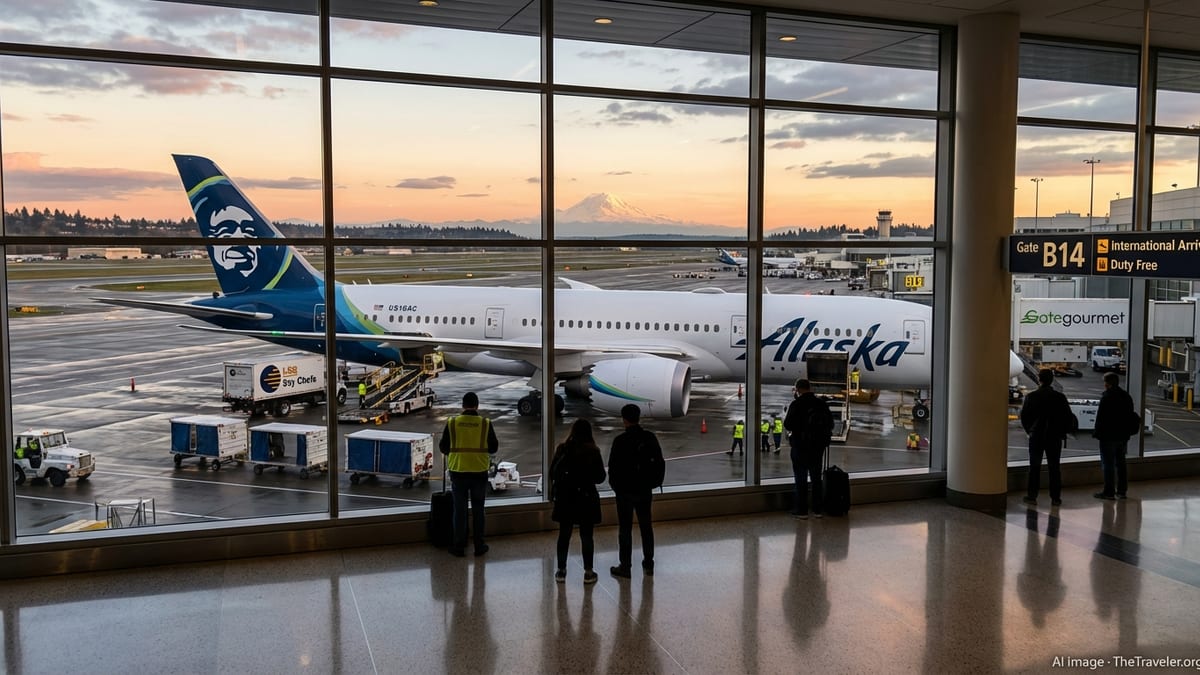
Alaska Airlines is set to cross the Atlantic for the first time in its history, announcing new seasonal nonstop flights between Seattle and Rome beginning in spring 2026 aboard its own Boeing 787-9 Dreamliner aircraft.
First Transatlantic Route Marks Major Strategic Shift
The new Seattle to Rome service will mark Alaska Airlines’ debut in the European market, extending the carrier’s international reach beyond Asia and the Pacific and positioning Seattle-Tacoma International Airport as a growing long-haul gateway. The airline has been steadily building out its global network from Seattle, adding nonstop flights to Tokyo and Seoul in 2025, and will now link the Pacific Northwest directly with one of Europe’s most visited capitals.
Rome service is scheduled to begin in late April 2026, operating seasonally through the peak summer travel period. Flight timings are expected to be optimized for same-day connections from cities across Alaska’s West Coast network into Seattle, giving travelers in markets such as Portland, San Francisco, San Diego and Anchorage a one-stop option to Italy’s capital.
For Alaska, the move signals a broader shift from a primarily domestic and near-international airline to a carrier with true long-haul ambitions. Industry analysts note that the route taps into strong demand from both leisure travelers and cruise passengers who already use Seattle as a jumping-off point for European itineraries.
The decision to choose Rome as a first European destination follows years of customer feedback indicating the Italian capital as one of the most requested nonstop routes from Seattle. The new service will also expand connectivity for Alaska’s oneworld and other partners, who can funnel transatlantic traffic through Seattle rather than relying solely on East Coast hubs.
Boeing 787-9 Dreamliner Debuts in Full Alaska Branding
The Seattle to Rome flights will be operated by Boeing 787-9 Dreamliners, introducing Alaska’s first fully branded widebody cabin tailored for long-haul travel. The aircraft, originally part of an order associated with Hawaiian Airlines and now integrated into Alaska’s fleet plan, will feature what the airline is calling its “new global experience,” with an emphasis on comfort and privacy on flights exceeding ten hours.
Configuration details are expected to include a three-cabin layout with a lie-flat business class featuring enclosed suites, a premium economy-style section with extra legroom and enhanced service, and a refreshed main cabin with upgraded seats, larger overhead bins and modern in-flight entertainment systems. The 787-9’s higher cabin humidity, lower pressurization altitude and larger windows are designed to reduce jet lag and improve overall comfort on the roughly 11-hour journey between Washington state and Italy.
The Rome route is also expected to take advantage of Alaska’s emerging 787 pilot and maintenance base in Seattle. Concentrating long-haul operations around a single widebody type simplifies scheduling and supports consistent service standards on overseas routes, including Tokyo, Seoul and now Rome. The shift away from older Airbus A330 aircraft on some inherited Hawaiian routes underscores Alaska’s intent to standardize around the more fuel-efficient Dreamliner.
From an environmental and cost perspective, the 787-9’s fuel efficiency will be critical in making a long, transatlantic route viable from Seattle, where airlines face stiff competition from foreign carriers operating advanced jets of their own. Alaska executives have framed the Dreamliner as central to their ability to offer competitive products on routes of ten hours or more.
Boost for Seattle as a Global Gateway
The new flights come as Seattle-Tacoma International Airport completes major investments aimed at improving the passenger experience and preparing for increased international traffic. In January 2026, the Port of Seattle and Alaska Airlines marked the completion of the SEA Gateway project, a multi-year effort that refreshed the terminal’s north end with a brighter, more efficient check-in, security and arrivals experience designed to serve as a modern “front door” for the region.
Airport officials have highlighted that these upgrades were timed in part to support a wave of new long-haul services, including additional routes to Asia and Europe. With Alaska’s Rome launch and Delta Air Lines planning its own Seattle–Rome service from summer 2026, travelers will soon have multiple choices across carriers and schedules when flying nonstop between the Pacific Northwest and Italy.
Seattle’s growing role as a global gateway reflects a broader trend in U.S. aviation, as West Coast hubs increasingly anchor nonstop links to both Asia and Europe. For the Port of Seattle, each new intercontinental route supports tourism and trade, bringing inbound visitors to the Pacific Northwest’s national parks, wine regions and cultural attractions while giving local residents easier access to far-flung destinations.
Local tourism boards in both Washington and Italy are expected to court travelers with joint marketing campaigns tied to the new service. Rome’s position as a gateway to destinations across Italy and the Mediterranean, from Florence and Naples to the Amalfi Coast and Sicily, makes it a natural anchor point for multi-stop European itineraries originating in Seattle.
Competitive Landscape and Partnership Opportunities
Alaska’s entry into the Seattle–Rome market comes as major global carriers continue to expand their own transatlantic footprints. Delta’s planned four-times-weekly service between Seattle and Rome, beginning in summer 2026, will place the two airlines head-to-head on the route, with each offering connections across their respective networks and alliances.
Unlike larger U.S. legacy carriers with extensive European networks, Alaska will initially rely heavily on partnerships to extend connectivity beyond Rome. Through alliances and bilateral agreements, Seattle-originating passengers are expected to be able to connect onward from Rome Fiumicino to other Italian and European cities on partner airlines, combining Alaska’s transatlantic segment with intra-Europe services on a single itinerary.
For frequent flyers, the addition of Rome creates new opportunities to earn and redeem miles on long-haul journeys. Alaska has indicated that premium cabin demand is especially strong on long international routes, and the airline is expected to calibrate pricing, mileage earning and upgrade policies carefully to balance loyalty benefits with the economics of a relatively small long-haul fleet.
Analysts suggest that success in Rome could pave the way for additional European destinations from Seattle in subsequent years, including potential links to major hubs such as London and other tourism centers. The performance of the 787-9 on the route, both operationally and commercially, will be closely watched within the industry as a test case for Alaska’s transatlantic ambitions.
Travelers Gain New Options Between the Pacific Northwest and Italy
For travelers, the most immediate impact of Alaska’s new route will be the convenience of flying nonstop between Seattle and Rome without having to connect through East Coast or European hubs. Eliminating a connection can cut total travel time by several hours and reduce the risk of missed flights, weather disruptions and baggage delays.
Peak summer dates are expected to see particularly strong demand, driven by vacationers heading to Italy’s historic sites, coastal towns and countryside. Cruise passengers embarking on Mediterranean sailings from Italian ports are also a key target audience, with the nonstop option simplifying pre- and post-cruise travel planning from the Pacific Northwest.
Travel advisors anticipate that competitive pressures among Alaska, Delta and foreign carriers offering one-stop itineraries will help keep fares in check, especially outside the busiest weeks of the summer season. Shoulder-season dates in late spring and early autumn, when Italy’s weather is mild and crowds are lighter, may offer some of the best value for travelers flexible on timing.
With the launch of the Seattle–Rome nonstop, Alaska Airlines is signaling that its long-haul experiment is entering a new phase, one that positions the company not just as a leading West Coast carrier, but as a growing player in the transatlantic market. For Pacific Northwest travelers eyeing Italy in 2026, the journey to the Eternal City is poised to get considerably easier.