

Endicott Arm and its dazzling Dawes Glacier often top travelers’ Alaska wish lists, but they are far from the only glacier-carved fjords worth sailing. From the cliffs of Tracy Arm to the sprawling icefields of Kenai Fjords and the storied inlets of Prince William Sound, Alaska offers a network of deep, narrow waterways where tidewater glaciers crack and thunder into the sea. For travelers comparing itineraries or seeking an Endicott-like experience elsewhere along the coast, several alternate fjords deliver equally dramatic scenery and, in some cases, more reliable access to ice.
Understanding What Makes Endicott Arm Special
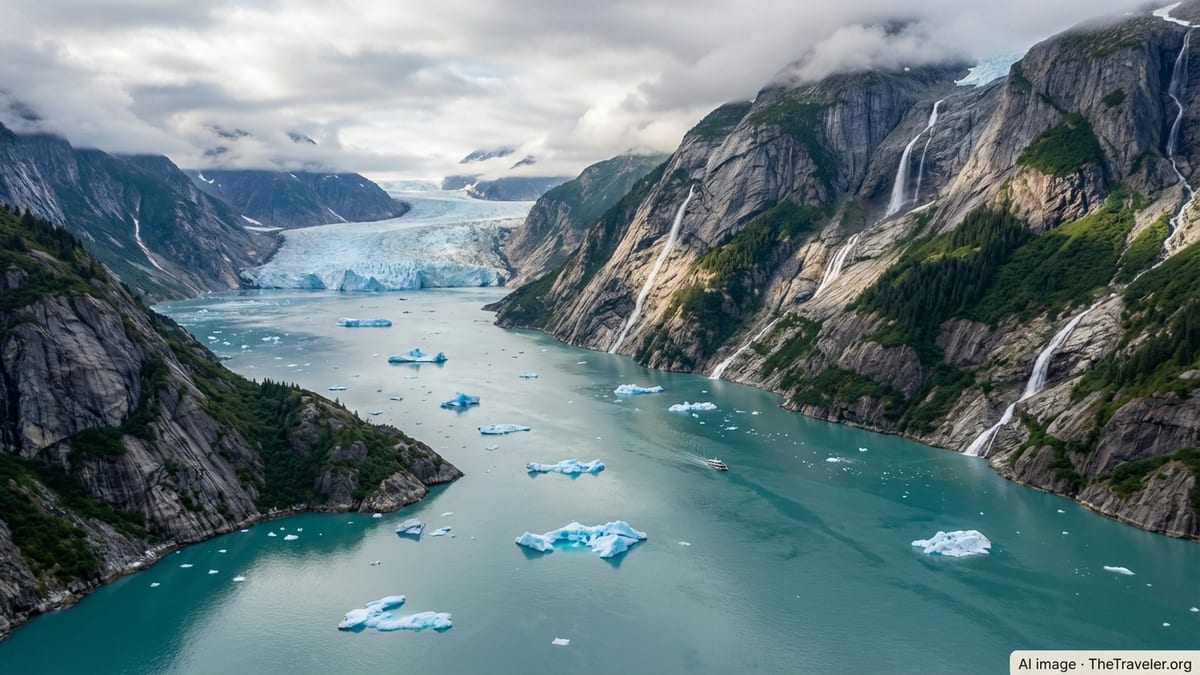
To understand which fjords offer an experience comparable to Endicott Arm, it helps to know what gives this Juneau-area waterway its particular magic. Endicott Arm is a narrow, steep-sided glacial fjord that runs roughly 30 miles from Holkham Bay to the tidewater face of Dawes Glacier. Sheer granite walls, tumbling waterfalls, icebergs drifting in milky blue water, and frequent harbor seal haul-outs create a sense of intimate scale that many travelers find more powerful than simply viewing a distant glacier from open water.
Another hallmark of Endicott Arm is its accessibility from major cruise routes in Southeast Alaska. Many large-ship itineraries that previously focused on nearby Tracy Arm now include Endicott Arm instead, because ice conditions often allow more reliable entry. Yet the features are similar: a twisting fjord channel, high cliffs, hanging glaciers, and the chance to watch a tidewater glacier calve from relatively close range when conditions permit.
For travelers comparing options, the key elements to look for in “similar” fjords are a narrow glacial channel, a tidewater glacier at the head, protected waters carved deep into mountainous terrain, and a realistic opportunity to approach the ice. Wildlife such as seals, whales, porpoises, and nesting seabirds add to the sense of immersion and can vary by region and season, so it is wise to view any fjord experience as a blend of scenery and wildlife rather than a guaranteed checklist.
Across coastal Alaska, several destinations fit this profile, each with its own personality. Tracy Arm, Kenai Fjords National Park, Glacier Bay, Prince William Sound, and even remote Northwestern Fjord all feature dramatic, ice-filled channels that echo the atmosphere of Endicott Arm while providing different vantage points on Alaska’s rapidly changing glacial landscapes.
Tracy Arm: Endicott’s Close Cousin in Southeast Alaska
Only a short distance from Endicott Arm, Tracy Arm is perhaps the most directly comparable fjord, with a nearly identical layout and feel. This narrow, twisting inlet southeast of Juneau leads to the twin tidewater faces of North and South Sawyer Glaciers. Steep granite walls rise thousands of feet on either side, often streaked with waterfalls and crowned by hanging glaciers that hint at the vast icefields beyond the ridgelines. The journey up Tracy Arm feels exploratory, with every bend revealing new formations of ice and stone.
Tracy Arm’s allure lies in its concentration of glacial features and floating ice. Because the Sawyer glaciers extend deep underwater, the ice they shed is dense, intensely blue, and often forms large, sculptural bergs. Day boats and small ships that can safely weave among bergs bring travelers close to this frozen world, while harbor seals often rest on the ice floes between the vessel and the glacier. When conditions are favorable, captains can approach within about half a mile of the glacier face, allowing ample time to listen for the echo of calving ice.
Access to Tracy Arm is typically via Juneau, with independent day cruises running during summer and many small-ship expedition itineraries including the fjord as a highlight. Large cruise ships sometimes list Tracy Arm on their route, though in practice they may only reach the entrance or divert to Endicott Arm if ice clogging the channel prevents safe passage. Travelers who specifically want the narrow-fjord-and-glacier experience should pay close attention to the size of the vessel and whether the operator offers a history of successfully reaching the glacier face in recent seasons.
For those who enjoyed Endicott Arm or could not reach it because of ice, Tracy Arm is a compelling alternative that captures much of the same drama. The fjord is similarly narrow, the icebergs similarly vivid, and the fjord walls perhaps even more winding and vertiginous in places. If time allows, choosing an itinerary that includes one arm on the way north and the other on the return can offer a fascinating side-by-side comparison of two sibling fjords carved by the same vast ice system.
Glacier Bay National Park: A Broader Stage for Tidewater Glaciers
While Glacier Bay feels more expansive than the tight corridors of Endicott or Tracy Arm, it delivers an equally memorable, and arguably more diverse, glacier experience. This UNESCO-listed national park encompasses a massive fjord system that branches into multiple inlets, many of which end in tidewater glaciers. Ships navigating the bay typically spend a full day inside its protected waters, visiting one or more glaciers such as Margerie, Johns Hopkins (when allowed), or Lamplugh, depending on wildlife considerations and seasonal regulations.
Unlike the singular, winding journey up Endicott Arm, a day in Glacier Bay feels like a movable feast of landscapes. The transition from forested lower bay to stark, ice-dominated upper reaches gives travelers a striking sense of time and scale. Many of the glaciers here have visibly retreated within living memory, and park rangers often join cruise ships or day vessels to interpret these changes, pointing out bare rock recently uncovered by ice melt and explaining the ecological succession that follows.
Wildlife abundance in Glacier Bay can rival or surpass that of Endicott Arm, particularly for humpback whales, sea otters, Steller sea lions, and seabirds. Harbor seals often gather on ice floes near calving fronts, especially in protected inlets where disturbance is carefully managed. Because Glacier Bay operates under strict visitor caps and daily ship limits, there is a sense of remoteness and quiet that belies the number of travelers who pass through each season.
For travelers who value variety and interpretation over the tight, canyon-like feel of a single arm, Glacier Bay is an excellent companion or alternative to Endicott. It offers multiple glacier viewpoints in one long, continuous day of scenic cruising, along with in-depth naturalist commentary and a strong sense of being in a living scientific laboratory where climate, ice, and wildlife are in constant dialogue.
Kenai Fjords National Park: Aialik, Holgate, and Northwestern Fjords
Farther south near the town of Seward, Kenai Fjords National Park delivers a different twist on the Endicott-style experience. Here, steep, glacially carved fjords such as Aialik Bay and Northwestern Fjord cut deep into the coastal mountains, ending in active tidewater glaciers that calve into the Gulf of Alaska. Boat tours depart Seward’s small boat harbor daily in the summer, ranging from shorter wildlife-focused trips in the relatively sheltered waters of Resurrection Bay to full-day cruises that travel more than 100 miles round-trip into the heart of the park.
Aialik and Holgate Glaciers, reached via Aialik Bay, are among the most frequently visited tidewater glaciers in Kenai Fjords. The approach through the bay offers classic fjord scenery, including rugged cliffs, forested slopes, and frequent sightings of humpback whales, orcas, puffins, and sea otters. Boats typically linger in front of the glacier face to watch for calving events, during which large chunks of ice crash into the sea, sending waves and echoing booms across the water. The setting feels less confined than Endicott Arm but still impressively intimate, especially on smaller vessels that approach the ice within safe limits.
For travelers seeking an even more remote and Endicott-like sense of discovery, Northwestern Fjord is a standout. Reached on longer, small-vessel cruises, this narrow fjord lies beyond Aialik Bay and is ringed by hanging glaciers and waterfalls cascading from the Harding Icefield above. Operators describe it as a full-day adventure, often nine hours or more on the water, with multiple tidewater glaciers at the head of the fjord and rich bird and marine life en route. Because of its distance and exposure to more open water, Northwestern Fjord is typically recommended for those comfortable with longer days and potentially rougher seas.
Kenai Fjords differs from Endicott Arm in one important respect: it combines glacial drama with open-coast marine ecosystems. Travelers often encounter both tidewater glaciers and abundant wildlife such as whales and sea lions on the same trip. For visitors planning a broader Alaska itinerary that includes road travel on the Kenai Peninsula, a Kenai Fjords cruise is a natural complement to any Inside Passage journey and can provide a second, equally compelling perspective on Alaska’s glacier fjords.
Prince William Sound and College Fjord: A Tapestry of Glaciers
North and east of Kenai Fjords, Prince William Sound offers a calm, island-studded inland sea ringed by the Chugach Mountains and studded with glaciers. Within this broader region, College Fjord stands out as a destination with multiple tidewater and valley glaciers lined up along a single deep inlet, creating an effect that many travelers find even more impressive than a single glacier at the head of a fjord. Cruise ships and smaller vessels enter the sound from the Gulf of Alaska or from ports such as Whittier and Valdez, then thread among icebergs and forested islands to reach glacier views.
College Fjord is particularly famous for the series of glaciers named after East Coast universities, including Harvard, Yale, Smith, Wellesley, Bryn Mawr, Holyoke, and Vassar. Harvard Glacier, one of the largest tidewater glaciers in the sound, towers at the fjord’s head as a wide river of ice more than a mile across at its face. The combination of multiple named glaciers visible from a single anchorage or slow cruise offers a sense of abundance and variety that recalls, and in some ways exceeds, what travelers see in Endicott Arm.
Sailing in Prince William Sound generally feels more sheltered than traveling along the open Gulf of Alaska, thanks to the protective ring of mountains and islands. That makes it a strong option for travelers concerned about motion sickness who still want to experience substantial glacier scenery. Day cruises based out of Whittier typically visit one or more tidewater glaciers while also highlighting wildlife such as sea otters, harbor seals, bald eagles, and occasionally whales. Multi-day small-ship itineraries may linger longer in College Fjord or venture to other glaciated inlets like Harriman Fjord.
Compared with Endicott Arm, the fjords of Prince William Sound offer broader vistas but still deliver the essential components of the glacier-fjord experience: steep walls, floating ice, calving tidewater faces, and abundant wildlife. For travelers combining a rail journey, self-drive itinerary, or Anchorage-based stay with coastal cruising, Prince William Sound is one of the most rewarding and accessible ways to add a second or third glacier fjord to an Alaska trip.
Hubbard Glacier and Disenchantment Bay: Sheer Scale over Narrow Fjords
Travelers who loved Endicott Arm for its glacier spectacle may also want to consider Hubbard Glacier, even though it sits in a more open setting. Often billed as one of the largest tidewater glaciers visited by cruise ships in Alaska, Hubbard flows into Disenchantment Bay near the community of Yakutat. Its face stretches several miles across and rises approximately the height of a multi-story building above the waterline, with a deep, submarine portion hidden below the surface.
Unlike narrow fjords such as Endicott Arm and Tracy Arm, the approach to Hubbard Glacier does not involve tight canyon turns or cliffs pressing close to the ship. Instead, travelers experience an expanding panorama of ice and mountains as the ship advances up Disenchantment Bay. On days when sea ice is not too thick, vessels can approach within roughly half a mile of the terminus, surrounding guests with drifting bergs of all sizes. Seals often rest on the ice, and on clear days distant peaks, including the towering mass of nearby Mount St. Elias, frame the scene.
The trade-off for this vast scale is that Hubbard is less of an intimate fjord and more of a colossal wall of ice dominating a wide bay. There are fewer waterfalls and close-in rock walls compared with Endicott Arm, and wildlife density can vary significantly with season and conditions. Yet for travelers who want to feel the raw power of a truly huge glacier and see extensive icefields feeding into a single outlet, Hubbard is difficult to match.
In itinerary planning, Hubbard Glacier often appears on one-way or round-trip cruises that travel farther west along the Gulf of Alaska than routes limited to the core Inside Passage. It pairs well with at least one narrower fjord experience, such as Endicott, Tracy Arm, or Glacier Bay, creating a compelling contrast between the enclosed, cliff-lined channels of Southeast and the immense open vistas farther along the coast.
Choosing the Right Glacier Fjord for Your Itinerary
With so many fjord and glacier options on the table, selecting the best alternatives or complements to Endicott Arm comes down to your priorities, travel style, and tolerance for open water. Some travelers prefer the intimate, cliff-walled atmosphere of narrow fjords such as Tracy Arm, Endicott Arm, or Northwestern Fjord, where every bend reveals new sculpted ice and rock. Others gravitate toward the expansive variety of Glacier Bay or Prince William Sound, where multiple glaciers and ecosystems can be experienced in a single long day of cruising.
If wildlife is a top priority, Kenai Fjords National Park and Glacier Bay are especially strong contenders. Both are known for consistent sightings of humpback whales, orcas, sea lions, and seabirds during the main summer season, alongside dramatic glacier scenery. Endicott and Tracy Arm can also be rich in seals, mountain goats, and birds, particularly when ice conditions lead to large numbers of seals hauling out on floes near the glacier fronts.
Comfort and logistics matter just as much as scenery. Travelers worried about seasickness may appreciate sheltered environments such as Prince William Sound or the inner reaches of Glacier Bay more than longer trips that cross open stretches of the Gulf of Alaska en route to Kenai Fjords or Hubbard Glacier. Those with limited time might prioritize easy-access day cruises from Juneau, Seward, or Whittier, while others building a longer itinerary can choose a combination of large-ship cruising and smaller local operators for added flexibility and closer glacier approaches.
A practical approach is to identify the must-have elements of your glacier experience: Do you want a narrow fjord with a tidewater glacier at its head, the widest possible glacier face, or a day rich in wildlife as well as ice? Once you rank those priorities, compare them to the fjords described above and look for itineraries that realistically reach these destinations in the months you plan to travel. Weather and ice are always variables in Alaska, so choosing routes known for multiple scenic options can help ensure that, even if one arm is blocked by ice, your overall trip still delivers unforgettable views of glaciers meeting the sea.
Planning Tips for Experiencing Alaska’s Glacier Fjords
Timing is one of the most important considerations when planning any glacier fjord experience in Alaska. The primary cruising season runs from roughly May through early September, with shoulder-season trips at the edges offering fewer crowds but also a higher likelihood of lingering spring ice or early autumn storms. Early in the season, some fjords may have heavier brash ice that can limit how close vessels can approach tidewater glacier faces. Later in the season, retreating ice can open channels while also reflecting ongoing glacier melt.
Vessel size and style strongly shape the experience. Large cruise ships offer stability, extensive onboard amenities, and comfortable viewing decks but may have to remain farther from glacier faces due to maneuverability and safety requirements. Smaller day boats and expedition vessels can often thread deeper into ice-filled channels and linger longer at calving fronts, though they may be more affected by rough seas and offer less shelter from wind and spray. Travelers who prioritize proximity to ice and wildlife typically favor smaller boats, while those who value comfort and convenience often opt for a large-ship cruise supplemented by targeted day trips.
Packing appropriately can significantly enhance your enjoyment of any glacier fjord visit. Even in mid-summer, temperatures near tidewater glaciers feel cool, especially when wind and precipitation are factored in. Layered clothing, including a base layer, insulating mid-layer, and windproof, waterproof outer shell, helps you stay comfortable on exposed decks where the best views are often found. Warm hats, gloves, and sturdy, non-slip footwear are important, and sunglasses and sunscreen are valuable even on overcast days because ice and water can reflect substantial light.
Finally, building flexibility into your schedule is wise. Alaska’s weather is famously changeable, and fog, wind, or heavy rain can reduce visibility or make certain routes impractical on short notice. Itineraries that include more than one glacier fjord or offer alternate scenic routes give captains and local operators room to adjust plans without sacrificing the overall experience. By combining Endicott Arm with at least one of the other fjords described here, you increase your chances of witnessing tidewater glaciers calving and maximize your exposure to the vast, evolving world of Alaska’s coastal ice.
The Takeaway
Endicott Arm earns its reputation as one of Alaska’s most spectacular glacier fjords, but it is just one expression of a much larger story unfolding along the state’s rugged coast. Travelers looking for similar experiences will find abundant options, from the near-mirror image of Tracy Arm and the multifaceted inlets of Glacier Bay to the wildlife-rich fjords of Kenai Fjords National Park and the glacier-packed waters of Prince William Sound. Each destination offers its own balance of narrow channels, towering walls, tidewater glacier faces, and wildlife encounters.
Ultimately, the “best” alternative to Endicott Arm depends on your personal priorities. If you crave tight, twisting fjords and close-in ice, Tracy Arm or Northwestern Fjord may be ideal. If you want a broad survey of glaciers and ecosystems in one long day, Glacier Bay or Prince William Sound could be a better match. For those building longer itineraries that combine cruises with road or rail travel, integrating a Kenai Fjords or Prince William Sound day trip adds texture and variety to the classic Inside Passage experience anchored by Endicott or another Southeast fjord.
Whichever combination you choose, the key is to approach Alaska’s glacier fjords with a spirit of flexibility and curiosity. Ice conditions, weather, and wildlife are all dynamic, and no two days in these waterways are exactly alike. By selecting routes that echo the defining qualities of Endicott Arm while embracing the unique character of each region, you give yourself the best possible chance of leaving Alaska with a vivid mental gallery of cliffs, ice, and ocean that will linger long after the journey ends.
FAQ
Q1. Which Alaska glacier fjord is most similar to Endicott Arm?
Tracy Arm is the closest match in terms of narrow, steep-sided walls, twisting channels, abundant icebergs, and a tidewater glacier at the head of the fjord.
Q2. Is Tracy Arm or Endicott Arm more reliable for reaching the glacier?
In recent years, Endicott Arm has often been considered slightly more reliable for reaching its tidewater glacier, though ice conditions vary by season and year.
Q3. If my cruise cannot enter Endicott Arm, what is the best backup option?
If your ship must divert, Tracy Arm or Glacier Bay are strong alternatives, and you can often book a separate day cruise from Juneau or another port to add a glacier fjord.
Q4. How does Glacier Bay compare with narrow fjords like Endicott?
Glacier Bay is broader and less canyon-like but offers multiple tidewater glaciers, extensive wildlife viewing, and in-depth ranger interpretation in a single long day.
Q5. Are Kenai Fjords cruises similar to Endicott Arm experiences?
Yes, especially full-day trips into Aialik Bay or Northwestern Fjord, which feature steep fjord walls, active tidewater glaciers, and rich marine wildlife.
Q6. Is Prince William Sound a good choice for travelers prone to seasickness?
Prince William Sound is relatively sheltered by islands and mountains, making it a strong option for those seeking glacier views in generally calmer waters.
Q7. What is special about College Fjord compared with other glacier areas?
College Fjord offers a cluster of named glaciers, including Harvard and Yale, visible from one inlet, creating a concentrated, panoramic glacier-viewing experience.
Q8. Does Hubbard Glacier offer a narrow fjord experience like Endicott?
No, Hubbard Glacier sits at the head of a wide bay, but it compensates with immense scale, a very large glacier face, and extensive floating ice.
Q9. When is the best time of year to visit Alaska’s glacier fjords?
The main season runs from roughly late May through early September, with midsummer often offering the most consistent access and wildlife, though conditions vary.
Q10. Should I choose a large cruise ship or a small boat for glacier fjords?
Large ships prioritize comfort and stability but may stay farther from the ice, while smaller boats often reach deeper into fjords and closer to glacier faces at the cost of fewer amenities.