

More news on this day
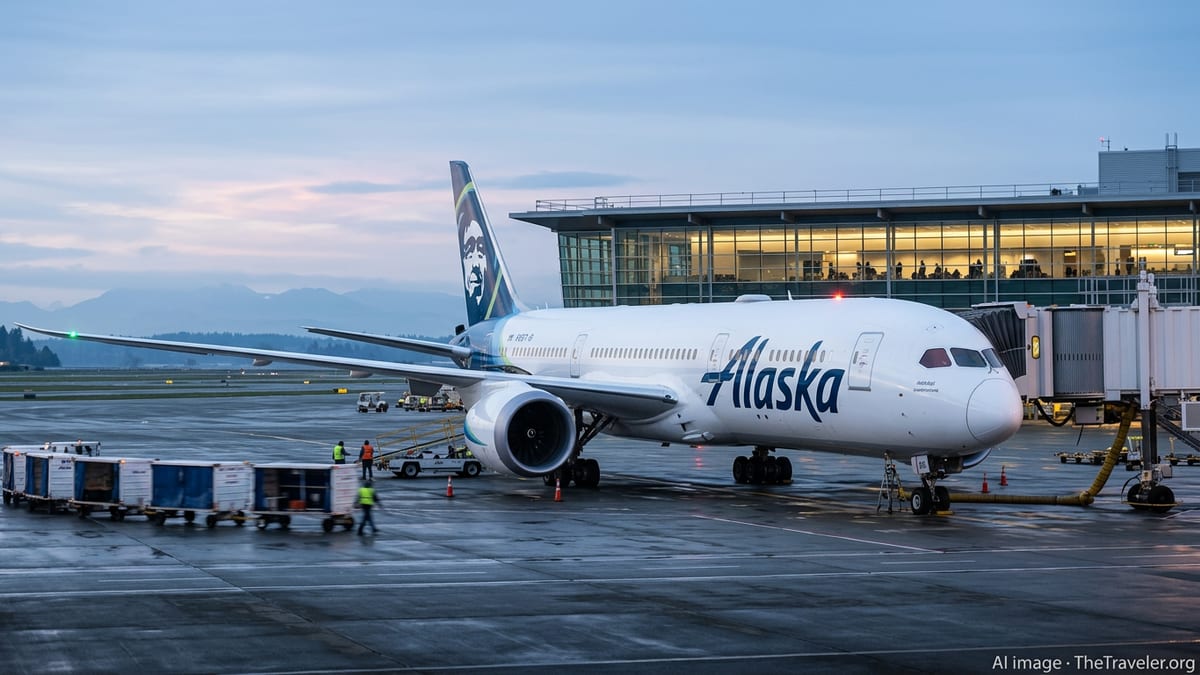
Alaska Airlines is moving quickly to transform Hawaiian Airlines’ Boeing 787-9 Dreamliners into glowing global flagships, positioning the twinjets at the heart of an ambitious push into Europe and Asia from Seattle.
Get the latest news straight to your inbox!
From Island Workhorses to Alaska’s Global Showpieces
The 787-9s now under the Alaska Air Group umbrella were initially ordered and introduced by Hawaiian Airlines, primarily for long-haul flying between Hawaii, North America and key Asian markets. Following the completion of Alaska’s acquisition of Hawaiian, publicly available information shows that these aircraft are being reassigned to support a new long-haul hub strategy centered on Seattle-Tacoma International Airport.
Reports indicate that Alaska is progressively shifting widebody flying on some transpacific routes from Hawaiian’s Airbus A330 fleet to the newer Dreamliners. Early deployments have focused on services such as Seattle to Tokyo Narita and Seattle to Seoul Incheon, operated with Hawaiian-branded aircraft but marketed as part of Alaska’s growing international network. Over the next year, those same 787s are expected to transition into full Alaska-branded flagships as operating certificates and branding work are completed.
Company statements and industry coverage describe the 787-9 as the backbone of Alaska’s new intercontinental aspirations. The type’s range and efficiency allow nonstop links from the Pacific Northwest deep into Europe and Asia, including plans for marquee routes such as Seattle to Rome from May 2026, with additional European destinations to follow.
A New Exterior Look and "Global" Brand Identity
Alaska’s emerging 787 identity starts on the outside. Concept imagery and airline communications highlight a refreshed livery that keeps core elements of Alaska’s current look while amplifying its role as a global carrier. The fuselage treatment emphasizes a cleaner white base with bolder titles, while the tail retains the familiar Eskimo icon reinterpreted with updated shading and lighting effects intended to read strongly across large airports and night operations.
The airline frames the new 787 exterior as a visual symbol of its evolution from a West Coast specialist to a carrier with a substantial intercontinental footprint. The design aims to stand out against other widebody operators in heavily trafficked hubs such as London, Rome and major Asian gateways. Aviation observers note that the look is more streamlined and contemporary than Alaska’s 737 fleet, reflecting the flagship status of the Dreamliner.
Industry analysis suggests that repainting Hawaiian’s 787s into a unified Alaska scheme will also help reduce customer confusion as the group shifts from dual-brand long-haul operations out of Seattle to a clearer division of roles. Hawaiian is expected to remain focused on Hawaii-centric and interisland flying, while the Alaska-branded 787s handle the bulk of transoceanic missions linking the Pacific Northwest to the world.
Cabin Overhaul: Quiet Cabins, Lie-Flat Seats and New Premium Options
Inside, Alaska is using the transition of Hawaiian’s Dreamliners as an opportunity to introduce a new long-haul product standard. Publicly available renderings and descriptions point to a reconfigured cabin with a dedicated business-class section offering direct-aisle-access lie-flat seats, a modern premium economy product and a refreshed economy cabin aimed at improving comfort on flights approaching 10 to 12 hours.
The 787 platform itself brings large, electronically dimmable windows, quieter cabins and improved humidity compared with older widebodies. Alaska’s global concept builds on that foundation with upgraded lighting schemes intended to reduce jet lag, expanded personal storage and updated inflight entertainment systems at every seat. Reports indicate that the airline also plans to roll out high-speed satellite connectivity across the 787 fleet, leveraging experience from Hawaiian’s early adoption of new-generation inflight Wi-Fi.
For travelers familiar with Hawaiian’s existing long-haul interiors, differences will become more pronounced as aircraft are progressively refitted. Alaska’s configuration is expected to prioritize business-class capacity and premium seating mix appropriate for business and high-yield leisure traffic between Seattle and major financial and cultural centers in Europe and Asia.
Seattle as a West Coast Global Gateway
Alaska’s transformation of the Hawaiian 787s is tied directly to its strategy for Seattle. The airline has described a goal of building up to a dozen or more intercontinental destinations from its hometown hub by the end of the decade, with the Dreamliner playing the lead role. Recent launches from Seattle to Tokyo Narita and Seoul Incheon, alongside newly announced services to London and Reykjavik, give an early glimpse of that vision.
Network maps and filings show that the 787 hub in Seattle is designed to tap both local demand in the Pacific Northwest and connecting traffic from Alaska’s extensive domestic network. Travelers from cities across the western United States can route through Seattle onto the Dreamliners toward Europe and Asia, often in competition with entrenched global players that have historically dominated the long-haul market from the region.
Industry commentary notes that Alaska’s move into long-haul widebody flying represents a significant shift for a carrier that long marketed itself as an all-737 operator. By inheriting and then repurposing Hawaiian’s Dreamliners, Alaska gains a shortcut into markets that would have been difficult to pursue using only single-aisle aircraft or through partners alone.
What This Means for Travelers Eyeing Europe and Asia
For passengers, the transformation of Hawaiian’s 787s into Alaska flagships should translate into more nonstop choices and a different onboard experience from what either airline offered alone. Seattle-based travelers in particular will see expanded options to reach Europe and Asia without changing carriers, while residents of Hawaii may gain new one-stop opportunities via Alaska’s mainland hub in addition to existing Honolulu-focused services.
Loyalty program members are also watching the rollout closely. Alaska’s Mileage Plan has long been regarded as a strong value proposition for redemptions on partner airlines, especially to Europe and Asia. With an in-house 787 long-haul product, members may find more opportunities to use miles for premium cabins on Alaska-operated flights, alongside existing oneworld partner options.
Timelines for full cabin refits, repainting and brand transitions may vary by aircraft, and schedules remain subject to regulatory milestones and market conditions. However, based on current public plans, travelers can expect to see more Dreamliners in full Alaska colors on the Seattle ramp in 2026, serving a growing roster of long-haul routes that push the airline firmly into global territory.