

More news on this day
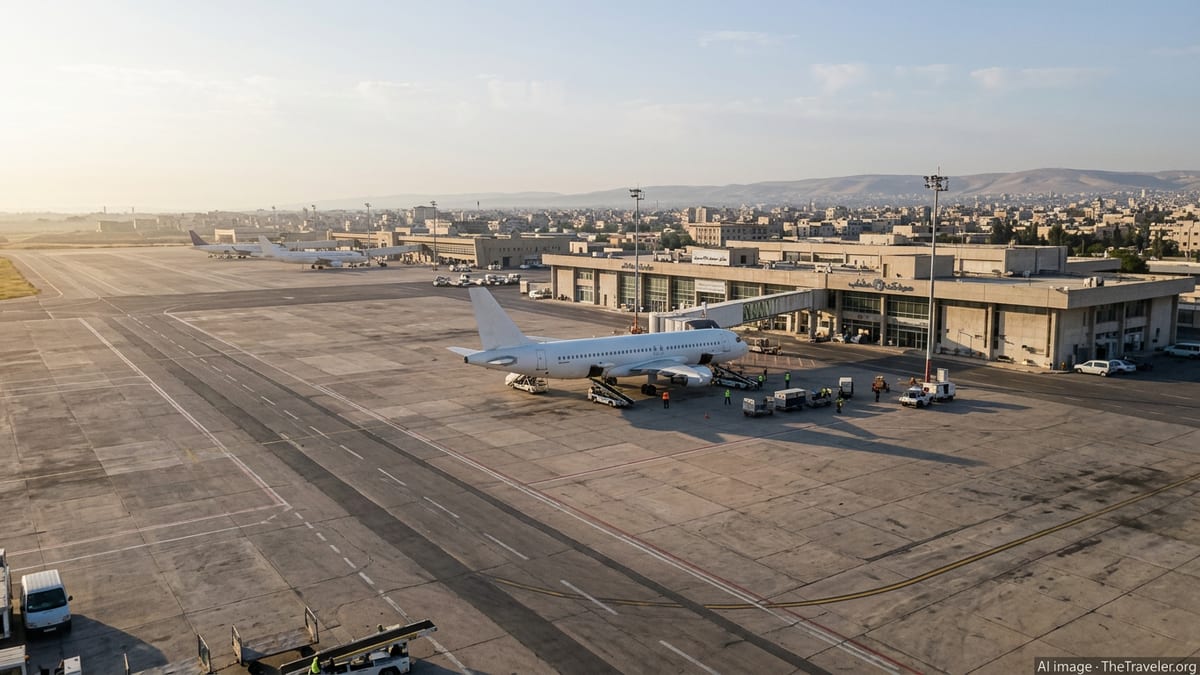
Aleppo International Airport has resumed commercial operations after a weeks-long security shutdown, restoring a vital air link for northern Syria and underscoring cautious optimism about the country’s broader recovery.
Flights Resume After Security Shutdown
Syrian aviation officials confirmed that Aleppo International Airport has been cleared to restart flights following an extensive security and technical review prompted by recent unrest in and around the northern city. The General Authority of Civil Aviation and Air Transport announced that air traffic at Aleppo would resume in line with an approved schedule, even as much of the country’s southern airspace, including access to Damascus, remains restricted.
The reopening comes after authorities suspended flights to and from Aleppo in early 2026 amid clashes in parts of the city and concerns over the safety of passengers and crew. During the closure, airlines were forced to reroute or cancel services, isolating northern Syria from regional hubs and adding pressure to already strained overland routes.
Officials said the decision to recommission Aleppo followed a comprehensive assessment of security risks and infrastructure readiness, including runway integrity, navigation systems and passenger facilities. The airport is now operating under tightened safety protocols, with close coordination between civil aviation authorities and security agencies.
The restart of services is being phased in, with national carrier Syrian Airlines and a handful of regional operators expected to prioritize routes linking Aleppo to key gateways in the Middle East, particularly Amman, Istanbul, Doha and Gulf cities where large Syrian expatriate communities live and work.
Regional Carriers Return to Northern Syria
Aleppo’s latest reopening builds on a gradual return of regional airlines over the past year, as the city’s status as Syria’s main economic hub has reasserted itself. Carriers such as Royal Jordanian, Turkish Airlines, Qatar Airways and newer Syrian operators have progressively restored routes that were cut during the civil war and subsequent waves of instability.
Royal Jordanian resumed scheduled services between Amman and Aleppo in 2025 after a fourteen-year hiatus, becoming one of the first foreign airlines to bet on the city’s recovery. Turkish Airlines and Qatar Airways followed with their own relaunches of services from Istanbul and Doha, aiming to tap demand from business travelers, aid workers and Syrians seeking onward connections to Europe, the Gulf and Asia.
Syrian carriers, including state-owned Syrian Airlines and privately backed Fly Cham, have also expanded their presence at Aleppo. In addition to domestic links, they have introduced or revived regional routes to destinations such as Sharjah and Yerevan, reflecting efforts to rebuild Aleppo as both a commercial center and a gateway to northern Syria and neighboring markets.
Aviation analysts say the latest resumption of flights is likely to encourage more airlines to consider Aleppo as a technical and commercial alternative while Damascus remains constrained by security-related closures and complex airspace restrictions.
A Strategic Hub in Syria’s Economic Recovery
The return of operations at Aleppo International Airport is widely viewed inside Syria as a milestone in the country’s fitful postwar recovery. Long the industrial heart of the nation, Aleppo suffered heavy destruction during the conflict, losing factories, skilled workers and critical infrastructure. Restoring reliable air links is seen as essential to attracting investment, reviving trade and reconnecting the city to global supply chains.
Recent economic agreements between Syria and regional partners have reinforced Aleppo’s strategic role. Large-scale investment plans include funding to upgrade the airport’s terminals, expand its passenger capacity and modernize cargo facilities to handle increased volumes of textiles, agricultural products and manufactured goods from the surrounding region.
Local business leaders argue that a functioning airport can accelerate the return of diaspora capital and expertise. Many Syrian entrepreneurs now based in the Gulf, Europe and Turkey have signaled interest in short, frequent trips to assess opportunities in manufacturing, logistics and construction if flight options remain stable and predictable.
Humanitarian agencies also rely on Aleppo’s air links for staff rotations and time-sensitive deliveries. While most large-scale relief cargo still moves by land, commercial flights provide a crucial backbone for personnel movement, medical evacuations and high-value supplies that cannot be easily transported over Syria’s damaged road network.
Airspace Constraints and Ongoing Risks
Despite the optimism surrounding the latest reopening, Aleppo’s operations remain tightly bound by regional security dynamics. Syrian authorities have only partially reopened northern air corridors, allowing traffic toward Turkey and select regional hubs, while keeping much of the southern sector and Damascus International Airport off limits due to continuing military activity and the risk of cross-border strikes.
This patchwork of restrictions creates operational challenges for airlines and passengers alike. Carriers must carefully plan routings to avoid conflict zones, often adding time and cost to journeys. Insurers and risk assessment firms continue to classify Syrian airspace as high risk, which can raise premiums and deter some operators from mounting services despite improving ground conditions.
Airport managers in Aleppo have implemented reinforced security procedures, including enhanced screening, restricted airside access and closer monitoring of flight paths. Nevertheless, aviation experts caution that any deterioration in the security situation, whether inside Syria or in the broader region, could quickly disrupt operations and force another suspension of services.
For travelers, the reality is a fragile normality. While tickets to and from Aleppo are once again on sale, schedules remain subject to rapid change, and passengers are being advised to check their flights frequently and allow extra time for security formalities and potential delays.
Hopeful Symbol for Travelers and Residents
For residents of Aleppo, the sight and sound of commercial aircraft once again climbing into the sky carries meaning that goes beyond timetables and ticket sales. After years of siege, bombardment and economic collapse, an operating international airport is widely seen as a marker of reconnection with the outside world and a modest return to ordinary life.
Families separated across borders in the Middle East and Europe now have more options to visit relatives, study abroad or seek medical treatment without days of overland travel. Students, businesspeople and aid workers who previously had to route through distant airports and long road journeys can again consider Aleppo as a viable entry and exit point.
Local tourism officials hope that, over time, improved connectivity will support a careful revival of cultural and heritage tourism in and around the city, drawing visitors back to Aleppo’s ancient markets, historic citadel and surrounding countryside. Any such recovery is expected to be slow and closely tied to perceptions of safety, both in the air and on the ground.
For now, the reopening of Aleppo International Airport stands as a cautious but significant step in Syria’s long road back. Each landing and takeoff represents not just a movement of passengers, but a tentative signal that the country’s largest northern city is beginning to rejoin regional and global networks after more than a decade of isolation and upheaval.