

More news on this day
A new chapter in long-haul luxury travel is opening for British holidaymakers as all-business-class airline Beond prepares to launch nonstop flights from the United Kingdom to the Maldives, positioning itself as a niche premium leisure option on one of the world’s most sought-after sun-and-sea routes.
Get the latest news straight to your inbox!
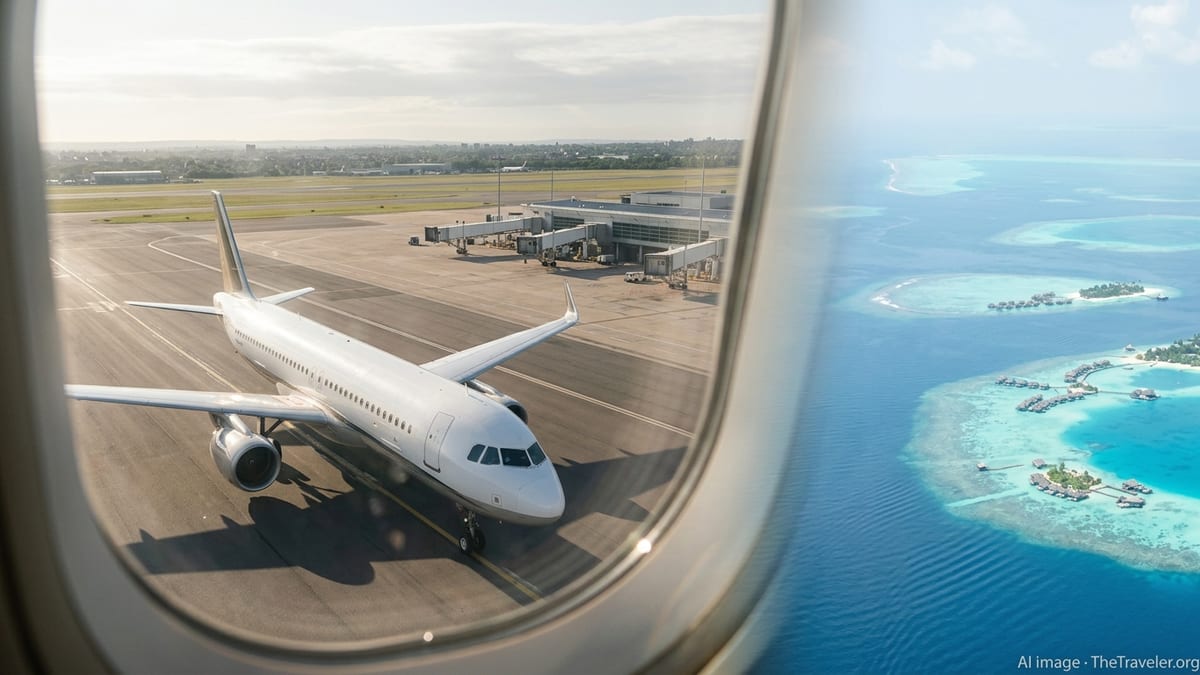
All-business-class concept targets premium leisure market
Beond markets itself as a “premium leisure” carrier, operating aircraft in an all-business-class configuration with no economy cabin. Publicly available information shows that the airline’s fleet is centered on narrowbody Airbus jets, initially an A319 equipped with 44 lie-flat business seats, with additional A321 and A321LR aircraft configured with around 68 fully flat seats. The focus is on point-to-point services from key origin markets directly into Malé, avoiding traditional hub-and-spoke connections.
Reports indicate that the airline’s core strategy is to appeal to holidaymakers traveling to the Maldives who might normally opt for business class on major Gulf or European network carriers. By stripping out the economy section entirely, Beond aims to create a quieter, more exclusive onboard environment, while keeping fares at a level that undercuts many conventional business-class tickets on peak leisure dates.
The launch of direct UK flights fits this model, connecting a high-spend outbound market with one of the world’s most premium resort destinations. Industry commentary suggests that the Maldives continues to attract strong demand from British travelers looking for high-end resort stays and honeymoon trips, a segment where the perceived value of lie-flat seats on an overnight flight is especially strong.
Beond’s concept also aligns with a broader trend toward airlines creating more clearly segmented premium products, as carriers seek to capture higher-yield leisure traffic amid resilient demand for long-haul holidays. The UK–Maldives route gives the airline a showcase pairing of a mature outbound market and a luxury island destination heavily reliant on aviation links.
Nonstop UK–Maldives link adds competition to a luxury corridor
According to published coverage of Beond’s network plans, the airline has been steadily expanding its Maldives-focused route map across Europe and the Middle East, adding cities such as Munich, Zurich and Milan before moving to serve the UK directly. The new nonstop UK–Malé link places Beond into direct competition with established one-stop options via hubs in the Gulf, Turkey and continental Europe.
Nonstop services from the UK are particularly attractive for travelers aiming to minimize total journey time and overnight connections. A direct routing cuts out a transfer and can shave several hours from the door-to-door itinerary, an important consideration for families and couples targeting short, high-value resort stays. Travel trade analysis suggests that such convenience, combined with a fully flat business cabin, is likely to appeal to passengers prepared to pay a premium for comfort and speed.
Beond’s entry also adds another layer of competition on fares in the premium segment. While the airline is positioning itself at the luxury end of the market, past pricing on its European routes has often undercut the business-class fares of larger network rivals during key seasons. Observers will be watching closely to see whether the heightened competition nudges down average premium ticket prices on the UK–Maldives corridor or simply expands the overall market by drawing in new travelers who previously flew in economy.
For the Maldives, stronger nonstop connectivity from the UK adds to the country’s appeal as a winter-sun and special-occasion destination. Tourism data from recent years has consistently highlighted Europe, and in particular the UK, as one of the most important source markets, making additional premium capacity a strategic boost for resorts that focus on high-spend visitors.
Cabin product: lie-flat seats, boutique-style service and privacy
Coverage of Beond’s existing operations describes a cabin product built around lie-flat seats arranged in pairs, offering a 2-2 layout that is more typical of short-haul business class but adapted here for long-haul use. The airline emphasizes generous pitch, full-flat functionality and privacy dividers to create a more intimate environment than traditional widebody cabins with larger business-class sections.
The narrowbody Airbus aircraft used by Beond allow the airline to provide a sense of exclusivity, with a total seat count far below that of a typical twin-aisle jet serving similar distances. Travel reports note that this smaller cabin can feel more like a private club atmosphere, with fewer passengers sharing the attention of the cabin crew and less congestion during boarding, meal services and disembarkation.
In terms of soft product, publicly available descriptions highlight multi-course meals, premium beverages and an emphasis on personalized service consistent with the airline’s premium leisure positioning. On longer segments such as the UK–Maldives route, this approach is designed to complement the lie-flat hardware by making the overall experience feel more akin to a boutique hotel stay than a traditional flight.
For travelers connecting directly to resort islands by seaplane or domestic flights after arrival in Malé, the ability to arrive well-rested can be a deciding factor. Industry observers point out that a fully flat seat and smaller, quieter cabin environment are likely to be key selling points for Beond as it courts UK-based travel agents and tour operators packaging high-end Maldives itineraries.
Challenges and opportunities in a niche long-haul segment
The launch of direct UK–Maldives services places Beond within a small but closely watched group of all-business-class and all-premium airline concepts. Previous attempts on other routes, particularly across the North Atlantic, have struggled to achieve long-term profitability, illustrating the difficulty of sustaining such a specialized model in a highly competitive industry.
Analysts note that Beond’s focus on a pure leisure destination differentiates it from many earlier all-business-class ventures that targeted corporate-heavy city pairs. By aligning capacity with seasonal demand for high-end holidays, and limiting the number of seats on each aircraft, the airline may have more flexibility to adjust schedules and pricing to match peaks around school holidays and the European winter sun season.
At the same time, the narrowbody aircraft and relatively modest fleet size can constrain schedule frequency and resilience. Any disruption or equipment constraints may have an outsized impact on operations, especially on longer sectors such as the UK–Maldives flight, where recovery options are more limited than on short-haul routes. Travel community discussions already reflect a mix of enthusiasm for the concept and concern about reliability and after-sales support, issues that can strongly influence repeat business in the premium segment.
Beond’s success on the UK route will likely depend on how effectively it can build trust among travel agents, tour operators and frequent premium leisure travelers. Transparent communication about schedules, clear contingency planning and sustained investment in both hard and soft product will be critical factors as the airline seeks to establish itself as a long-term player in the Maldives-focused premium travel market.
What the new route means for UK travelers
For UK travelers, the arrival of an all-business-class option to the Maldives broadens the spectrum of choices beyond the traditional mix of economy, premium economy and business cabins on large network carriers. Those planning honeymoons, milestone celebrations or once-in-a-decade luxury trips now have the option of a nonstop journey where every seat is designed for sleep, privacy and working space.
Packages combining Beond flights with high-end Maldivian resorts are expected to appeal particularly to couples and small groups prioritizing comfort, as well as to travelers for whom the flight experience is an integral part of the holiday rather than just a means of transport. The airline’s brand positioning suggests that it aims to integrate closely with resort and tour partners, marketing a seamless luxury experience from departure in the UK to check-in at overwater villas and beach suites.
As with any new entrant, early adopters will likely weigh the appeal of a fresh product and attractive introductory fares against perceived risks around schedule stability and support in case of disruption. Travel professionals advise prospective passengers to pay close attention to fare conditions, rebooking options and travel insurance coverage when trying out a newcomer in the premium segment.
If Beond succeeds in delivering reliable operations on the UK–Maldives corridor, its presence could signal a broader revival of niche all-premium airlines tailored to specific high-value leisure flows. For now, its nonstop UK flights mark a notable development in the evolving landscape of long-haul travel, bringing greater choice and a new style of luxury to one of the world’s most coveted beach destinations.