

More news on this day
Allegiant Air has introduced a new “Travel with Confidence” policy designed to shield passengers from financial penalties if their plans are disrupted by a U.S. government shutdown, offering greater flexibility for changes and refunds at a time of heightened uncertainty for air travelers.
Get the latest news straight to your inbox!
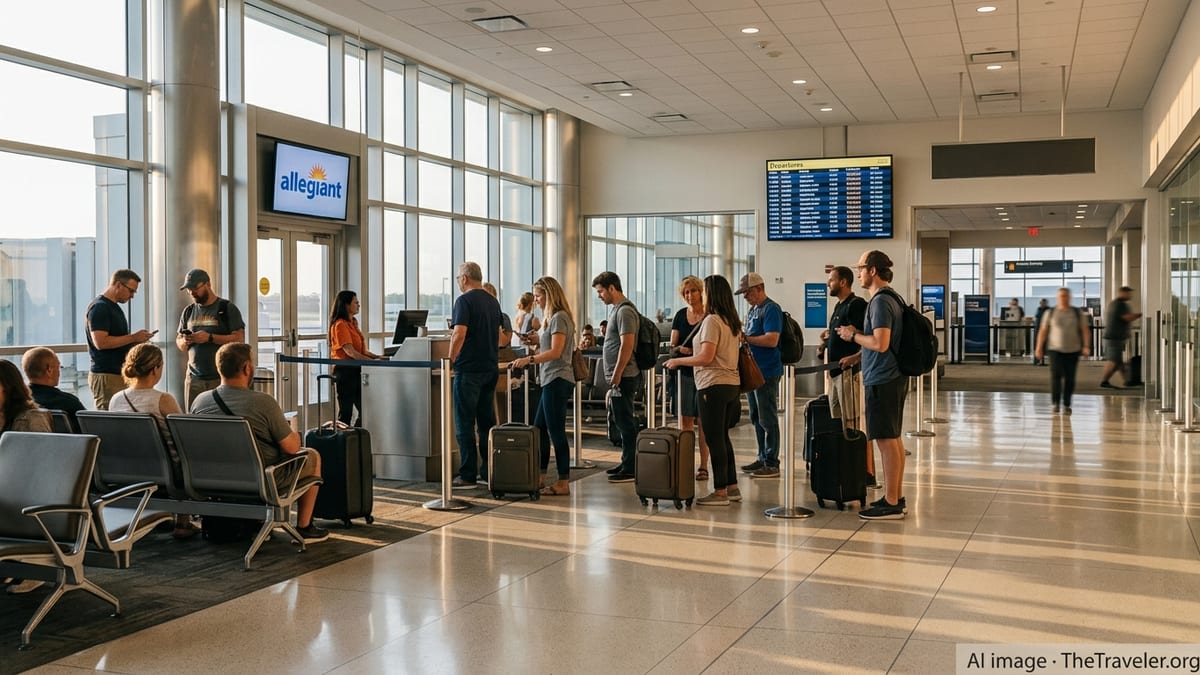
Policy Targets Government Shutdown Disruptions
According to publicly available information from Allegiant’s latest customer policy updates, the new “Travel with Confidence” initiative is structured specifically around the risk of a federal government shutdown affecting air travel. The carrier is positioning the program as a way for passengers to book upcoming trips without worrying that a lapse in government funding could leave them holding nonrefundable tickets.
Reports indicate that the policy applies when a shutdown leads to significant operational impacts, such as widespread air traffic delays, staffing constraints at security or air traffic control, or broader disruptions that make it difficult or impractical for customers to travel. Allegiant is expected to use published federal timelines and aviation system impacts as the reference point for when the protections are triggered.
While Allegiant has offered limited-fee flexibility in past irregular operations, the framing around a government shutdown marks a more targeted response to a recurring political risk. Industry coverage suggests that airlines are paying closer attention to how budget standoffs in Washington can ripple through aviation infrastructure and consumer confidence.
Flexible Date Changes Without Standard Fees
Under the “Travel with Confidence” policy, Allegiant is promoting the ability for affected customers to change their travel dates without traditional change fees when a qualifying government shutdown disrupts their plans. For a carrier known for keeping base fares low and charging separately for many services, fee-free date changes represent a notable concession to flexibility.
Publicly available descriptions of the policy indicate that passengers will be able to move their trips within a defined rebooking window, subject to seat availability. While the airline is still expected to collect any fare difference if the new itinerary is more expensive, travelers would not pay the standard change penalties that typically apply to its lowest-cost tickets.
This structure mirrors a broader industry trend that accelerated during the pandemic, when many large airlines permanently eliminated change fees on most domestic itineraries. Allegiant’s move, focused narrowly on shutdown-related disruption, reflects how the ultra-low-cost segment is adapting similar tools in targeted ways to reassure travelers without fully reshaping their fee-based model.
Refund Options When Travel Is No Longer Viable
In addition to flexible rebooking, Allegiant’s “Travel with Confidence” policy is described as offering refund pathways in cases where a shutdown makes the original trip impractical or impossible. Public guidance suggests that customers whose flights are canceled, significantly delayed, or otherwise rendered unusable because of shutdown-related impacts may request a return of their ticket value.
Refund eligibility is expected to depend on the specific circumstances, including whether the airline ultimately operates the flight, the length of any schedule change, and whether alternative options are available. In scenarios where a shutdown creates prolonged uncertainty or repeated disruptions, Allegiant is signaling a willingness to allow customers to step back from their travel plans without absorbing the full cost.
Travel industry analysts point out that clear refund and credit rules can be especially important for Allegiant’s core leisure market, which often consists of families, retirees, and infrequent flyers who may not have the budget flexibility to absorb last-minute changes. By spelling out how shutdown-related refunds and credits will work, the airline is attempting to reduce the perceived risk of booking in advance.
Reassuring Price-Sensitive Leisure Travelers
The timing of Allegiant’s announcement aligns with renewed public discussion of potential federal budget standoffs and their impact on aviation services. Coverage in travel and business media highlights that previous shutdowns have raised concerns about air traffic control staffing, security checkpoint wait times, and broader operational reliability across U.S. airports.
Allegiant’s route network is heavily focused on linking smaller cities and regional airports with popular leisure destinations, often on limited frequencies. For travelers on these routes, a canceled or heavily delayed flight tied to a shutdown can mean losing an entire vacation window, rather than simply catching a later departure. The new policy is framed as an answer to those concerns, emphasizing that customers will have options to adjust or cancel without standard penalties if shutdown conditions significantly disrupt the system.
Publicly available information on consumer sentiment suggests that travelers increasingly weigh flexibility alongside price when comparing airlines. By branding its shutdown protections as “Travel with Confidence,” Allegiant is seeking to highlight that its low-fare model can still provide a safety net when external events beyond passengers’ control threaten to upend their plans.
How Allegiant’s Move Fits into a Changing Policy Landscape
Allegiant’s shutdown-focused flexibility arrives against a backdrop of evolving customer service policies throughout the airline industry. Over the past several years, larger network carriers have reshaped their change and cancellation structures, and regulators have scrutinized how airlines handle refunds and credits during widespread disruptions. Travel news coverage notes that passengers now expect clearer promises when political or operational shocks hit the system.
For Allegiant, the “Travel with Confidence” policy functions as both a customer reassurance tool and a competitive signal. While the airline continues to emphasize low base fares and a pay-as-you-go approach to extras, it is adding defined circumstances where flexibility is prioritized over fee revenue. Observers view this as part of a broader effort by budget carriers to retain cost-conscious customers who might otherwise gravitate toward airlines perceived as more forgiving when plans change.
As discussions over federal funding and shutdown scenarios continue in Washington, Allegiant’s new policy underscores how airlines are trying to adapt product offerings around political uncertainty itself. For travelers watching the headlines but still intent on planning vacations months in advance, the promise of shutdown-linked flexibility and refunds is being presented as a way to book now with fewer financial risks attached.