

More news on this day
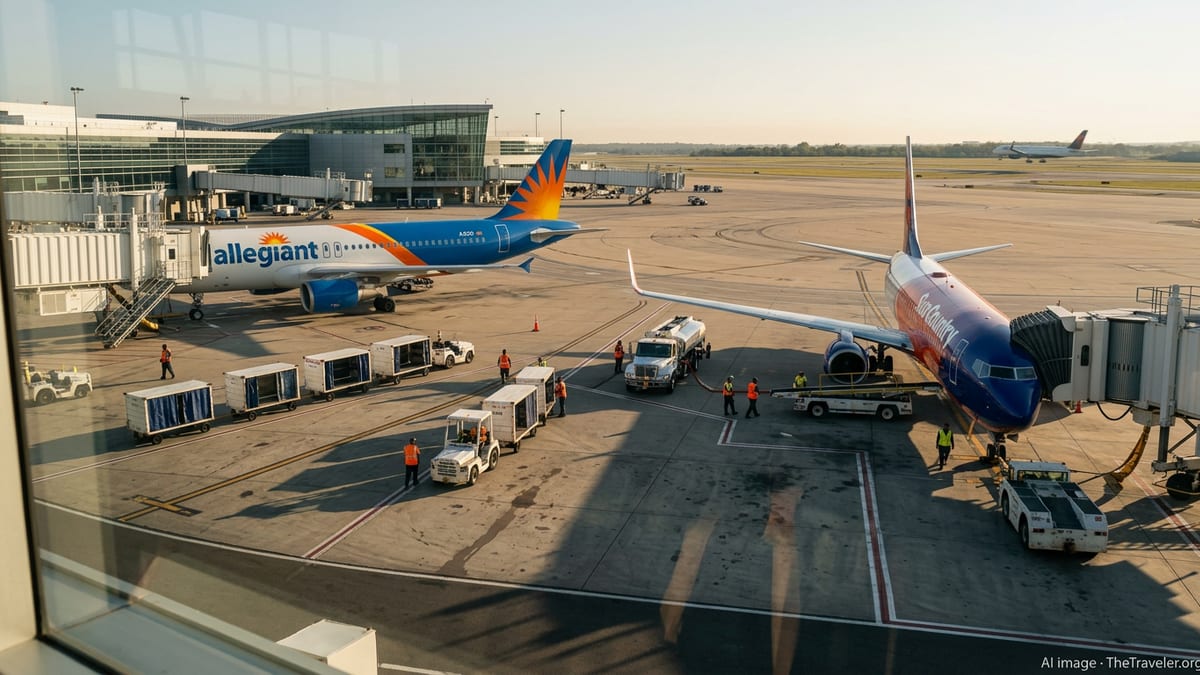
Allegiant Travel Company and Sun Country Airlines are moving ahead with plans to combine their operations after clearing a key stage of U.S. Department of Justice antitrust review, advancing a $1.5 billion deal that would create one of the country’s largest leisure-focused carriers.
Get the latest news straight to your inbox!
Regulatory Review Clears Early Hurdle
Public filings and investor communications indicate that the companies have received early termination of the waiting period under the Hart-Scott-Rodino Act, a central component of the Department of Justice’s antitrust review process. That step removes an initial regulatory obstacle and allows Allegiant and Sun Country to begin more detailed planning for integration, while further approvals and customary conditions remain outstanding.
The merger agreement, announced on January 11, 2026, values Sun Country at roughly $1.5 billion in a cash-and-stock transaction. Under the terms disclosed to investors, Sun Country shareholders are set to receive a mix of Allegiant shares and cash, giving them a minority stake in the combined company once the deal closes. Both boards unanimously approved the transaction before it moved into the federal review phase.
Company statements and aviation law briefings describe the merger as subject not only to antitrust clearance, but also to additional regulatory approvals and shareholder votes. While the Hart-Scott-Rodino milestone is an important indicator that competition authorities do not currently intend to challenge the transaction at this stage, it does not constitute final approval of the combination.
Recent corporate disclosures suggest that closing is now targeted for the second half of 2026, with some materials narrowing expectations to the third quarter, provided that shareholders endorse the deal and remaining regulatory processes are completed as anticipated.
What the Combined Airline Would Look Like
Allegiant and Sun Country present the merger as the creation of a larger, more competitive leisure airline built around point-to-point flying and a focus on vacation destinations. Public investor presentations describe a combined network of more than 650 routes, linking Allegiant’s strong presence in secondary and regional markets with Sun Country’s scheduled and charter operations, including flights to Mexico, Central America, Canada and the Caribbean.
According to transaction materials circulated to investors and airport authorities, the merged carrier would operate under the Allegiant name and be headquartered in Las Vegas. The company plans to maintain a significant operational presence in Minneapolis–Saint Paul, where Sun Country has long served as a hometown airline. Leadership plans call for Allegiant’s chief executive officer Greg Anderson to lead the combined airline, with Sun Country’s chief executive Jude Bricker joining Allegiant’s board and serving in an advisory role during integration.
Financial outlines released to the market highlight expected cost and revenue synergies, including shared aircraft utilization, combined purchasing power and cross-selling of routes to a broader leisure customer base. The companies have pointed to an ambition to generate substantial annual synergies within several years of closing, while emphasizing a strategy built around low fares and unbundled pricing.
Industry commentary notes that the deal would significantly expand Allegiant’s fleet and give the airline broader international reach, while offering Sun Country access to a larger capital base and a nationwide brand. At the same time, analysts and aviation observers continue to debate how service quality, seating configurations and onboard amenities may evolve once operations are fully combined.
Timeline, Approvals and What Changes for Travelers Now
Despite progress at the Department of Justice, the transaction remains in the approval phase and has not yet closed. Company guidance points to the second half of 2026 as the expected window for completion, after shareholder votes and remaining regulatory steps. Until then, both Allegiant and Sun Country continue to operate as separate airlines under their existing brands and policies.
Public-facing information from the airlines and airport partners consistently emphasizes that there is no immediate impact on ticketing, flight schedules or the travel experience. Customers can continue to book and fly on Allegiant and Sun Country as they do today, and tickets already purchased remain valid under the current operating arrangements.
Even after legal closing, a full integration of operations will take additional time. Regulatory and aviation briefings explain that the two carriers will operate on separate Federal Aviation Administration certificates until they receive a single operating certificate covering shared procedures, training and safety programs. That process can extend well beyond the formal closing date, meaning that aircraft, crews and systems are likely to transition gradually rather than overnight.
Frequent flyers and loyalty program members are watching closely for updates on points, status levels and co-branded credit cards. Public commentary suggests that no immediate changes have been announced, and travelers are being advised in published coverage to monitor future statements from the airlines as integration plans mature.
Impact on Competition and Key Hubs
The Allegiant–Sun Country combination comes amid broader consolidation trends in the U.S. airline industry, particularly among low-cost and ultra-low-cost carriers. Analysts note that both airlines concentrate on price-sensitive leisure travelers, often serving secondary airports and seasonal vacation routes that can be overlooked by the largest network carriers.
By blending Allegiant’s extensive point-to-point domestic network with Sun Country’s international leisure routes and charter contracts, the merged airline is expected to become a more prominent competitor in the vacation travel segment. Market observers suggest that this could intensify competition on certain sun and beach routes, especially from Midwestern origins where Sun Country has historically held a strong position.
At Minneapolis–Saint Paul, where Sun Country has been an important presence alongside a dominant legacy carrier, local attention has focused on whether the merger will preserve or reduce non-stop options for leisure travelers. Public documents from the companies state that the combined airline intends to maintain a significant presence at the airport, although specific long-term schedule decisions have not yet been detailed.
In Las Vegas, the merger reinforces the city’s role as a central hub for Allegiant’s broader strategy, tying together inbound tourism with a network that reaches deep into smaller U.S. communities. Aviation analysts point out that consolidating corporate functions in Las Vegas could create new efficiencies while also concentrating more decision-making power in Allegiant’s existing leadership team.
What Travelers Should Watch Next
For travelers, the near-term message remains continuity. Flights on both Allegiant and Sun Country continue as scheduled, with existing policies on seat selection, baggage and onboard services still in place. Any future alignment of fees, cabin layouts or onboard amenities is expected to be announced closer to the operational integration stage.
As the transaction advances, passengers may want to pay attention to announcements regarding route changes, especially on overlapping or marginally profitable routes that could be adjusted once the airlines begin coordinating schedules. Industry watchers also anticipate updates on fleet strategy, including how the combined company will deploy aircraft types across domestic and international markets.
Regulators will continue to scrutinize the merger’s impact on competition, particularly on routes where Allegiant and Sun Country both currently operate or where alternative options are limited. If the transaction proceeds on the current timeline, travelers could begin to see more visible branding and schedule coordination in late 2026 or beyond, once the legal and operational pieces fall into place.
Until then, the Allegiant–Sun Country deal serves as another signal of how leisure-focused airlines are seeking scale and network breadth in an evolving U.S. air travel market, even as passengers wait to see how the merger will shape prices, choices and the in-flight experience.