

More news on this day
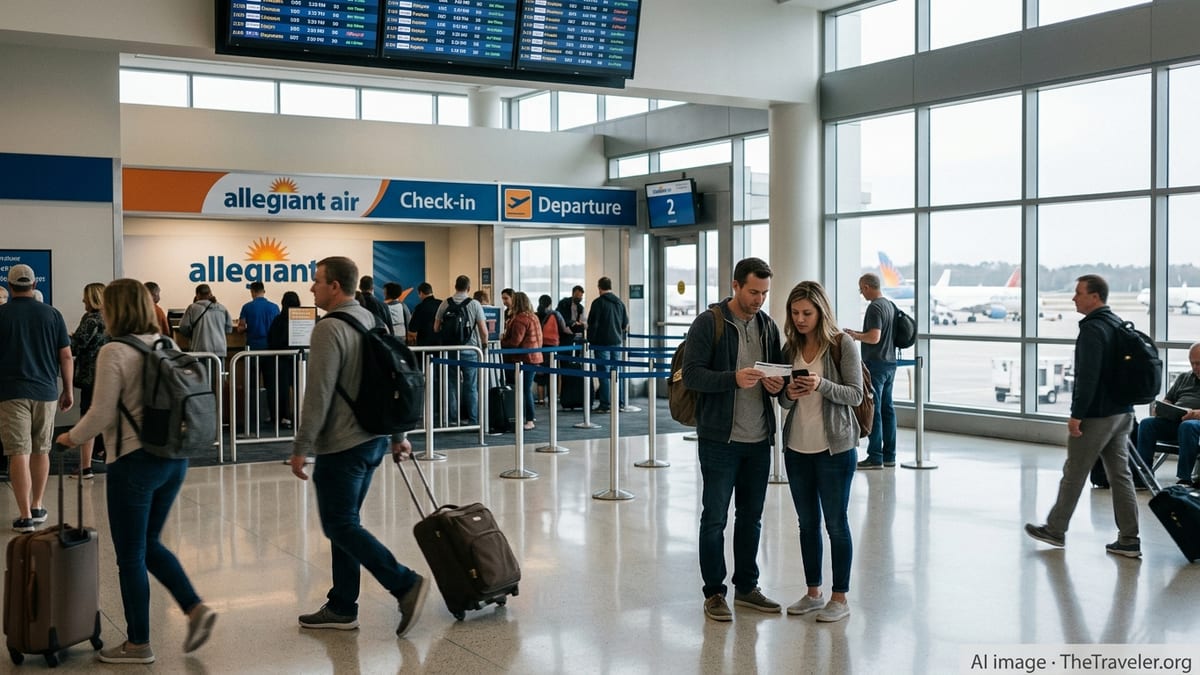
Allegiant is rolling out a new initiative called “Travel with Confidence,” designed to give budget-conscious leisure travelers more flexibility and clearer choices as economic jitters and unpredictable schedules continue to shape how Americans fly.
Get the latest news straight to your inbox!
What ‘Travel with Confidence’ Is Designed to Do
Allegiant’s “Travel with Confidence” initiative is being introduced against a backdrop of fluctuating demand and heightened sensitivity to trip disruptions. Publicly available company information and industry commentary indicate that Allegiant is leaning into flexibility as a way to reassure travelers who might hesitate to lock in nonrefundable fares during uncertain times.
The program centers on making it easier to adjust plans when work, health or financial circumstances shift. While Allegiant has long offered add-ons such as Trip Flex and third-party travel insurance, “Travel with Confidence” is positioned as a broader framework that pulls these options together and promotes them as part of a single, traveler-focused message.
For passengers, the practical effect is a more visible set of tools to modify itineraries, protect trip value and understand what happens if plans must change at the last minute. The initiative builds on Allegiant’s existing low-cost model, in which base fares cover transportation while optional extras provide customization and revenue for the airline.
The launch also fits into a wider trend across the U.S. airline sector, where carriers continue to refine change and cancellation policies that were first relaxed during the pandemic and then recalibrated as demand recovered.
Core Elements: Flexibility, Credits and Fees
At the heart of Allegiant’s approach are its change and cancellation rules, which already differ from many full-service carriers. Standard Allegiant tickets typically remain nonrefundable in cash, and changes often result in travel credits rather than direct refunds. “Travel with Confidence” highlights how these credits work and under which conditions fees may be reduced or waived.
Trip Flex, the carrier’s long-standing optional add-on, is expected to remain a central feature. When purchased with a ticket, Trip Flex generally allows one itinerary change without the standard change fee, though passengers may still need to pay any difference in fare. The new initiative underscores this as a key way to preserve flexibility if dates or destinations need to shift.
The broader framework also points travelers toward travel insurance products, which can help recover nonrefundable costs in certain covered situations. While these policies are administered by third-party providers, Allegiant markets them alongside its fares as another layer of protection in periods of personal or economic uncertainty.
Taken together, these components create a clearer menu of options for customers weighing how much risk they are comfortable assuming. Travelers willing to commit to fixed plans can still opt for the lowest possible fare, while those seeking more flexibility can pay extra for safeguards that align with their tolerance for change.
How It Fits Allegiant’s Leisure-Focused Network
“Travel with Confidence” appears closely tied to Allegiant’s focus on point-to-point leisure routes linking smaller U.S. cities with popular vacation destinations. Reports on the airline’s strategy highlight that its customers are often families and casual travelers planning infrequent trips, rather than weekly business flyers.
For these passengers, one canceled sports tournament, rescheduled wedding or shift in school calendar can affect an entire vacation. By spotlighting ways to move trips without forfeiting all value, Allegiant is responding to a customer base that may feel particularly exposed to last-minute changes.
Analyst coverage of Allegiant’s performance has also pointed to a need to manage demand volatility on off-peak days and seasons. Encouraging travelers to book earlier, with added flexibility, can help the carrier firm up schedules while giving passengers reassurance that seats are not a one-shot bet.
Industry observers note that as Allegiant prepares for future fleet changes and potential network adjustments, initiatives that shore up customer confidence may help support bookings across newer and existing routes, particularly in secondary markets where travelers have limited alternative carriers.
What Travelers Should Check Before Booking
For passengers considering Allegiant under the “Travel with Confidence” banner, the most important step remains carefully reviewing fare conditions at checkout. Publicly available guides to Allegiant’s policies emphasize that eligibility for changes and credits depends on factors such as when a ticket was purchased, whether Trip Flex was added and how close the travel date is.
Travelers should verify whether a booking is cancelable within a short penalty-free window after purchase, and how any resulting credit would be issued or applied. They should also check the deadlines and limits associated with Trip Flex, including how far in advance a change must be requested and whether certain fare types or routes are excluded.
Those adding travel insurance are advised to read the policy documentation to understand what qualifies as a covered reason for cancellation or interruption, and to confirm how claims are processed. Program names and marketing language may sound similar, but each product operates under its own terms and conditions.
Because Allegiant’s policies can differ from those of larger network carriers, travelers who are accustomed to more flexible main-cabin tickets elsewhere may want to take extra time to compare options. The “Travel with Confidence” message aims to make those trade-offs more transparent at the moment of purchase.
Positioning Within a Competitive Market
Allegiant’s move comes as airlines across the United States continue to adjust their approaches to fees, ancillary products and customer loyalty. Budget-focused carriers, in particular, have been looking for ways to retain low base fares while addressing traveler expectations for flexibility that solidified during the pandemic years.
Public earnings releases and investor commentary on Allegiant have highlighted the growing importance of add-ons, from bundled seat and baggage packages to co-branded credit cards and travel protection products. “Travel with Confidence” sits within that larger ancillary strategy, presenting flexibility not as a departure from the low-cost model but as an optional upgrade for those who value it.
For consumers, the initiative reinforces a broader industry message: flexibility has a price, but that price may be worth paying in an era when work, health and economic conditions can shift quickly. Allegiant is betting that by structuring and promoting its options more clearly, hesitant travelers will be more willing to commit to future trips, even when the outlook feels uncertain.
How widely travelers embrace the “Travel with Confidence” concept will become clearer as booking patterns evolve across seasons and markets. For now, it signals that Allegiant sees traveler reassurance as a competitive asset, not just a cost of doing business in unpredictable times.