

More news on this day
Allegiant’s decision to add Atlantic City to its network and extend its flight schedule through May 2026 is emerging as a timely boost for the Carolinas’ tourism economy, tightening air links between resort cities like Myrtle Beach and key Northeast feeder markets that increasingly rely on low-cost, nonstop service.
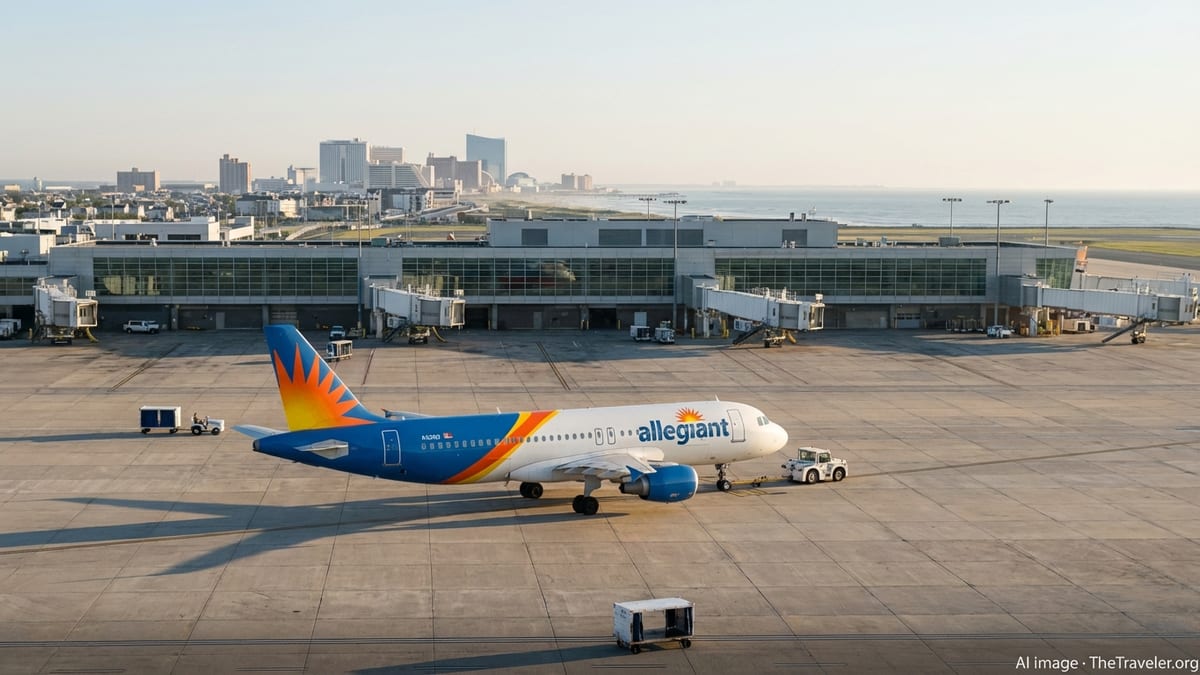
Atlantic City Joins Allegiant Network as Coastal Leisure Hub
When Allegiant announced in August 2025 that it would begin serving Atlantic City International Airport with four new nonstop routes, aviation and tourism officials across the Mid Atlantic and Southeast immediately saw implications that stretch well beyond New Jersey. By positioning Atlantic City as a fresh coastal node in its point to point system, the ultra low cost carrier effectively added a new spoke in the broader tourism network that already connects travelers from the Northeast to the beaches of the Carolinas.
The new Atlantic City flights are focused initially on Florida sunshine, with nonstop service to Fort Lauderdale and Orlando Sanford starting in December 2025 and to Punta Gorda and St. Pete Clearwater in February 2026. Even without a direct Carolina link from Atlantic City, those routes plug into a pattern: Allegiant is steadily building a lattice of leisure focused connections among second tier and regional airports, and Myrtle Beach stands out as one of the airline’s fastest rising East Coast destinations within that design.
Crucially for planners and hoteliers, Allegiant has already extended its schedule for all markets, including Atlantic City, through May 2026. That longer booking window allows Northeast travelers to lock in spring and early summer trips months in advance, smoothing demand into destinations such as Myrtle Beach, Hilton Head and coastal North Carolina that depend heavily on drive and fly traffic from New Jersey, Pennsylvania and New York.
For Atlantic City itself, the arrivals of Allegiant jets from Florida help diversify an airport that has long struggled to maintain consistent service. For the Carolinas, they indicate that a new stream of price sensitive leisure travelers will have better access to low fares and more connecting options into the region’s resorts, even when those connections are stitched together by travelers themselves rather than traditional hub and spoke itineraries.
How Extended Schedules Through May 2026 Support Carolina Travel
Allegiant’s decision to release its schedule through May 2026 might sound like an internal planning milestone, but for tourism boards from Myrtle Beach to the Outer Banks it is a critical tool. Many households in the Northeast time their summer travel purchases around winter and spring promotions. Knowing that flights to and from Atlantic City, Myrtle Beach and other leisure airports are already loaded into reservation systems through the peak booking season gives them confidence to market longer stays and shoulder season trips.
Tour operators and vacation rental managers in the Carolinas say that extended airline schedules reduce a persistent friction point: would be visitors often hesitate to reserve a beach house or condo until they can lock in airfare. When a low cost carrier like Allegiant publishes flights months earlier than some full service competitors, it encourages budget focused families to commit to a beachfront week rather than a shorter, more expensive city break.
For the airline, the longer horizon helps refine pricing around key demand spikes, including spring break, Easter and Memorial Day. With Atlantic City now in the mix as a new origin for Northeastern travelers headed toward the Southeast, Allegiant can watch booking patterns develop and adjust capacity or fares on Myrtle Beach and other Carolinas routes to capture more of that traffic. That data feedback loop, in turn, helps destination marketers target advertising in markets where airfare remains a value proposition.
Atlantic City’s integration into the schedule through May 2026 also sends a signal of stability to airport and regional planners. Rather than relying on one summer at a time commitments, stakeholders can map out at least two full shoulder seasons of cooperative marketing, encouraging visitors who discover Allegiant via Atlantic City’s Florida flights to consider a Carolina beach escape on a subsequent trip.
Myrtle Beach Emerges as Allegiant’s Carolina Anchor
Myrtle Beach International Airport has quietly become one of Allegiant’s key beach gateways on the East Coast, and the 2026 schedule solidifies that role. The carrier recently confirmed new nonstop routes into Myrtle Beach from cities such as Elmira in upstate New York and Dayton in Ohio, both set to launch in May 2026 with introductory one way fares pitched to value conscious travelers. Those additions join existing links from the Midwest and Northeast that funnel visitors directly into the Grand Strand.
For the Carolinas’ tourism network, Myrtle Beach plays the role of both destination and distribution point. Many visitors who land there spread out along coastal South Carolina and even into southeastern North Carolina, supporting a range of resorts, campgrounds and short term rental communities. Allegiant’s pattern of serving smaller origin airports mirrors the Carolinas’ own patchwork of seaside towns, where localized attractions and family traditions matter as much as headline brands.
As Atlantic City ramps up under Allegiant’s banner, there is growing expectation among tourism officials that a nonstop link between Atlantic City and Myrtle Beach will eventually appear on the airline’s route map. Even in advance of such a pairing, however, the strengthened position of both airports within Allegiant’s system already benefits the Carolinas. Travelers who discover the airline through Atlantic City’s Florida flights may be more likely to consider Myrtle Beach or other Carolina destinations when browsing future vacation options, especially if they live near a participating regional airport that feeds into Allegiant’s growing Myrtle Beach offerings.
Meanwhile, the Myrtle Beach airport authority has been investing in terminal improvements and route incentives aimed at sustaining low cost service beyond the core summer window. Having an airline that is showing clear confidence in leisure focused coastal cities, from Atlantic City to Gulf Shores, reinforces the case for similar investments along the South Carolina shoreline.
Strengthening the Northeast to Carolina Tourism Corridor
For decades, the so called Northeast to Carolina corridor has been dominated by long car trips along Interstate 95 and coastal highways, as generations of families made their way to Myrtle Beach, the Outer Banks and the South Carolina Lowcountry. The rise of low cost, nonstop flights from secondary airports is gradually rewriting that script, turning what once required a full day’s drive into a two hour flight followed by a shorter car journey to the final beach town.
Atlantic City’s new Allegiant service inserts another aviation gateway into this corridor. Travelers from southern New Jersey and parts of Pennsylvania who might previously have driven straight south or flown only from larger airports like Philadelphia now have an alternative that fits Allegiant’s simple, fee based model. As they grow comfortable with the airline’s style of travel, they are natural candidates for marketing campaigns that highlight the ease of flying from a local field to Myrtle Beach or other Carolina airports served by the carrier.
The timing is favorable. The Carolinas are seeing steady growth in visitor numbers, particularly among families seeking budget friendly alternatives to more expensive Florida resorts. Allegiant’s expansion, with Atlantic City as a fresh spoke and Myrtle Beach as a proven node, is tailored to exactly that demographic: travelers who prioritize low base fares and nonstop flights over premium in flight frills.
Regional tourism leaders are already exploring joint campaigns that could stitch these pieces together, promoting itineraries that start with gaming, dining and boardwalk strolls in Atlantic City before continuing on to a beach rental in North or South Carolina. Airline schedules that stretch through May 2026 give marketers a tangible timetable to work with, allowing them to test packages and messaging across multiple booking cycles.
Economic Ripple Effects Across Coastal Communities
Air service decisions ripple quickly through tourism dependent economies, and Allegiant’s Atlantic City launch combined with its Myrtle Beach growth trajectory is no exception. Hoteliers, restaurateurs and attraction operators up and down the Carolina coast report that the presence of low cost carriers often correlates with longer average stays, as travelers reallocate savings on airfare toward additional nights in a rental or extra excursions.
With Atlantic City now connected to multiple Florida destinations under Allegiant’s banner, there is also an emerging two way flow of visitors. Residents of the Carolinas who might typically drive to Florida for vacations may find that a short Allegiant hop from Myrtle Beach or nearby regional airports to Atlantic City, via connections in Florida or other Allegiant cities, offers a new style of getaway that does not require a long highway grind. That diversification of options helps smooth seasonal peaks and valleys, particularly for businesses that operate year round.
Local officials in the Carolinas also emphasize the branding power that comes with being visible on a fast growing airline’s route map. Each new Allegiant route into Myrtle Beach or neighboring airports is accompanied by marketing materials, search visibility and word of mouth that collectively reinforce the narrative of the Carolinas as accessible, affordable beach destinations. Atlantic City’s appearance alongside those cities in Allegiant’s system maps and booking flows effectively links the Mid Atlantic gaming capital with the Southeast’s family friendly shorelines in the minds of travelers.
In the longer term, improved air connectivity supports workforce mobility as well as leisure travel. Seasonal employees, hospitality professionals and even remote workers who divide their time between the Northeast and the Carolinas benefit from additional nonstop options, particularly when they originate from smaller airports with easier parking and security queues than crowded hubs.
What Travelers Can Expect From Allegiant’s Atlantic City Operations
For travelers considering Atlantic City as their departure point in 2026, Allegiant’s operating model will be familiar to anyone who has flown the airline from Myrtle Beach or other leisure airports. The carrier focuses on a limited number of weekly frequencies, often aligning flights with weekend and peak demand days rather than daily schedules, and builds its value proposition around low base fares supplemented by optional fees for seat selection, carry on bags and other extras.
At Atlantic City International, Allegiant’s new flights to and from Florida are expected to use single class Airbus narrowbody aircraft, with a straightforward, high density cabin layout designed to keep per seat costs down. That approach mirrors the airline’s Myrtle Beach operations and is part of what allows it to maintain service in markets that might not support the higher overhead of a full service airline.
Passengers traveling from Atlantic City into the Carolinas via Allegiant will mostly piece together self connections, often routing through Florida or another Allegiant city. While this requires more planning than a traditional hub itinerary, it can be significantly cheaper for flexible travelers who are willing to manage separate tickets and allow for longer connection times. Allegiant’s extended schedule through May 2026 gives such travelers more visibility into possible combinations, particularly for spring and early summer trips.
Airport officials in both Atlantic City and Myrtle Beach are working to streamline the on the ground experience, improving parking, baggage areas and terminal amenities to handle increased leisure volumes. That infrastructure work is essential if the budget friendly promise of Allegiant’s fares is to be matched by a smooth start and end to the journey on each end of the route.
Strategic Outlook: Will a Direct Atlantic City–Carolina Route Follow?
Industry analysts note that Allegiant’s route decisions tend to follow demonstrated demand rather than speculative plays. The strong performance of Myrtle Beach and other Carolina markets, combined with Atlantic City’s addition to the network, has sparked speculation that a nonstop route linking the two coasts might appear in a future schedule extension beyond May 2026.
Several factors will shape that decision. Load factors on Atlantic City’s initial Florida flights, competitive responses from other carriers in the broader Mid Atlantic to Southeast corridor and the continued strength of Myrtle Beach bookings from Northeastern origins will all play a role. If those metrics remain robust, a seasonal Atlantic City to Myrtle Beach link could fit neatly into Allegiant’s pattern of weekend heavy, summer focused flying tailored to family travelers.
In the interim, tourism agencies in both regions are moving ahead as though the partnership already exists. Cooperative campaigns, shared data on visitor profiles and joint outreach at travel trade events help reinforce the idea that Atlantic City, Myrtle Beach and other Carolina communities are part of a single, evolving leisure network stitched together by low cost, nonstop flights. The result is a more resilient tourism ecosystem, less vulnerable to disruptions in any single market.
For travelers planning trips in 2026, the message is straightforward. Allegiant’s arrival in Atlantic City and its continued investment in Myrtle Beach and other Carolina gateways are expanding the menu of affordable options for reaching the Southeast’s beaches. Whether or not a dedicated nonstop emerges by the peak of summer, the airline’s growing footprint is already reshaping how and from where visitors flow into the Carolinas’ coastal communities.