

More news on this day
A Delta Air Lines departure at Savannah–Hilton Head International Airport was briefly delayed when an alligator wandered too close to aircraft operations, creating a distinctly Lowcountry kind of traffic jam on the tarmac.
Get the latest news straight to your inbox!
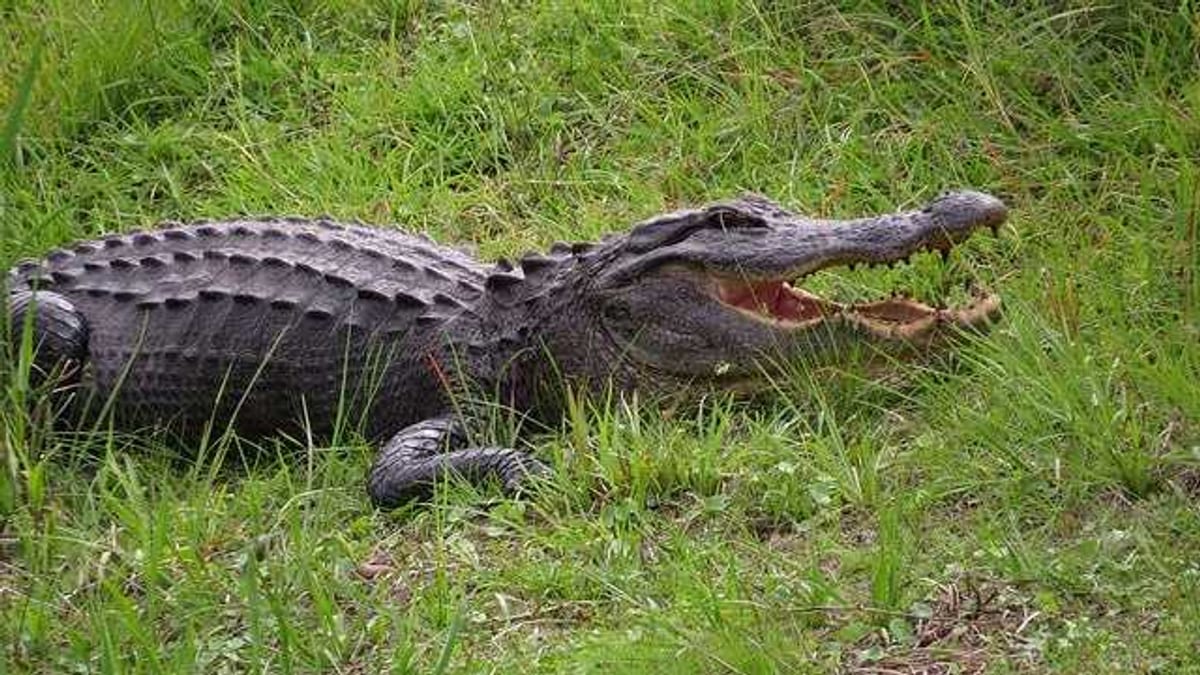
Image by WJCL
Unusual Wildlife Sighting Slows Routine Departure
Reports circulating on social media and travel forums indicate that the delay occurred after ground crews and airfield personnel spotted an alligator near a taxiway used by a Delta flight preparing for departure. For safety reasons, aircraft movement was paused while the reptile’s position was assessed and the animal was allowed to clear the active area.
Available accounts describe the disruption as short lived, with the affected Delta aircraft waiting on the ground until the alligator moved away from the paved surface. No injuries were reported, and there is no indication of damage to airport facilities or aircraft.
While passengers experienced a brief delay, publicly available flight-tracking records for Savannah–Hilton Head International on similar wildlife occasions typically show pauses of under an hour before normal activity resumes. In this case, reports suggest the interruption lasted only long enough for staff to be confident that the animal no longer posed a risk to operations.
The incident adds an eye catching chapter to the growing list of unusual reasons for minor flight delays, a category that has included everything from birds and sea turtles to stray pets on airport grounds in other parts of the United States.
An Airport Surrounded by Swampland and Wildlife
Savannah–Hilton Head International Airport sits amid wetlands and swampland on the outskirts of Savannah, an environment that naturally attracts alligators, wading birds, and other native species. Public planning documents and industry coverage of the airport’s operations describe several hundred acres of surrounding marsh and low lying areas where wildlife is commonly present on the periphery of the airfield.
Airport improvement and safety assessments note that alligators are part of the broader wildlife mix around Savannah and coastal South Carolina. The creatures are known to move through canals, retention ponds, and drainage corridors that crisscross airport properties and nearby highways, particularly during warm weather.
In response to this setting, Savannah–Hilton Head International has developed specialized wildlife management practices over the years. Publicly available information about the airport’s airfield operations highlights the use of regular perimeter patrols and other measures designed to keep animals away from runways and taxiways whenever possible.
Even with such precautions, occasional wildlife intrusions remain a fact of life at airports with large, undeveloped buffers. When an animal as sizable as an alligator approaches pavement used by jet traffic, the standard response is to halt aircraft movement until the situation is resolved, prioritizing safety over schedule.
How Airports Handle Wildlife Near Runways
Across the aviation industry, encounters with wildlife are managed according to established safety protocols that focus on keeping both passengers and animals out of harm’s way. For large species such as deer, coyotes, or alligators, the first step is usually to suspend departures and arrivals in the affected area, then coordinate with airfield personnel to monitor the animal’s movement.
At airports bordered by wetlands or water, wildlife programs can include habitat modification, fencing, and drainage design aimed at making active airfield areas less inviting to animals. In some cases, airports also explore the use of technology such as cameras or drones to help monitor fence lines and hard to reach terrain where wildlife might approach.
Published profiles of Savannah–Hilton Head International note that the airport has studied the use of unmanned aircraft systems to supplement traditional wildlife patrols, reflecting how facilities in sensitive habitats are investing in new tools to detect and deter animals before they reach busy surfaces.
Despite such efforts, industry data show that occasional wildlife related ground holds are not uncommon at airports located in coastal or wetland regions. These incidents are typically brief, and once staff confirm that the area is clear, normal taxi and takeoff procedures resume.
Passenger Experience: A Memorable Delay But Limited Disruption
For travelers on the delayed Delta flight, the sight of an alligator interrupting their departure likely turned an ordinary wait on the tarmac into a travel story to share. Social media posts about similar events at other southeastern airports frequently include photos taken from cabin windows and lighthearted commentary about sharing runway space with local wildlife.
From an operational standpoint, publicly available data for Savannah–Hilton Head flights on days with comparable short term disruptions show that knock on effects are generally limited. Once the immediate pause lifts, subsequent departures and arrivals often proceed close to schedule, especially at mid sized airports where traffic volumes are moderate.
In cases like the alligator delay, the impact tends to be contained to the aircraft already in the queue. Airlines may adjust departure times slightly and coordinate with connecting hubs to accommodate passengers whose itineraries are tightly timed.
For visitors heading to Hilton Head Island and the surrounding Lowcountry resorts, a wildlife related pause may serve as an early reminder that the coastal environment they have come to experience is never far away, even at the airport.
Balancing Tourism, Safety, and the Coastal Ecosystem
The Savannah–Hilton Head region relies heavily on tourism, attracting visitors for its beaches, golf courses, historic districts, and marshland scenery. Alligators are a well known part of that landscape, often spotted in lagoons on golf courses or along nature trails throughout coastal Georgia and South Carolina.
State and academic guidance on alligator behavior emphasizes that the animals are generally wary of people but can become bolder when habituated to human activity or food sources. Travelers are urged to observe wildlife from a distance, obey posted warnings, and avoid feeding or approaching alligators, whether near residential areas, resort communities, or transportation corridors.
Events like the brief Delta delay at Savannah–Hilton Head underscore the constant balancing act between maintaining efficient transportation links and respecting the native ecosystem that draws many visitors in the first place. For airports, that balance is expressed through investment in wildlife management plans and infrastructure that aims to protect both aviation safety and local species.
For travelers, the encounter serves as a vivid illustration that in this part of the country, the journey to and from the airport is closely intertwined with the surrounding marshes and waterways. An alligator on the taxiway may be an inconvenience, but it is also a reminder that the Lowcountry’s wild side remains very much alive at the edge of the runway.