

More news on this day
Passengers departing Savannah Hilton Head International Airport experienced an unexpected wildlife encounter when an alligator near the taxiway briefly delayed a Delta Air Lines flight, turning a routine departure into a distinctly Lowcountry moment.
Get the latest news straight to your inbox!
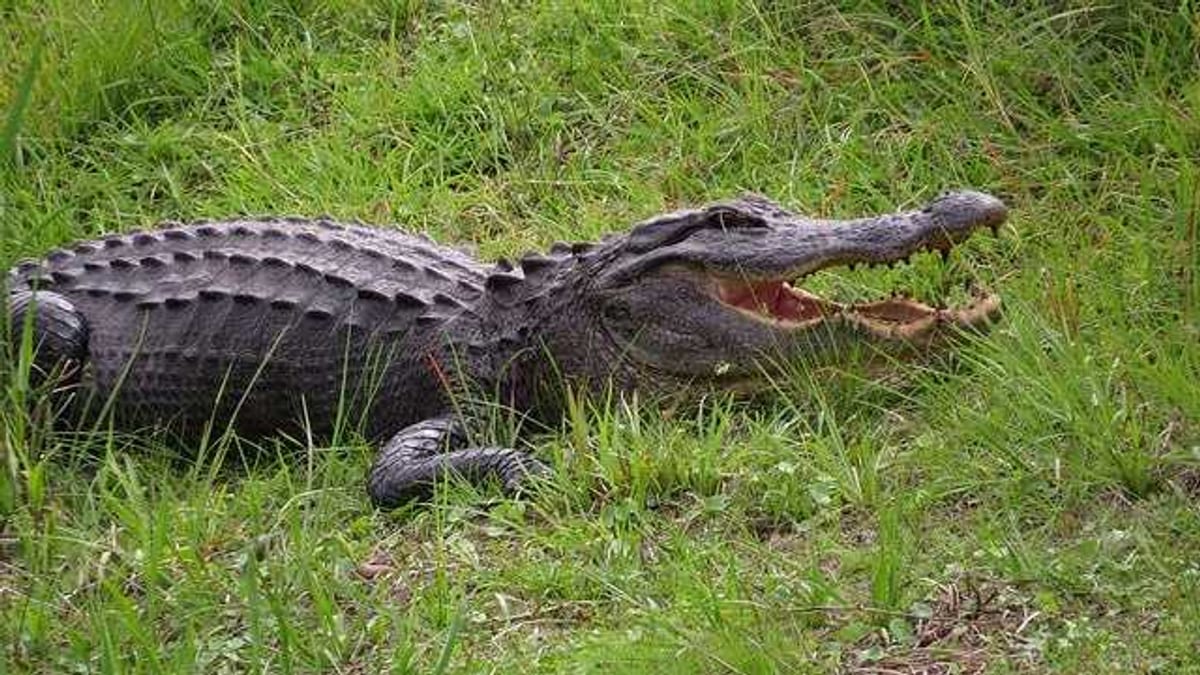
Image by wjcl.com
Reptile On The Move Near The Runway
According to local and aviation industry coverage, the delay occurred after ground crews spotted an alligator close to an active movement area at Savannah Hilton Head International Airport. The animal reportedly ambled across pavement used by aircraft, prompting crews to pause a Delta departure while the reptile finished its slow crossing.
Publicly available flight data for recent departures from Savannah to major hubs such as Atlanta indicates only a brief interruption in operations consistent with a short wildlife delay. The pause lasted long enough for the alligator to clear the immediate area so ground staff and pilots could confirm that taxi routes were unobstructed.
No injuries were reported, and available information does not indicate any damage to aircraft or airport infrastructure. The incident remained a curiosity rather than a safety emergency, underscoring both the proximity of Savannah’s airfield to wetlands and the routine nature of wildlife management in the region.
Social media posts and traveler accounts describe the moment as more amusing than alarming, with some passengers treating the pause as an unexpected glimpse of coastal Georgia’s natural environment from the cabin window.
Savannah’s Airport Sits Next To Prime Alligator Habitat
Savannah Hilton Head International is surrounded by wooded areas and low-lying wetlands typical of coastal Georgia and South Carolina. Airport planning documents and tourism reports describe the broader region as rich in marshes, ponds, and drainage canals, all of which can provide ideal habitat for alligators.
Wildlife sightings around the airfield are not unprecedented, and regional travelers are accustomed to seeing alligators near golf course water hazards, roadside ditches, and retention ponds. The airport’s extensive drainage features, essential for handling heavy rain, can occasionally attract native wildlife that move through the waterways.
Airport materials note that Savannah Hilton Head International balances growth in passenger traffic with environmental considerations, including stormwater systems and vegetated buffer zones. Those same features that help protect nearby waterways can also support the movement of animals in and around airport property.
The incident illustrates the particular character of travel in the Lowcountry, where modern aviation infrastructure stands only a short distance from natural habitats, and occasional encounters with native species remain part of the landscape.
Wildlife Management Is A Standard Part Of Airport Safety
While an alligator on or near a taxiway makes for memorable headlines, wildlife management programs at commercial airports treat such sightings as predictable operational issues. Federal guidance in the United States encourages airports to maintain wildlife hazard management plans, which commonly address birds, deer, and other animals that might stray close to runways and taxiways.
Publicly available airport planning documents and aviation safety resources emphasize that the standard response to large wildlife near movement areas is to halt aircraft until the hazard has passed or has been moved. In Savannah’s case, the alligator was allowed to clear the area, after which the Delta flight continued departure preparations.
Experts often note that larger animals can pose more serious risks than smaller species because of their size and weight, even if they move slowly. For that reason, brief operational delays are considered a routine and appropriate precaution whenever such animals are spotted within or adjacent to active airfield zones.
The quick return to normal operations at Savannah Hilton Head International following the sighting suggests that existing procedures worked as intended, with only minor disruption to passengers’ schedules.
Passengers Capture A Uniquely Local Travel Story
Accounts shared online indicate that travelers on the delayed Delta flight reacted with a mix of surprise and humor as word spread that the hold-up involved an alligator, not a mechanical issue or weather-related restriction. For many out-of-town visitors, the pause offered a story that felt distinctly tied to the region they were departing.
Some passengers reportedly snapped photos or videos through the cabin windows as the reptile moved at its own pace across the pavement and adjacent grass. While not all travelers could see the animal directly, the explanation for the delay quickly circulated throughout the cabin.
The brief interruption came during a period of generally normal operations at Savannah Hilton Head International, according to airline tracking services. That context likely helped soften any frustration, since passengers were able to continue to their destinations with only a modest adjustment to their departure time.
For local tourism businesses promoting the Savannah and Hilton Head area, such an incident may even reinforce the region’s enduring image as a destination where coastal nature remains close at hand, even at the airport.
Highlighting The Balance Between Growth And Environment
The episode at Savannah Hilton Head International draws attention to the ongoing balance between expanding air travel and preserving the coastal ecosystems that attract visitors to the region in the first place. Passenger volumes through Savannah have grown in recent years, supported by additional flights and broader route networks.
At the same time, planning and marketing documents for the Savannah and Hilton Head area consistently emphasize marshes, rivers, and wildlife-rich landscapes as central to the destination’s appeal. The alligator sighting on the airfield neatly encapsulates that dual identity, where tourism and transportation infrastructure sit beside natural habitats.
Industry observers note that as regional airports grow, investment in wildlife monitoring, fencing, and habitat management typically increases as well. The goal is not to eliminate nearby ecosystems, but to reduce the likelihood that animals will appear on runways and taxiways, where they can disrupt operations or create hazards.
For travelers passing through Savannah, the brief delay caused by a wandering alligator serves as a reminder that in this corner of the Southeast, the natural world remains a visible part of the journey, even as jets line up for departure.