

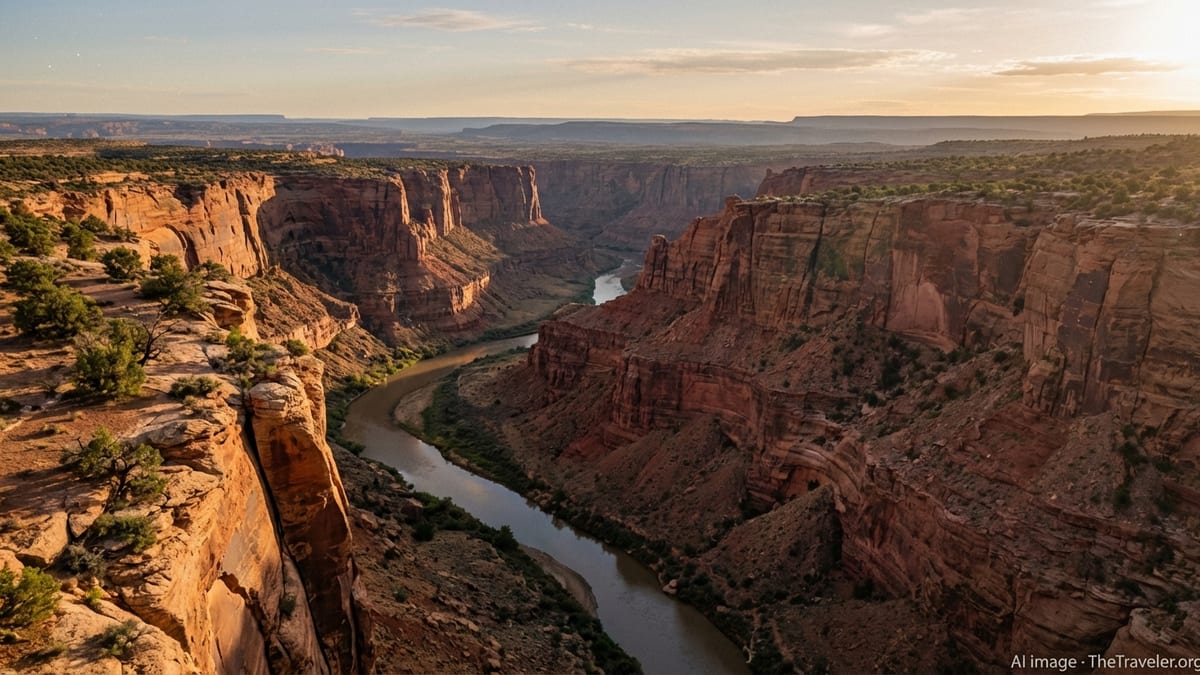
Arizona’s canyons have become symbols of the American Southwest, from the vast yawning chasm of the Grand Canyon to the sculpted narrows of Antelope Canyon. But surging visitor numbers, heat, limited permits and rising costs have many travelers asking a simple question: where else can you go for equally dramatic canyon scenery, without following the same well-trodden path? Around the world, rivers and tectonic forces have carved extraordinary gorges, ravines and slot canyons that deliver the same sense of scale and wonder, often with fewer crowds and a different cultural backdrop. Here is where to look if you love Arizona’s canyon landscapes but are ready for something new.
Why Look Beyond Arizona’s Famous Canyons
Arizona’s canyon country is deservedly popular. The Grand Canyon draws millions of visitors each year, and social media has turned places like Antelope Canyon and Horseshoe Bend into global photo icons. That fame comes with pressure. Peak seasons now bring roadside congestion, competition for limited permits, and heavily guided experiences where time inside a canyon can feel strictly managed. For some travelers, the result is less solitude and spontaneity than the scenery seems to promise.
Heat and safety are also factors. Much of Arizona’s canyon country bakes in summer, with temperatures that can make hiking dangerous by late morning. Flash floods are a recurring risk in narrow side canyons. Park rangers and land managers have responded with more regulation and timed entries in the most fragile places, an understandable step that also reduces flexibility for independent travelers who prefer to follow their own schedule.
Looking beyond Arizona does not mean settling for lesser landscapes. The same geologic story that shaped the Colorado Plateau extends across state and national borders, and other regions have their own spectacular canyons carved into limestone, sandstone and basalt. Some feel uncannily similar to Arizona’s red-rock temples. Others offer a fresh twist: river gorges draped in European villages, subtropical ravines filled with endemic plants, or dramatic desert canyons where you might see only a handful of other hikers all day.
Choosing an alternative destination can also diversify your trip. Instead of flying into Phoenix or Las Vegas, you might anchor an itinerary around Denver, Madrid or Cape Town, pairing canyon hikes with wine regions, coastal drives or historic city stays. With thoughtful planning, canyon scenery becomes one part of a more varied, and sometimes less crowded, travel experience.
Utah’s Canyon Country: The Most Natural Stand-In
If you want Arizona-style rock but new horizons, southern Utah is the most obvious alternative. The region shares the same Colorado Plateau geology that underpins northern Arizona, yet it spreads across a patchwork of national parks, monuments and Bureau of Land Management lands that feel wilder once you step away from the main viewpoints. For many travelers, it delivers the drama of the Grand Canyon and Sedona with more options to disperse and explore.
Zion National Park is often compared to a canyon version of a cathedral, with sheer sandstone walls soaring more than 2,000 feet above the Virgin River. The best-known hikes are no secret, but even as crowd management systems evolve, visitors can still find quieter stretches by starting early, visiting in shoulder seasons or heading for less-publicized trails. Just driving the approach roads, where cliffs rise in rose, cream and rust-colored layers, offers a taste of that vertical scale that many associate with Arizona’s most famous viewpoints.
Beyond Zion, the network of protected lands between Kanab and the Arizona border holds some of the Southwest’s most remarkable slot canyons. Buckskin Gulch in the Paria Canyon–Vermilion Cliffs Wilderness is frequently cited as one of the longest and deepest slot canyons in the region, with towering, close-set walls that can stay in shadow for much of the day. Access typically begins from trailheads along a gravel road off a remote stretch of highway, and permits are required both for day hiking and overnight trips. The environment is unforgiving, with real flash-flood risk, but for experienced hikers this is a powerful alternative to Arizona’s better-known narrows.
Capitol Reef, Canyonlands and the less-trafficked corners of Grand Staircase–Escalante add to Utah’s case as Arizona’s closest cousin. Here you find water-carved canyons, labyrinthine side drainages and broad slickrock domes like those around Sedona, but on a scale that allows day hikers to wander for hours without seeing another group. The trade-off is that infrastructure can be sparse and some routes are unmarked, so research, good maps and conservative planning are essential.
Colorado and New Mexico: Mountain States with Hidden Gorges
Travelers who picture Colorado as strictly alpine may be surprised by how many canyons cut through its high desert and foothills. The Royal Gorge near Cañon City is one of the best-known examples, a steep-sided chasm carved by the Arkansas River. In places, the walls rise sharply above a narrow river corridor, creating a sense of vertical enclosure that resonates with anyone who has peered into the Grand Canyon. Much of the activity is structured around viewpoints, bridges and rafting trips, which can be an advantage for visitors who like clear access and safety infrastructure.
Farther west, Black Canyon of the Gunnison National Park offers perhaps the starkest alternative to Arizona’s layered red rock. Here, a relatively short river distance drops steeply through dark, metamorphic stone, producing some of the steepest cliffs in North America over a comparable span. Lookout points along the rim reveal a tight, shadowed chasm; in certain light you can see the river glinting far below, underscoring just how fast and deep the incision has been. Hiking trails and scenic drives hug the rims, while experienced climbers and boaters tackle the inner gorge under strict conditions.
New Mexico contributes its own canyon experiences, set against a distinct cultural backdrop. The Rio Grande del Norte National Monument preserves a dramatic river gorge north of Taos, where the river has sliced through a volcanic plateau to create an abrupt trench. Standing on the bridge that crosses the gorge or hiking along the rim, visitors get a strong sense of depth and space similar to some viewpoints on the Colorado River, but the surrounding landscape is high desert and sage rather than Arizona’s red sandstone mesas.
Elsewhere in New Mexico, canyons often intersect with Indigenous history and spiritual sites. Narrow valleys shelter ancestral dwellings and petroglyphs, and trails can pass from open mesa edges into wooded ravines in the span of a morning hike. For travelers who liked the cultural layers around the Grand Canyon and Sedona, this combination of geology and heritage can feel like a natural next step.
European River Gorges: Canyon Scenery with Old World Flair
You do not have to stay in North America to find canyon landscapes. Europe’s great river gorges may not always have the raw depth of Arizona’s most famous chasm, but they offer a similar sense of confinement and scale, paired with historic villages, vineyards and medieval ruins. For travelers who want canyon views alongside culture, food and relatively short driving distances, these are compelling alternatives.
Spain’s Ribeira Sacra in Galicia and neighboring regions is one example. Here, the Sil River and its tributaries have cut narrow canyons into a plateau of granite and slate, creating deep, twisting valleys lined with terraced vineyards and old stone monasteries. Boat trips along the river reveal cliffs rising steeply from the water, a reminder that canyon formation is as much a story of persistent rivers as it is of desert erosion. Yet at the rim, visitors can step into small towns, sample local wines and explore Romanesque churches, a very different experience from standing at an isolated overlook in the American Southwest.
France’s Verdon Gorge in Provence is often compared to a European Grand Canyon. While smaller in absolute scale, it offers dramatic limestone walls, turquoise river water and extensive networks of hiking trails and roadside viewpoints. From the rim, you can look down into a serpentine chasm that alternates between wider basins and tight narrows. Kayakers and climbers share the space with drivers cruising corniche roads, making it easy to combine active exploration with leisurely scenic drives.
In Eastern Europe, gorges like those carved by the Tara River in Montenegro or the Vltava in the Czech Republic showcase different facets of canyon topography. Some are cloaked in dense forest, with sheer rock faces emerging where rivers have sliced deep enough. For visitors used to the bare rock and sun-blasted vistas of Arizona, the juxtaposition of canyon walls with lush vegetation can feel both familiar and novel.
Europe’s canyons often benefit from moderate climates and established tourism infrastructure. Paved roads lead to viewpoints, public transport connections are common in peak seasons, and overnight options range from simple guesthouses to boutique hotels housed in centuries-old buildings. This ease of access comes at the cost of true wilderness, but it makes canyon scenery more approachable for families or travelers who prefer not to drive long distances on unpaved roads.
Southern Hemisphere Canyons: From South Africa to Australia
Head south of the equator and canyon landscapes appear in new geological settings, shaped by different rock types, vegetation and climates. These destinations are further afield for North American travelers, but they offer a strong contrast to Arizona, pairing deep ravines with coastal drives, wildlife and wine regions.
South Africa’s Blyde River Canyon is frequently cited as one of the largest green canyons in the world, a reference to its heavily vegetated slopes. Instead of exposed desert walls, you see rolling hills, cliffs and buttresses draped in subtropical foliage. Lookouts reveal sweeping views where river-cut valleys step down toward lowveld plains. The scene may be greener than anything in Arizona, yet the sense of a river system carving deeply into a plateau is strikingly similar.
In neighboring Namibia, the Fish River Canyon showcases a different end of the spectrum. Here, a desert river has etched a long, winding chasm into arid terrain, creating wide meanders and steep rock walls more reminiscent of parts of the Colorado Plateau. Hiking trails along the rim and into the canyon reveal layered rock formations and broad desert skies, an experience that can feel closer to the Grand Canyon than many expect, albeit on a smaller scale and with a far lower visitor density.
Australia adds another twist with its own canyon-like valleys and gorges. The Capertee Valley in New South Wales is sometimes noted for its sheer width, wider in places than the Grand Canyon, though shaped more like a vast basin enclosed by cliff lines than a single narrow trench. Trails and lookouts around the valley rim reveal vertical sandstone escarpments and forested slopes, an inversion of Arizona’s exposed rock but with that same sense of a landscape defined by uplift and erosion. Elsewhere, in the country’s interior, smaller gorges cut through red rock plateaus, creating pockets of desert scenery that would not look out of place in the Southwest.
Travel times to these southern hemisphere canyons are long for visitors from North America or Europe, so they are best approached as anchors for extended trips. Combining canyon hikes with coastal beaches, wildlife reserves or city stays helps balance the itinerary and justify the journey. Seasons are reversed from the Northern Hemisphere, which can also be an advantage if you are trying to escape winter at home.
Planning a Canyon-Focused Trip Without the Crowds
Wherever you choose to go, a thoughtful approach to timing and logistics is key to enjoying canyon scenery without feeling overwhelmed by other visitors. Shoulder seasons are often the sweet spot. In many canyon regions, late spring and early autumn offer milder temperatures than mid-summer, along with a noticeable drop in crowds once school holidays begin or end. Winter can be rewarding too in certain locations, though storms, icy trails and limited services are trade-offs to consider.
Starting early in the day remains one of the simplest strategies. In popular areas, trailhead parking lots often fill by mid-morning, but sunrise hikes tend to be quieter. Morning light can also be kinder for photography, especially in narrow canyons where direct sun later creates harsh contrast. In hot climates, early starts improve safety by allowing hikers to cover the most exposed miles before midday.
Permits and regulations deserve careful attention. Many canyon environments are fragile and prone to flash flooding, and land managers use permit systems to limit impact and coordinate rescue resources. Research current rules for each area, including group size limits, required equipment and seasonal closures. In some cases, guided trips provide access to sections of canyon that are otherwise off-limits, which can be worthwhile if you value both safety and local knowledge.
Finally, be realistic about your own comfort level with exposure, heat and remote terrain. Canyon hikes can be deceptive: descending at the start feels easy, but every step down must later be climbed back up. Altitude, lack of shade and uneven footing can magnify fatigue. Building in rest days, choosing routes with clear exit points and carrying more water than you think you need can make the difference between a memorable outing and a difficult one.
The Takeaway
Arizona’s canyon landscapes have earned their place on many travelers’ bucket lists, but they are far from the only places where rivers and geologic time have sculpted profound chasms in the earth. From Utah’s sprawling canyon country and Colorado’s shadowed gorges to European river valleys and southern hemisphere ravines, alternatives abound for those willing to look beyond the most photographed viewpoints.
Each alternative destination offers its own blend of geology, climate and culture. Some echo Arizona closely, with red-rock walls, dry air and long desert vistas. Others reinterpret canyon scenery through the lens of vineyards, subtropical forests or African savannas. Choosing among them is less about finding a perfect replica of a famous view and more about deciding what kind of trip you want overall: a road adventure through the American West, a cultural journey through Europe, or a long-haul expedition that pairs canyon hikes with coastal or wildlife experiences.
By planning carefully, respecting local regulations and being honest about your own limits, you can enjoy the drama of deep gorges and towering cliffs without the densest crowds. The forces that carved Arizona’s icons are at work around the world. Following those rivers and fault lines to new places can lead to canyon experiences every bit as memorable, and often more personal, than the classics they resemble.
FAQ
Q1. Are canyon destinations outside Arizona as impressive as the Grand Canyon?
Many canyons elsewhere are smaller in absolute terms, but they can feel just as impressive at ground level, especially where cliffs rise steeply and viewpoints are close to the rim.
Q2. What is the best time of year to visit canyon regions if I want to avoid extreme heat?
In most canyon destinations, late spring and early autumn strike the best balance, offering milder temperatures, fewer storms than mid-summer and generally lighter crowds than peak holiday periods.
Q3. Do I need special permits to hike in canyons outside Arizona?
Permit rules vary widely. Some regions allow open day hiking, while others require advance reservations for both day use and overnight trips, especially in narrow or flood-prone canyons.
Q4. How can I stay safe from flash floods in slot canyons?
Check recent weather for the entire upstream drainage, avoid entering narrow canyons when storms are forecast, heed local warnings and be prepared to turn back at the first sign of rising water or thunder.
Q5. Are there canyon destinations suitable for families with young children?
Yes, many canyon regions have short, well-marked rim trails, roadside viewpoints and boat trips that offer dramatic scenery without demanding long or exposed hikes.
Q6. How do canyon hikes in Europe compare with those in the American West?
European canyon and gorge hikes often combine steep terrain with nearby villages, roads and services, so the landscapes can feel dramatic while overall logistics remain relatively easy.
Q7. What kind of fitness level do I need for most canyon hikes?
Many viewpoints require only light walking, but longer trails typically demand good cardiovascular fitness, comfort on uneven surfaces and readiness for sustained climbs on the return.
Q8. Can I rely on mobile navigation apps in remote canyon areas?
Signal in canyons is often unreliable, so it is wise to carry offline maps, know how to read basic topographic features and treat digital tools as helpful extras rather than your only guide.
Q9. What essential gear should I pack for canyon trips?
Sturdy footwear, ample water, sun protection, layered clothing, a basic first-aid kit and some form of map or route description are core items in most canyon environments.
Q10. How can I minimize my environmental impact when visiting canyon landscapes?
Stay on established trails, pack out all waste, respect permit limits and local regulations, and avoid disturbing wildlife or fragile vegetation along canyon rims and riverbanks.