

More news on this day
Austria-based Amadeus River Cruises is preparing a dramatic expansion into Portugal, with plans for a next-generation luxury vessel on the Douro River from 2028 that industry observers say could reset expectations for upscale river cruising in the region.
Get the latest news straight to your inbox!
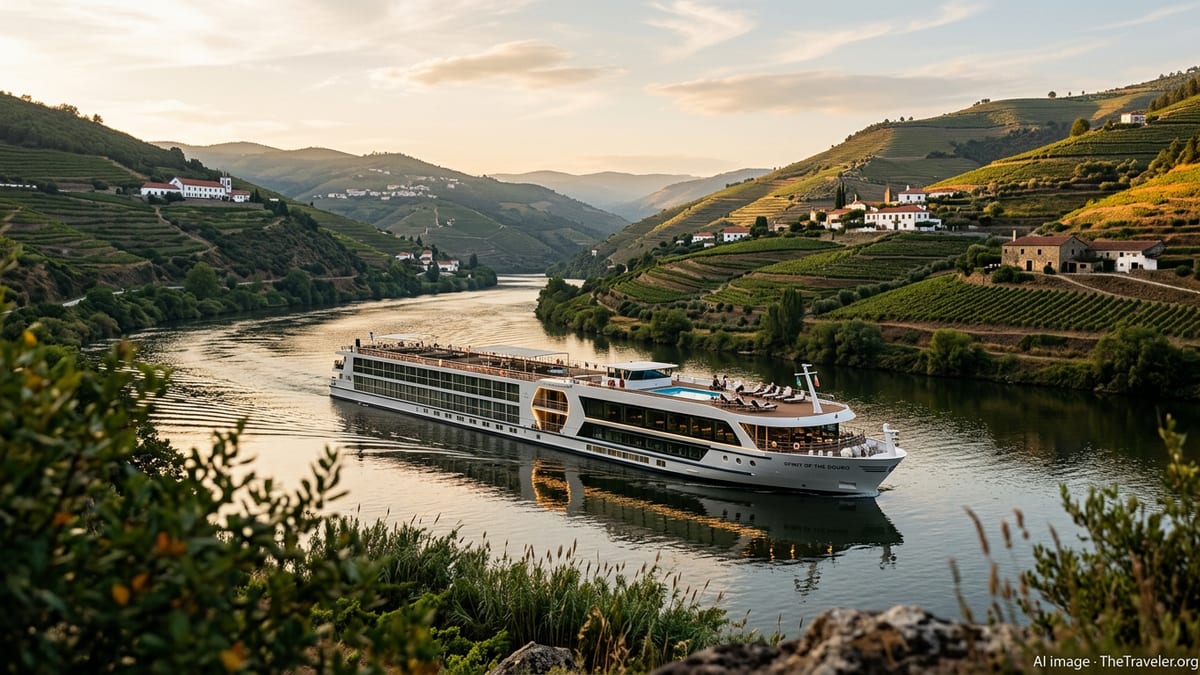
A Strategic Leap into Portugal’s Fast-Growing Douro Market
Publicly available industry coverage shows that Amadeus River Cruises has been steadily growing its European footprint with newbuilds such as Amadeus Aurea, debuting in 2026, and Amadeus Mira, scheduled for 2027. Reports indicate that the company now intends to extend this new-generation platform to Portugal, preparing a dedicated Douro-class ship targeted for a 2028 launch window. While full specifications and the final vessel name have not yet been made public, trade commentary increasingly refers to the project as a defining statement of intent for the Austrian brand in one of Europe’s most competitive river markets.
The move positions Amadeus to enter a river that has seen a wave of luxury investment, with operators ranging from specialist river lines to larger groups announcing new vessels for the late 2020s. By planning a purpose-built Douro ship rather than redeploying an existing vessel, Amadeus is signaling a long-term commitment to Portugal and to the specific operational and design challenges of a narrow, lock-controlled river framed by UNESCO-listed vineyard landscapes.
Analysts note that the Douro is emerging as a strategic counterweight to the Rhine and Danube, particularly for North American and UK travelers seeking warmer weather, wine-focused itineraries, and smaller ports of call. For Amadeus, which has historically concentrated on central and western Europe, a 2028 Douro debut is widely viewed as a logical next step in its North American growth strategy and in its broader push toward higher-yield, design-led ships.
A New Generation of Amadeus Design, Adapted for the Douro
Recent Amadeus newbuilds highlight a design language centered on airy interiors, floor-to-ceiling windows, and an emphasis on spacious suites and wellness amenities. Industry observers expect the forthcoming Douro vessel to draw heavily on this template while adapting to Portugal’s stricter size and draft constraints. That likely means a lower passenger count than the company’s Rhine and Danube ships, but with a higher proportion of premium accommodation and balcony-style cabins to maximize river and vineyard views.
Commentary in trade publications suggests that features pioneered on the 2025 and 2026 ships, such as expanded panoramic lounges, upgraded spa-style bathrooms, and refined culinary offerings, are being treated as a baseline for the Douro project. The new ship is widely expected to incorporate an extensive sun deck with shaded seating, compact pool or whirlpool facilities, and outdoor dining areas configured to take advantage of long Iberian evenings and terraced hillside vistas.
There is also growing anticipation around how Amadeus will handle sustainability on the Douro. Across Europe, new river vessels are increasingly specified with advanced propulsion systems, hull optimizations, and energy-efficient hotel operations. Industry reports indicate that the company has been investing in these technologies on its latest builds, and analysts expect the 2028 Douro ship to showcase further steps in emissions reduction, noise control, and shore power compatibility where local infrastructure allows.
Competing in an Intensifying Wave of Douro Newbuilds
The timing of the Amadeus Douro project aligns with a broader surge of investment on the Portuguese river. Scenic Group has publicly outlined plans for two new luxury vessels on the Douro by 2027, while other established players, including AmaWaterways, APT and Emerald Cruises, are also adding capacity in the second half of the decade. This clustering of launches is reshaping expectations about service levels, onboard space, and the range of excursions offered in northern Portugal and neighboring Spain.
Against this backdrop, Amadeus is expected to compete by emphasizing a refined, quietly luxurious style that its recent ships have been praised for in trade coverage. Rather than pursuing resort-style attractions, the company has historically focused on attentive service, food and wine programs calibrated to local regions, and understated interiors aimed at experienced river cruisers. Travel advisors following the brand suggest that a dedicated Douro vessel in 2028 would likely extend this approach, with programming centered on oenology, culture, and slow travel rather than headline-grabbing entertainment.
The intensifying competition is also encouraging operators to diversify their itineraries. With several new ships scheduled across 2027 and 2028, reports indicate a shift toward longer, more immersive Douro programs and combinations with Lisbon city stays or overland extensions into Spain. Industry observers expect Amadeus to field comparable offerings, potentially leveraging its broader European network to bundle Douro itineraries with Rhine or Danube cruises for multi-river journeys.
What the 2028 Debut Could Mean for Travelers
For travelers, the anticipated 2028 arrival of an Amadeus ship on the Douro points to more choice at the top end of the market. The line is known for a classic European ambiance that often appeals to guests who prefer a quieter, more traditionally styled experience compared with some of the newer lifestyle-focused concepts entering river cruising. Applied to Portugal, that could translate into an emphasis on regional cuisine, curated wine pairings, and guided visits that highlight local artisans, vineyard estates, and small riverside communities.
Travel planners note that Douro river cruises are typically more constrained by water levels and lock operations than some central European itineraries, which makes ship design and operating expertise particularly important. A purpose-built Amadeus vessel tailored to the river’s specific parameters is expected to prioritize stability, shallow draft, and optimized deck layouts that maintain passenger comfort during tight lock transits and occasional schedule adjustments.
The ship’s projected 2028 start also allows ample time for travel advisors and tour operators to build packages around it. Industry commentary suggests that early-access marketing to North American and UK audiences could focus on milestone trips, such as anniversaries and retirement celebrations, where guests are willing to invest in higher-category suites and extended pre- or post-cruise stays in Porto or Lisbon.
Signals of a Broader Shift in River Cruise Innovation
The Amadeus plan for a luxury Douro vessel in 2028 is being interpreted by sector analysts as part of a broader evolution in European river cruising. Rather than simply adding capacity on familiar routes, several brands are using the late-2020s delivery window to introduce new design standards, experiment with alternative propulsion solutions, and refine onboard experiences for a more demanding, experience-led audience.
On the Douro specifically, the clustering of high-end newbuilds over just a few years suggests that the river is transitioning from a niche wine-focused itinerary into a flagship product for multiple cruise groups. The anticipated Amadeus entry adds another well-known European player to that mix, raising expectations for service quality and for how sensitively ships interact with Portugal’s riverine environment and historic riverfront cities.
While details of the Amadeus Douro vessel remain under wraps, the company’s recent ship launches provide a clear indication of the direction of travel: fewer passengers per ship, more generous public spaces, an emphasis on large windows and open-air decks, and increased attention to sustainability and wellness. If those trends continue, travelers boarding the new Portuguese ship in 2028 can expect an experience that feels both distinctly local and closely aligned with the latest thinking in European river cruise design.