

More news on this day
Amsterdam has welcomed a new addition to Europe’s river cruise scene as AmaWaterways’ AmaSofia is christened in the Dutch capital, signaling a fresh boost for Rhine and Danube tourism ahead of its 2026 debut season.
Get the latest news straight to your inbox!
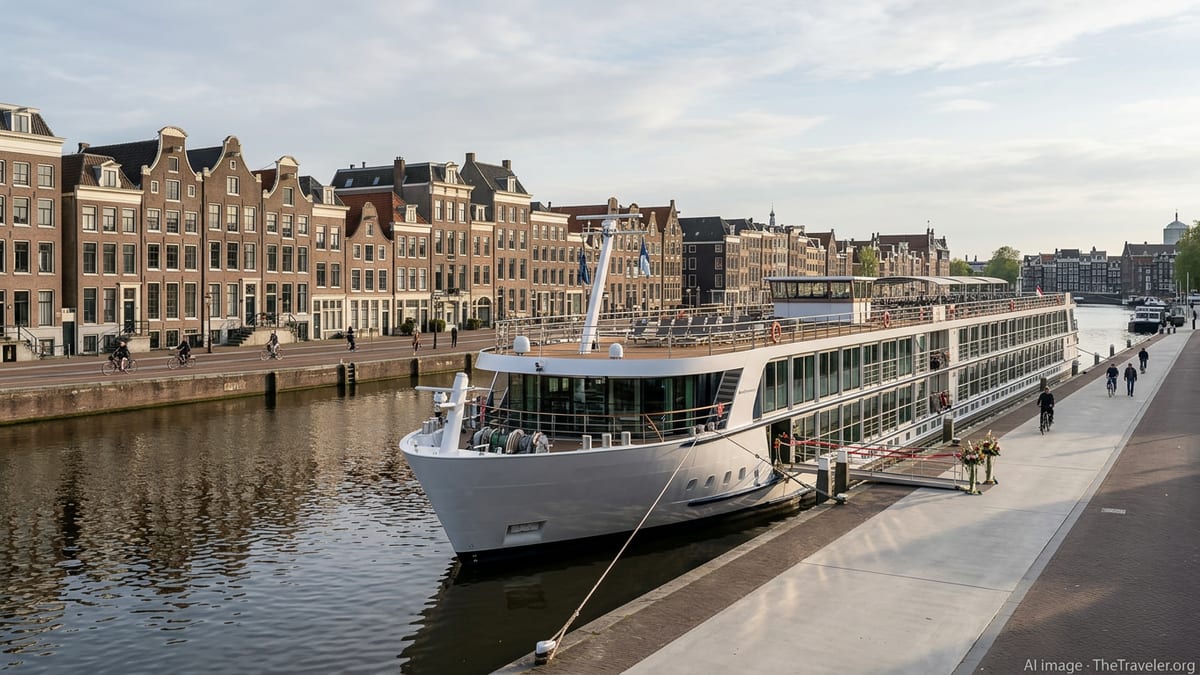
New Ship Strengthens Europe’s River Cruise Capacity
The introduction of AmaSofia comes as demand for European river cruising continues to climb, particularly on the Rhine and Danube, two of the continent’s most established waterways. Publicly available information shows that AmaSofia will join AmaWaterways’ expanding fleet as a 152-guest vessel designed to operate intensively on both rivers from spring 2026, adding capacity at a time when bookings for immersive, small-ship travel remain resilient.
Industry coverage indicates that the ship will focus on classic routes linking Amsterdam, Basel, Budapest and other key gateway cities, reinforcing their role as embarkation hubs. These itineraries place AmaSofia squarely within Europe’s most competitive river corridors, where operators are investing in newer hardware and more differentiated onboard experiences to attract seasoned cruisers and first-timers alike.
The christening in Amsterdam underscores the city’s significance as a starting point for Rhine voyages, connecting the North Sea coast to Germany, Switzerland and further on to the Danube through overland links and multi-river journeys. The move also highlights how Northern European ports are positioning themselves as entryways to extended cultural journeys across Central and Eastern Europe.
Observers note that the timing aligns with a broader post‑pandemic shift toward slower, land‑intensive itineraries, with river vessels like AmaSofia marketed as floating boutique hotels that minimize packing and unpacking while maximizing time in historic centers.
Design Focused on Balcony Living and Wellness
According to cruise line materials and travel trade listings, AmaSofia has been developed around balcony living, with the operator’s signature twin-balcony and French balcony configurations appearing across much of the stateroom inventory. These layouts are intended to maximize river views, giving guests clear sightlines to terraced vineyards, castle-topped hills and baroque skylines that define the Rhine and Danube corridors.
Cabins are described as contemporary in style, pairing neutral palettes and soft textiles with practical touches such as multi-jet showers and configurable bedding. Information from river cruise advisors notes that similar sister ships in the fleet typically balance compact footprints with storage solutions, entertainment systems and dedicated sitting areas in higher-category suites, setting expectations for AmaSofia’s accommodations.
Public descriptions emphasize a strong wellness component on board. The ship is slated to feature a sun-deck pool with a swim-up bar, a fitness room and a program of guided activities that cater to both active travelers and those seeking lighter options. Bicycles for independent exploration or guided rides are another hallmark of the line, giving guests additional flexibility to explore riverside towns and vineyards at their own pace.
The overall design strategy places AmaSofia in line with a trend across European river cruising: ships that feel more like intimate design-forward hotels, with wellness spaces and outdoor decks treated as central gathering points rather than afterthoughts.
Culinary and Cultural Experiences Along the Rivers
Published itineraries show that AmaSofia’s cruises will blend onboard gastronomy with shore-based cultural programming. The vessel will host multiple dining venues, including a main restaurant and a dedicated tasting venue similar to The Chef’s Table format seen on other AmaWaterways ships, where regionally inspired menus often highlight ingredients from the passing landscapes.
Daytime and evening menus are expected to track the ship’s progress along the rivers, with German, Austrian and Hungarian specialties likely to feature prominently on Danube segments, while Rhine sailings are anticipated to draw on traditions from the Netherlands, Germany, France and Switzerland. Wine service often reflects local appellations, giving guests an informal introduction to regional styles as they travel between ports.
On shore, existing Rhine and Danube programs with the line typically combine city walking tours, castle visits and vineyard tastings with more contemporary offerings, such as bike tours and themed excursions. Travel trade previews suggest AmaSofia’s schedule will mirror this blend of classic and active options, appealing both to culture-focused guests and those who prefer a more energetic pace.
This integration of dining, wine and shore-based storytelling is seen by analysts as a key differentiator for river cruising in Europe, where destinations are densely packed and repeat visitors increasingly look for deeper, more culinary-led engagement rather than simple sightseeing.
Itineraries Linking Amsterdam, Basel, Budapest and Beyond
Schedules released for the 2026 season indicate that AmaSofia will operate a mix of seven-night and longer voyages spanning the upper Danube and central Rhine. On the Rhine, the ship is expected to sail routes between Amsterdam and Basel, a pattern that threads together Dutch canal cities, German wine towns and Swiss cultural hubs, with highlights such as the Rhine Gorge and its concentration of medieval castles.
On the Danube, AmaSofia is scheduled to appear on well-established itineraries between Vilshofen and Budapest, passing through the UNESCO-listed Wachau Valley as well as major capitals including Vienna and Bratislava. Some sailings are timetabled to coincide with warm-weather festival periods, while others are positioned around the early and late shoulder seasons when crowd levels are typically lower and river conditions can be favorable.
Longer itineraries that combine Rhine and Danube segments, sometimes paired with pre- or post-cruise land programs, are also promoted within AmaWaterways’ wider portfolio and are expected to feed demand for the new ship. Documentation aimed at travel advisors points to bundled offerings where guests might spend time in Amsterdam or Prague before boarding, or extend their journey into the Alps or Eastern Europe afterward.
By concentrating capacity on these core routes, AmaSofia is likely to deepen the already strong link between Western European gateways and Central European river tourism, reinforcing river cruising’s role as an efficient framework for multi-country travel.
Economic and Tourism Impact Across River Regions
The entry of a new vessel on the Rhine and Danube has implications well beyond onboard amenities. Industry observers point out that each sailing supports a network of local suppliers, from provisioning companies and tour operators to guides, museums and family-run wineries that host tastings for guests. With AmaSofia scheduled for a full season of departures, the economic effect is expected to ripple through multiple regions.
Riverside communities in Germany, Austria, Hungary and the Netherlands have increasingly positioned river cruise visitors as part of their tourism mix, particularly in shoulder seasons when traditional city breaks and coach tours may taper off. Published tourism strategies from several regional bodies promote river calls as a way to distribute visitor spending more evenly, steering travelers into smaller towns and rural landscapes as well as major capitals.
At the same time, operators face pressure to demonstrate responsible growth. Public reports across the sector highlight investments in more efficient engines, optimized itineraries and port partnerships aimed at reducing congestion and managing environmental footprints. While specific technical details for AmaSofia have not been widely disclosed, the ship is entering a market where questions around sustainability and overtourism are increasingly central to planning decisions.
For travelers, the christening of AmaSofia in Amsterdam signals not only a new option in the premium river cruise segment but also a further tightening of ties between Europe’s great rivers and the cities that line their banks. As bookings open and the ship prepares for its first full season, attention is likely to focus on how successfully it balances elevated onboard comforts with the evolving expectations of Rhine and Danube destinations.