

More news on this day
A new Amazon Marathon planned for September 2026 in southeastern Peru is drawing international attention, promising a rare opportunity for endurance runners to race deep inside one of the planet’s most biodiverse and relatively untouched stretches of rainforest.
Get the latest news straight to your inbox!
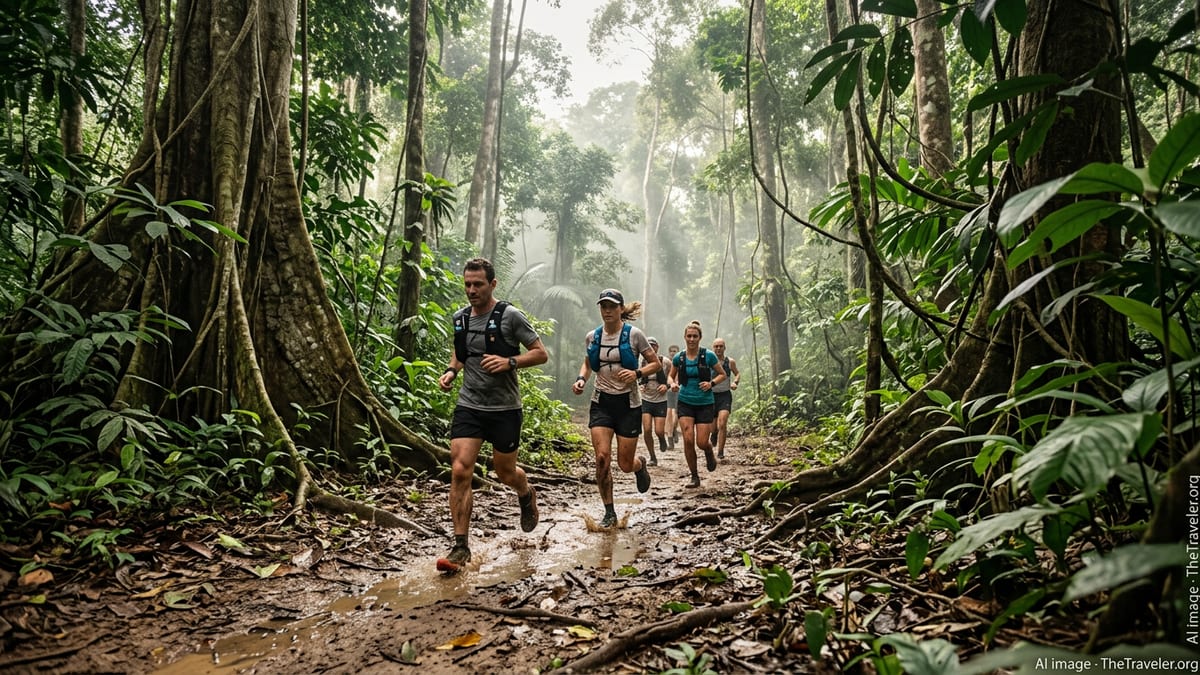
A New Destination Race in Puerto Maldonado
According to publicly available event information, the inaugural Amazon Marathon is scheduled to take place on September 9, 2026, starting near Puerto Maldonado in Peru’s Madre de Dios region. The town sits close to the confluence of the Tambopata and Madre de Dios rivers and is widely described as a key gateway to the lowland Amazon on Peru’s southeastern frontier.
Race materials indicate that the event will feature a full marathon, half marathon, and 10.5-kilometer distance, with the longer races subject to cut-off times of seven hours for the marathon and five hours for the half marathon. Entry is being offered as part of dedicated travel packages, with participant numbers controlled in line with the logistical challenges of operating in a remote, humid environment far from major urban centers.
Organizers describe the course as being embedded in lush primary rainforest that remains largely undisturbed compared with other parts of the Amazon basin. Runners and accompanying spectators are expected to split their time between Puerto Maldonado and riverside lodges reached by boat, with race briefings and course inspections planned within the forest itself.
Deep Jungle Setting and Course Conditions
The Amazon Marathon route is expected to unfold along a mix of dirt tracks, forest trails, and lodge access paths surrounded by dense canopy, vines, and layered undergrowth. While a detailed course map has yet to be published, early descriptions emphasize minimal paved sections and terrain shaped by seasonal rains, river levels, and the natural contours of the forest floor.
Average daytime temperatures in the region typically sit around 30 degrees Celsius during the dry-to-wet transition period, with high humidity and the potential for sudden downpours. Event guidance highlights that runners should be prepared for slippery roots, soft mud, and short, sharp rises rather than long sustained climbs, as the surrounding Amazon plain remains relatively low in elevation compared with Peru’s Andean trail races.
Publicly available guidance also notes that the start time is planned for early morning to avoid the highest heat index hours. Even so, long-distance specialists familiar with other jungle races, including multi-stage events in Manu National Park and the Brazilian Amazon, report that hydration, heat adaptation, and careful pacing are critical for safely managing marathon distances under continuous canopy cover.
Part of a Growing Trend in Extreme Eco-Endurance
The Amazon Marathon 2026 launch comes amid a broader wave of destination endurance events across South America that position remote ecosystems as race backdrops. In Peru, established mountain and jungle races such as the Inca Trail Marathon and multi-stage jungle ultras have already built a niche following among runners seeking technical terrain, altitude, or dense tropical environments.
Across the wider Amazon basin, dedicated ultra-trail events in Brazil and neighboring countries are similarly using long-distance courses to spotlight rainforest landscapes and raise the profile of conservation areas. The Peruvian Amazon, however, has hosted comparatively few road or trail marathons that are accessible to international participants, making the new Puerto Maldonado race a notable addition to the global calendar.
Observers of the endurance tourism sector indicate that such events often serve dual purposes: providing a unique challenge for runners while channeling visitor spending into regional economies that are heavily reliant on nature-based tourism. The Amazon Marathon’s package-based entry system appears to follow this model, bundling race access with guided excursions, lodge stays, and transport to and from the forest.
Environmental Stewardship and Local Impact
The Madre de Dios region contains protected areas and reserves known for harboring macaws, monkeys, giant river otters, and other species that draw wildlife enthusiasts from around the world. Public-facing information about the Amazon Marathon stresses that the race is being staged in cooperation with existing tourism infrastructure rather than through the construction of new large-scale facilities, an approach that aligns with prevailing low-impact travel practices in the area.
Environmental groups and research programs active in the region have long drawn attention to the pressures facing the Amazon, including deforestation, mining, and climate-related changes that affect rainfall and river patterns. Against that backdrop, endurance events are often scrutinized for their potential footprint, from trail erosion to waste generation. The Amazon Marathon’s reliance on existing lodges, capped participant numbers, and controlled access routes is being watched as an indicator of how competitive sports and conservation priorities can coexist.
Local tourism operators in Madre de Dios have previously promoted small-group travel as a way to support livelihoods while maintaining forest integrity. Industry analysts note that integrating a marathon into that model could help extend the visitor season and attract a segment of travelers who might not otherwise travel to the rainforest, provided that operational plans emphasize strict environmental management and respect for nearby communities.
What Runners Can Expect Ahead of 2026
With more than a year and a half before race day, the Amazon Marathon remains in its early promotion phase, and several course details are still being finalized. Prospective participants are being encouraged through public communications to consider the practical demands of long-distance running in a hot, humid rainforest, including the need for technical trail footwear, lightweight moisture-wicking clothing, and careful preparation for insects and tropical weather.
Race information points to a pre-event course inspection and briefing, allowing runners to familiarize themselves with conditions and review safety procedures. Support plans include aid stations, timing, and on-course personnel, with time limits designed to ensure that all runners clear the forested sections within daylight hours.
As registration interest builds, the Amazon Marathon 2026 is emerging as one of the more distinctive additions to the global race calendar, combining the format of a traditional 42.195-kilometer road event with the vivid, often unpredictable environment of the Peruvian Amazon. For runners accustomed to urban marathons on closed city streets, the appeal lies in trading concrete for canopy and crowds for the sounds of the rainforest, while confronting a level of heat, humidity, and terrain that will demand meticulous preparation and respect for the landscape.