

More news on this day
As geopolitical tensions in the Middle East send oil markets into fresh turmoil and disrupt key shipping lanes, UK-based Ambassador Cruise Line stands out for being fully hedged on its fuel needs, underscoring how risk management strategies are increasingly defining winners and losers across the global travel sector.
Get the latest news straight to your inbox!
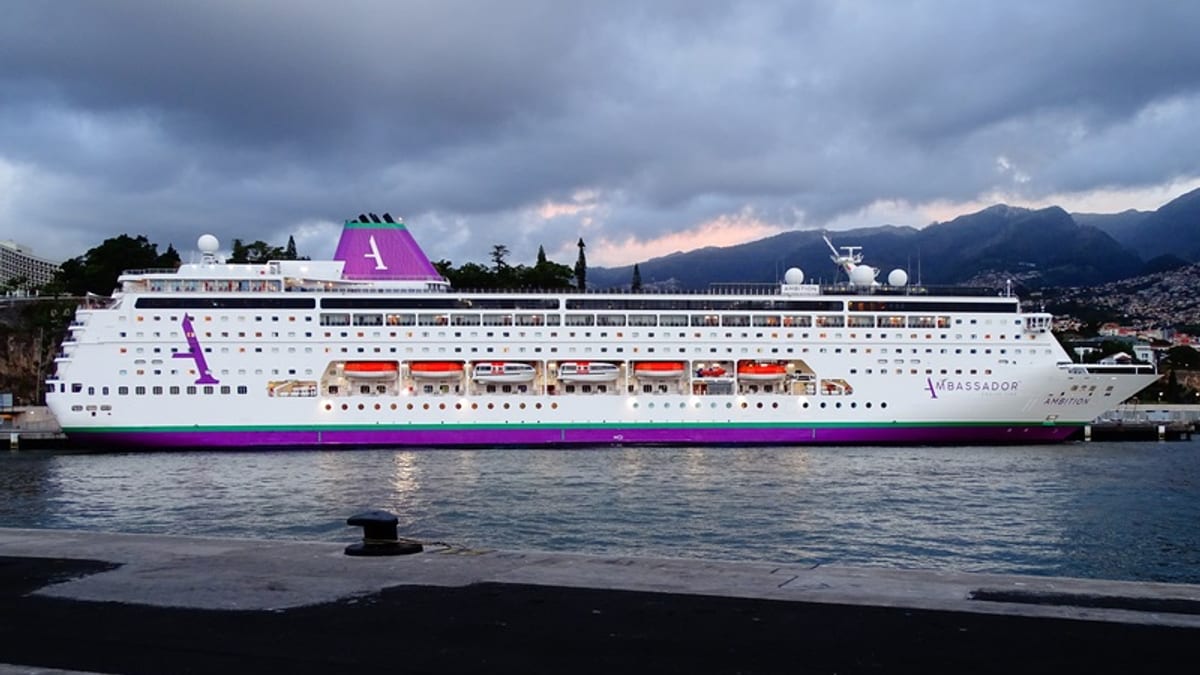
Image by Cruise Industry News | Cruise News
Geopolitical Strains Push Fuel Markets Back Into Turbulence
The latest flare-up in the Middle East, centered on disruption around the Strait of Hormuz, has reignited fears of a prolonged energy shock, with benchmark crude prices spiking sharply before partially retreating. Published analysis of the conflict’s economic impact indicates that oil has again surged past levels seen in recent years, driven by concerns over export bottlenecks, insurance costs, and rerouted tanker traffic.
For global transport and tourism, the choke point’s vulnerability has swiftly translated into higher operating costs. Research on maritime flows shows that a significant share of global oil exports normally moves through the strait, so even temporary slowdowns are feeding a risk premium into bunker fuel and jet fuel markets. Shipping and cruise operators are now confronting a familiar but sharper dilemma: absorb volatile fuel bills, or pass them on to customers already sensitive to rising travel prices.
Economic briefings from insurers and think tanks suggest that if volatility persists, the shock could filter through to broader consumer prices, particularly in fuel-intensive sectors such as aviation, cruising, and long-haul logistics. That backdrop is turning corporate risk strategies that once seemed purely technical, like fuel hedging, into a central storyline for travelers and investors watching the sector.
Ambassador’s Fuel Hedge Emerges as Competitive Shield
Against that unstable backdrop, Ambassador Cruise Line has moved into focus after publicly indicating that it entered the 2026 season fully hedged on fuel. For a still-young British brand that targets value-conscious guests, the move effectively locks in its main energy costs at pre-crisis levels, insulating itineraries from the most severe spot price swings now seen on global markets.
Publicly available information shows that fuel typically ranks among the top two or three operating expenses for ocean-going passenger fleets, often accounting for more than a tenth of total cruise operating costs. With the latest spike, that share would likely have risen meaningfully for unhedged operators. By contrast, Ambassador’s fully hedged position means its budget for marine fuel is fixed over the covered period, limiting the immediate impact of the geopolitical shock on its cost base.
Travel analysts note that such a stance does not remove all risk, since hedging can become a drag if prices retreat significantly below contracted levels. However, in the current environment of heightened volatility, the certainty provided by a full hedge offers tangible advantages in pricing, itinerary planning, and marketing. For guests, the most visible effect could be a relative steadiness in fares compared with rivals that are more exposed to the spot market.
Hedged Versus Unhedged: A Dividing Line in Travel
The Ambassador story lands at a time when fuel hedging has become a clear dividing line across the travel and transport landscape. According to recent financial disclosures, some major cruise brands, including Royal Caribbean and Norwegian Cruise Line, have significant but partial fuel hedges in place for 2026, covering around half or slightly more of projected consumption. Others, such as Carnival, have chosen not to hedge, relying instead on operational measures to trim fuel use.
The airline sector illustrates the contrast even more starkly. Reports from March 2026 highlight that most large United States carriers now avoid fuel hedging entirely, having unwound programs that once shielded them from price spikes but also locked in above-market costs when oil slumped. As the current crisis lifted jet fuel prices, these airlines found themselves fully exposed to the upswing, prompting a renewed debate about whether the pendulum had swung too far away from risk management instruments.
For cruise and ferry operators, the mixed approaches mean that the same geopolitical shock can have very different financial consequences. An operator like Ambassador, fully hedged for the season, may see only limited cost variance in the near term. By contrast, an unhedged or lightly hedged competitor could face materially higher bunker bills, making it harder to hold the line on pricing and promotions during a key booking window.
In practice, the divergence could influence route planning, capacity deployment, and even ship speeds. Lines with higher fuel exposure may be more inclined to shorten voyages, reduce time at sea, or cancel less profitable itineraries if price spikes persist. Hedged operators have more room to maintain program stability, a factor that may appeal to travelers seeking reliability amid headline-grabbing volatility.
Knock-on Effects for Cruise Pricing and Itineraries
For travelers, the immediate question is whether the latest fuel shock will translate into higher fares or fuel surcharges. Industry coverage suggests that while some cruise lines could introduce or adjust fuel supplements if prices stay elevated, others may try to preserve headline price stability through cost cuts elsewhere, especially during the competitive wave season for bookings.
Ambassador’s fully hedged position potentially offers a buffer against rapid price adjustments. With fuel costs largely predetermined, the company can keep focusing on filling capacity and marketing value-focused itineraries from UK ports, even as its suppliers and logistics partners grapple with higher underlying energy and insurance costs. That contrasts with less protected operators, where any prolonged squeeze could pressure margins and force a rethink of discounting strategies.
Route planning is also under scrutiny. The instability around key Middle Eastern sea lanes has already led some cruise deployments in the region to be altered or reduced, according to recent travel trade reporting. Lines heavily invested in Gulf itineraries are reassessing exposure to affected corridors, balancing passenger safety protocols with operational economics. For Ambassador, which concentrates on ex-UK sailings to northern Europe, the Atlantic and selected long-haul destinations, the main impact may come via global fuel pricing rather than direct itinerary disruption.
Even so, higher bunker prices prompted by the crisis can influence choices across the industry, from favoring more fuel-efficient vessels to prioritizing ports that support alternative fuels or shore power. Over time, the pattern of which operators are hedged or unhedged may subtly reshape the cruise map, nudging more capacity toward routes and seasons where fuel costs can be more easily managed or passed through.
Wider Travel Sector Braces for a New Fuel Risk Cycle
The Ambassador example sits within a broader reappraisal of fuel risk management across the travel economy. Research on the Iran-related energy shock indicates that a sustained period of elevated oil prices could lift inflation, squeeze household budgets, and cool discretionary travel demand, even if some companies temporarily benefit from volatility.
In maritime freight, major carriers have already introduced or raised fuel surcharges in response to the latest spike, according to recent market circulars. Analysts warn that these moves, combined with longer detours and rising insurance premiums for vessels avoiding conflict-prone waters, could keep freight and bunker prices higher for longer, feeding back into the costs faced by cruise and ferry companies.
Within this environment, Ambassador’s fully hedged stance can be seen as both a short-term shield and a strategic signal. It highlights a willingness to trade some potential upside if prices fall for stability in a period where sudden spikes are increasingly driven by geopolitical events rather than purely economic cycles. As other operators review their own exposure, the line between hedged and unhedged strategies is likely to remain a key factor in how resilient different brands prove to be in the face of the next fuel shock.