

More news on this day
Ambassador Cruise Line has altered one of its Northern Lights sailings after severe weather systems in the Norwegian and Barents seas prompted a rethink of the original Arctic-focused route, redirecting guests toward alternative Northern European ports judged to offer safer conditions.
Get the latest news straight to your inbox!
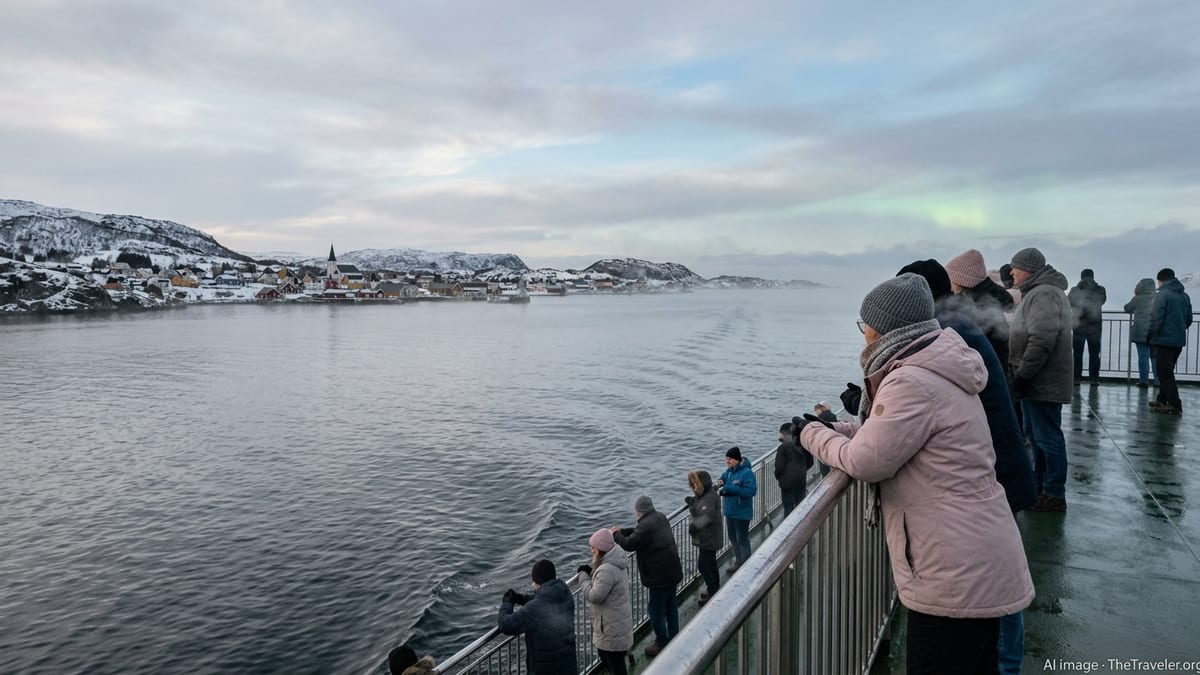
Storm Systems Force Rethink of Arctic-Focused Route
Publicly available itinerary updates for Ambassador Cruise Line’s winter season show that a scheduled Northern Lights cruise has been reshaped in response to persistent low-pressure systems tracking across the Norwegian Sea. Forecasts indicate that a combination of high winds, rough seas and deteriorating visibility along the original route made key Arctic ports increasingly difficult to service within normal safety margins.
The sailing, initially marketed around extended time inside the Arctic Circle with calls at classic aurora-viewing ports such as Tromsø, Alta and other high-latitude Norwegian destinations, has seen those northern calls curtailed or removed. Operational data and current marine weather bulletins point to repeated gale warnings affecting approaches to several of these ports, particularly along exposed stretches of coastline where narrow fjord entrances can become challenging during heavy swell.
According to published coverage from European cruise retailers and itinerary aggregators, the line opted to adjust the voyage before departure rather than risk last-minute cancellations once guests were already on board. The move aligns with broader industry patterns in recent seasons, where longer Northern Lights itineraries have been more frequently disrupted by increasingly volatile winter weather in northern waters.
Port agents and regional tourism updates from northern Norway have also highlighted intermittent closures and pilotage restrictions this winter, underscoring how quickly conditions can change for ships attempting to keep to tight schedules so far north. In that context, a proactive reroute toward more sheltered alternatives in the North Sea and Baltic appears consistent with prevailing safety-led decision making across the sector.
Shift Toward North Sea and Baltic Alternatives
Reconfigured voyage details circulated by cruise booking platforms show the sailing now leaning more heavily on North Sea and Baltic gateways in place of high-Arctic calls. Instead of pushing deep into Norway’s northernmost reaches, the revised program features a mix of ports in southern and central Norway, Denmark, and potentially the Netherlands or northern Germany, depending on the specific departure date.
These ports, including cities such as Bergen, Ålesund or Trondheim in Norway and hubs like Copenhagen or Hamburg farther south, tend to offer more protected approaches and more robust all-weather infrastructure than smaller Arctic communities. While they sit outside the strongest Northern Lights zone, they remain firmly within a Northern European winter landscape, with long nights and cold, crisp conditions that still offer some aurora potential when skies clear.
Published itineraries suggest a slightly slower pace, with added sea days built into the schedule to skirt the worst of the storms. That extra flexibility allows the ship to adjust speed and routing in real time around active weather systems, a strategy commonly used on winter cruises in the region to reduce motion on board and avoid port approaches during peak wind or swell.
Travel trade commentary indicates that these alternative ports can deliver a different style of cruise experience, with more emphasis on cultural attractions, historic waterfronts and winter cityscapes rather than purely aurora hunting. For many guests, that presents an opportunity to explore Northern Europe’s maritime capitals and fjord gateways while still enjoying the drama of winter at sea.
Managing Guest Expectations on Northern Lights Voyages
The itinerary change highlights an inherent tension in Northern Lights cruising between the promise of an otherworldly natural display and the unpredictable weather that shapes it. Cruise brochures for a range of lines routinely note that aurora sightings can never be guaranteed, and recent seasons have underlined how quickly plans may have to change to keep ships within safe operating limits.
Industry incident reports and cruise association briefings document several cases in recent years in which heavy weather in Arctic and sub-Arctic waters forced altered routes, delayed arrivals or even the cancellation of multiple ports on a single voyage. These patterns reinforce the message that, while modern ships are built to handle challenging conditions, itineraries that chase clear skies at very high latitudes are particularly exposed to winter storms.
For travelers, this means that flexibility has become an essential part of booking a Northern Lights cruise. Travel advisors increasingly recommend viewing the advertised route as an aspiration rather than a fixed promise, and suggest that guests treat extended sea time and unexpected port substitutions as part of the experience when sailing during the stormiest months of the year.
At the same time, some cruise specialists note that a degree of repositioning toward more southerly but still wintry ports can lead to more comfortable sea conditions, fewer missed calls and a broader mix of experiences ashore. In that sense, Ambassador Cruise Line’s rerouted voyage reflects a wider recalibration across the sector toward more conservative winter operations in northern waters.
Impact on Passengers and the Wider Cruise Market
Guests on the affected Ambassador sailing are being presented with an itinerary that differs from the one many originally chose, particularly those who selected the cruise for its concentration of Arctic Circle ports. However, reports from consumer forums and cruise commentators show that compensation models in comparable situations elsewhere in the industry typically focus on refunded port taxes, onboard credit and, in some cases, discounts on future bookings rather than full refunds, especially when the overall voyage length remains the same.
While the specifics of any goodwill gestures vary by line and sailing, the broader pattern indicates that cruise companies increasingly frame such shifts as necessary operational responses to conditions outside their control. In return, guests often receive enhanced onboard programming on sea days, with additional lectures, regional food offerings and winter-focused activities added to help maintain a sense of destination immersion despite altered port calls.
For the market as a whole, Ambassador’s decision adds to a growing body of evidence that Northern Lights and other cold-weather cruises are adapting to a more volatile climate. More conservative routing, seasonal fine-tuning of departure dates and an emphasis on multi-region itineraries that can pivot between fjords, North Sea coasts and Baltic ports are all emerging as tools for managing risk.
Cruise analysts note that demand for Northern Lights sailings remains robust, with new itineraries still entering the market for the late 2020s. Yet the reshaped Ambassador voyage suggests that operators will increasingly design programs with built-in alternatives, ensuring that even if severe weather shuts down parts of the Arctic, guests can still expect a varied and distinctly Northern European experience.
Balancing Safety, Experience and Climate Realities
Behind Ambassador Cruise Line’s rerouted sailing lies a broader conversation about how cruise operators balance guest expectations with maritime safety and a changing climate. Data from shipping associations and meteorological agencies points to shifts in storm tracks and intensity over the North Atlantic and adjacent seas, particularly during the late autumn and winter months that coincide with peak aurora season.
These patterns have practical consequences for route planners, who must consider not only long-term climate trends but also short-term forecasts and port-side constraints. High winds can shut down tender operations, heavy swell can make narrow harbor entrances inaccessible, and extreme cold can affect deck equipment and shoreside infrastructure, all of which influence whether a planned call remains viable.
In this environment, Ambassador’s decision to replace far-north calls with a slate of Northern European destinations underlines how cruise lines are seeking to maintain the appeal of winter voyages without exposing guests or crew to undue risk. By leaning on larger, better-sheltered ports and allowing more time to navigate between weather systems, operators can still offer a compelling mix of scenery, culture and seasonal atmosphere, even if the elusive Northern Lights prove harder to chase on a given sailing.
For travelers considering similar voyages, the current season’s disruptions serve as a reminder to read itinerary notes carefully, build flexibility into travel plans, and view any Northern Lights cruise as an adventure that may unfold differently from what was printed in the brochure, but can still deliver memorable moments across the coasts and cities of Northern Europe.