

More news on this day
American Airlines flight AA1396 from Nashville to Dallas made an unscheduled emergency landing in Little Rock, Arkansas, after an in-flight issue prompted the crew to divert the aircraft, according to early flight-tracking data and passenger reports.
Get the latest news straight to your inbox!
Midroute Diversion Interrupts Nashville–Dallas Service
American Airlines AA1396 departed Nashville International Airport en route to Dallas Fort Worth International Airport when the flight diverted toward Little Rock, interrupting a routine evening service between the two southern hubs. Publicly available flight-tracking information shows the aircraft changing course partway through the journey and descending into Bill and Hillary Clinton National Airport in Little Rock.
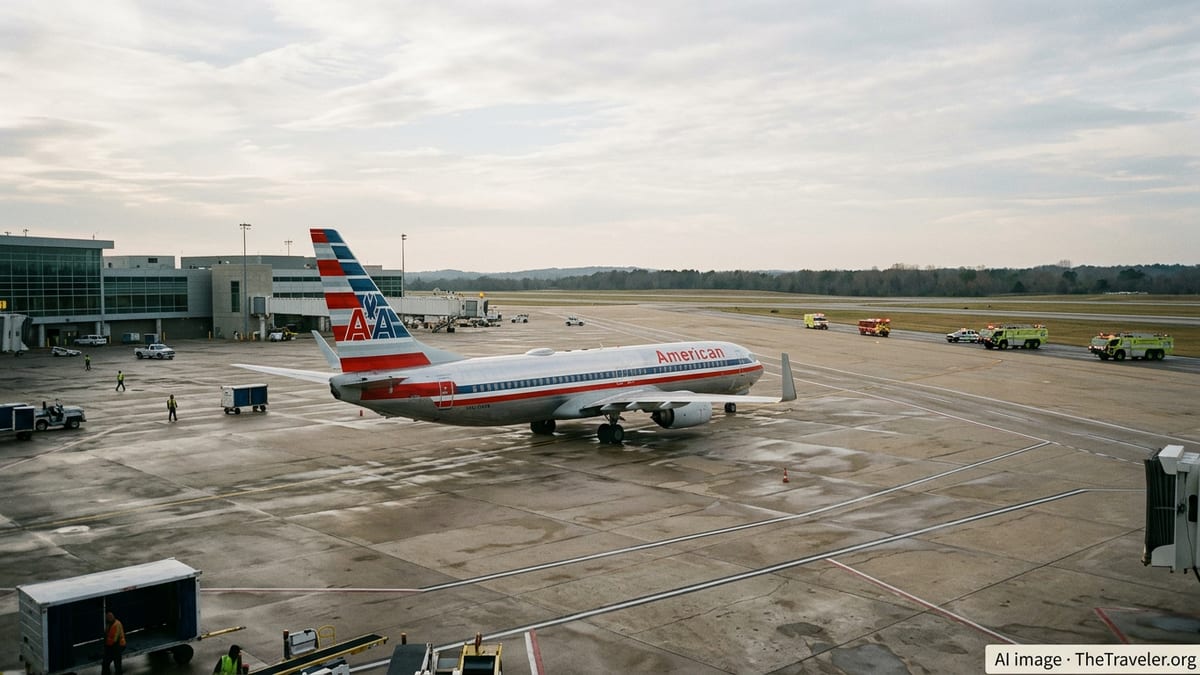
Initial online posts from aviation enthusiasts indicate the diversion was treated as an emergency, with the aircraft given priority handling on arrival. Ground services and emergency vehicles were positioned at the airfield as a precaution, a typical response in such circumstances.
There were no immediate indications of serious injury, and early accounts suggest passengers disembarked normally after the aircraft reached the gate. Travelers then faced the secondary challenge familiar to many diverted passengers: rebookings, new connections, and unexpected time in an unplanned city.
What Is Known So Far About the Incident
As of the latest available information, the precise nature of the in-flight issue on AA1396 has not been formally detailed in publicly released statements. Reports circulating on social platforms and flight-tracking discussion forums describe the situation as an emergency landing, but do not yet specify whether the trigger was technical, weather related, or medical in nature.
Flight data indicates a controlled descent and standard landing profile into Little Rock rather than the rapid altitude loss associated with severe mechanical problems or sudden depressurization. The aircraft taxied under its own power after landing, consistent with standard operations following a precautionary diversion.
Operational databases show that American Airlines regularly deploys narrow-body aircraft such as Boeing 737 or Airbus A320 family jets on the Nashville–Dallas route. While the exact aircraft type and registration for AA1396 on this specific flight have not been widely circulated, the diversion pattern aligns with established safety protocols that prioritize landing at the nearest suitable airport when a potential issue arises.
Passenger Experience and Operational Disruptions
For travelers on board, an unexpected diversion can significantly alter the rhythm of a short-haul trip. Passengers on AA1396 were reportedly informed of the decision to head to Little Rock midflight and prepared for an abnormal arrival, with some accounts referencing visible emergency equipment positioned along the taxi route once the aircraft cleared the runway.
After the landing, the focus shifted from the in-flight incident itself to the logistics of continuing journeys. According to publicly shared accounts, passengers awaited guidance on alternative arrangements, with some rebooked via later flights through Dallas and others potentially rerouted through different American Airlines hubs, depending on final destinations and seat availability.
For those with tight connections in Dallas, the diversion likely resulted in missed onward flights and overnight delays. Travelers accustomed to busy hub operations understand that a single unscheduled landing can ripple through personal and airline schedules, affecting everything from business meetings to family events.
Little Rock’s Role as a Diversion Airport
Little Rock’s Bill and Hillary Clinton National Airport serves as a logical diversion point for flights crossing the central southern United States. The airport maintains runway length, emergency services coverage, and commercial handling capabilities suitable for mainline jets commonly used on Nashville–Dallas segments.
Historically, Little Rock has received a variety of unscheduled arrivals linked to diversions, including weather-related reroutings and precautionary landings. Its location along key north–south and east–west air corridors makes it a practical alternative when conditions or circumstances prevent flights from continuing directly to their intended hubs.
For AA1396, the decision to divert to Little Rock aligned with standard aviation risk management, where crews select the nearest practical airport that offers adequate runway infrastructure, maintenance access, and passenger facilities. This allows airlines to address any technical or medical concerns while minimizing time spent in the air under abnormal conditions.
Safety Procedures and Next Steps for Travelers
Modern commercial aviation is designed around a conservative approach to risk, which typically means treating potential issues with caution and landing sooner rather than later. An emergency or precautionary landing, such as the one reported for AA1396, reflects this safety-first culture, in which even suspected faults or onboard medical concerns can justify diverting a flight.
Passengers affected by diversions often work through a familiar sequence of steps once on the ground: securing updated itineraries, requesting meal or hotel support where applicable, and informing contacts at their destination about revised arrival times. Airlines generally prioritize rebooking those whose onward connections are most severely affected, although outcomes vary depending on seat availability and time of day.
For travelers watching from a distance, the story of AA1396 serves as a reminder that diversions, while disruptive, are a core component of aviation’s layered safety system. Flights between Nashville and Dallas routinely operate without incident, and the rare occasions when routes are cut short highlight how multiple airports across the region, including Little Rock, play a vital supporting role in keeping air travel resilient and adaptable.