

More news on this day
American Airlines will inaugurate a new nonstop route between New York John F. Kennedy International Airport and Edinburgh on March 8, 2026, deploying its new Airbus A321XLR on the transatlantic link in a move that strengthens competition for Scotland-bound travelers and showcases the carrier’s latest premium narrowbody cabin.
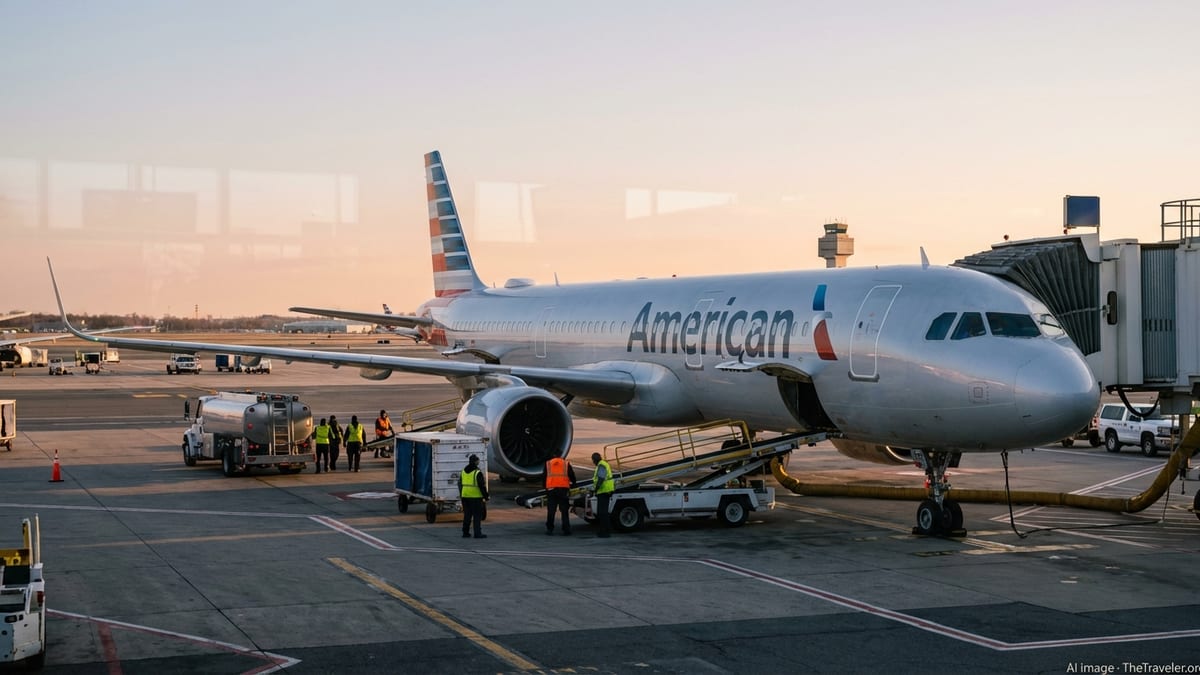
Seasonal Link Connects JFK and Scotland’s Capital
The new service will operate seasonally between New York and Edinburgh, giving American Airlines a fresh foothold in a market popular with both U.S. leisure travelers and visiting friends and relatives. The route is scheduled to begin on March 8, 2026, timed to capture early spring demand ahead of Scotland’s busy summer tourism season.
Flights will link Edinburgh Airport with American’s transatlantic gateway at JFK, offering same-carrier connections across the United States via New York. The service positions American alongside existing competitors serving Scotland from North America, while adding another option for travelers who prefer to connect through JFK instead of hubs further south or in continental Europe.
Industry analysts note that Edinburgh has grown steadily as a transatlantic destination, supported by the city’s festival calendar, heritage attractions and proximity to the Scottish Highlands. By entering the market with a next-generation narrowbody, American is betting on sustained demand from both sides of the Atlantic.
A321XLR Becomes American’s First Long-Haul Narrowbody Workhorse
The New York to Edinburgh route will be American’s first international long-haul service operated by the Airbus A321XLR, marking a milestone in the airline’s fleet strategy. The aircraft is designed for extended-range narrowbody flying, enabling nonstop missions of up to roughly 4,700 nautical miles while burning less fuel than traditional widebodies on similar sectors.
American has positioned the A321XLR as a key part of its 2026 network expansion, using the type to open and sustain thinner transatlantic routes that would be more difficult to justify with larger aircraft. The JFK–Edinburgh pairing fits that model, pairing a strong U.S. gateway with a high-value European city that does not always require widebody capacity in shoulder seasons.
For the airline, the deployment of the A321XLR on this route also serves as a showcase for its broader premium-focused strategy. The aircraft sits alongside newly configured Boeing 787-9 jets as part of a push to grow the proportion of higher-yield seats in American’s international network.
Premium Cabins Aim to Elevate Transatlantic Experience
American’s A321XLRs are configured with three cabins, led by the Flagship Suite at the front of the aircraft. The airline’s latest business-class product features lie-flat seats with privacy doors, expanded personal storage, and updated in-flight dining and beverage offerings tailored to long-haul flights.
Behind the suites, a dedicated premium economy cabin offers larger recliner seats with leg rests, increased pitch and upgraded amenities designed for travelers seeking more comfort without the price of a full business-class ticket. The remainder of the cabin is main cabin seating that includes 4K seatback entertainment, Bluetooth connectivity and seat-side power at every seat.
For New York to Edinburgh passengers, the interior is intended to narrow the gap between narrowbody and widebody comfort on overnight and return daytime flights. American is also promoting access to its premium ground facilities at JFK for eligible customers, positioning the overall experience as a step up from older-generation narrowbody transatlantic options.
Network Strategy Targets Secondary European Cities
The addition of Edinburgh forms part of a wider 2026 expansion in which American is using the A321XLR to reach secondary and mid-size European markets from key U.S. hubs. By pairing longer-range narrowbodies with connecting banks at airports like JFK, the airline can route customers from across the United States to cities that historically struggled to sustain year-round widebody service.
In practical terms, the aircraft’s lower trip cost allows American to calibrate capacity more closely to seasonal demand patterns. That flexibility is particularly important in northern European markets, where summer peaks contrast sharply with quieter winter months. A seasonal pattern on New York–Edinburgh gives the airline room to fine-tune frequencies and gauge long-term demand.
The move also aligns with broader transatlantic competition, as rival carriers deploy their own new-generation narrowbodies between North America and Europe. For Edinburgh, the arrival of another U.S. carrier expands choice for local travelers heading to the United States and increases the airport’s connectivity beyond existing hubs.
Implications for Travelers on Both Sides of the Atlantic
For U.S.-based passengers, the new route offers a one-stop option from many domestic cities to Edinburgh with a same-airline connection at JFK, potentially simplifying itineraries that previously required changes in London or other European hubs. Travelers booking into the Flagship Suite or premium economy cabins will see American’s newest long-haul products on a relatively short transatlantic sector.
Scottish travelers, meanwhile, gain direct access to New York along with onward connections across American’s domestic and Latin American network. The schedule is expected to appeal to both leisure and business customers, as well as the sizable diaspora and student traffic that regularly flows between Scotland and North America.
While the service launches as a seasonal offering, its performance in 2026 will inform whether American considers extending operations deeper into the year or adding additional Scottish or regional U.K. points. For now, the March 8 debut of the A321XLR on the New York–Edinburgh corridor signals a new phase in how airlines match aircraft to transatlantic markets, with passengers set to be the first to test American’s narrowbody long-haul bet.