

More news on this day
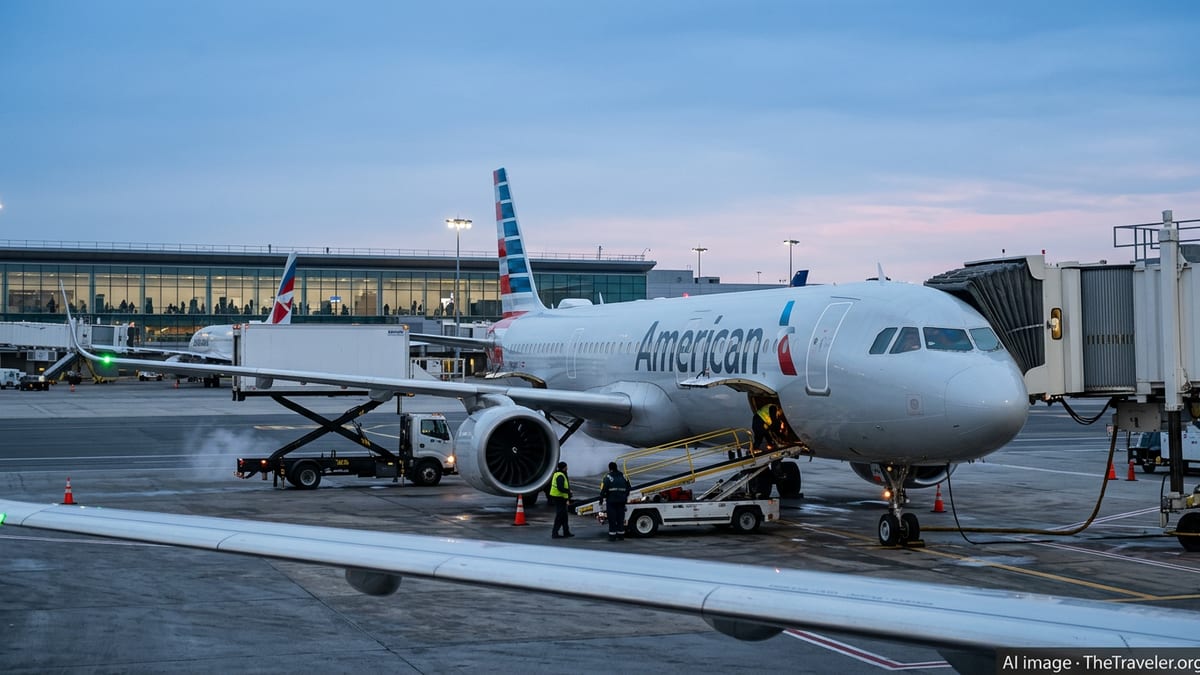
American Airlines is preparing a major transatlantic expansion for winter 2026, unveiling four new European routes to be operated by its next-generation Airbus A321XLR aircraft as the carrier leans on fuel-efficient narrowbodies to deepen its global reach.
Four New European Routes Anchored by A321XLR
According to American’s latest network update and industry schedule filings, the airline will introduce four additional European destinations to its winter 2026 timetable using the long-range Airbus A321XLR. While specific launch dates and frequencies vary by market, all four routes are planned to operate during the 2026–27 winter season, traditionally a quieter period for transatlantic travel.
The new services will connect American’s East Coast hubs with secondary European cities that historically struggled to sustain widebody flights in the off-peak months. The A321XLR’s extended range and lower trip cost allow American to place year-round or extended-season capacity on these thinner routes, creating new nonstop options that were previously only viable in summer or not served at all.
Industry data show that the four additions build on American’s earlier commitment to launch New York John F. Kennedy to Edinburgh as the carrier’s first international A321XLR route in March 2026. Together, the new network plan marks a decisive pivot toward using the single-aisle jet as a cornerstone of the airline’s transatlantic strategy rather than a niche supplement to its widebody fleet.
American has framed the move as both a competitive response to rival U.S. and European carriers and a customer-focused effort to expand nonstop access to increasingly popular leisure and mixed business-leisure destinations across the continent.
A321XLR Enables Year-Round Service on Thinner City Pairs
The Airbus A321XLR, a long-range derivative of the A321neo family, is central to American’s ability to open and sustain these four new routes into the winter season. With a range approaching 4,700 nautical miles and a capacity typically configured below that of traditional widebodies, the aircraft is designed to connect medium-density city pairs that fall between conventional short-haul and long-haul markets.
For American, that translates into the flexibility to right-size aircraft to demand on secondary European routes without retreating entirely during the colder months, when leisure traffic dips and corporate travel patterns shift. Instead of cutting nonstop links or relying solely on partner connections via larger hubs, the airline can keep its own metal in the market, maintaining brand presence and schedule continuity.
Network planners have long identified northern and central European cities as challenging in winter due to pronounced seasonality. By assigning the A321XLR to four fresh routes, American is attempting to smooth these swings, keeping capacity modest but continuous while leveraging the aircraft’s fuel efficiency to preserve economics that would be difficult to achieve with larger twin-aisle jets.
The strategy also offers an internal benefit: widebodies freed from marginal transatlantic flying can be redirected to core trunk routes or long-haul growth opportunities elsewhere in the network, improving fleet utilization at a time when long-range aircraft remain in high demand globally.
Enhanced Passenger Experience on a Narrowbody Jet
American’s A321XLR configuration is built around its latest long-haul cabin products, positioning the aircraft as a premium proposition despite its single-aisle layout. Customers on the four new European routes will see a cabin that includes the airline’s Flagship Suite in business class along with a dedicated premium economy section and an updated main cabin featuring modern in-flight entertainment and connectivity.
The airline has emphasized that the A321XLR is not a downgrade from a customer perspective, but instead a different way of deploying a long-haul capable aircraft. The cabin design incorporates lie-flat or nearly lie-flat seating in the forward cabin, personal screens, and high-speed Wi-Fi, with attention to storage, privacy, and lighting intended to make overnight transatlantic segments more comfortable.
American is also using the introduction of the A321XLR on these routes to refine its onboard service pattern. Shorter taxi and turn times compared with some widebodies, coupled with a smaller cabin, can help crews deliver a more personalized service, particularly in premium cabins where the ratio of flight attendants to passengers is often more favorable.
For economy travelers, the draw is less about luxury and more about having a convenient nonstop option. The new flights remove the need for connections through major European hubs, shortening door-to-door journeys and reducing the risk of missed connections in winter weather, while still offering the digital amenities and cabin comforts passengers have come to expect on international flights.
Stronger Transatlantic Competition and Connectivity
American’s decision to add four A321XLR-powered European routes for winter 2026 comes amid what analysts describe as the most aggressive transatlantic expansion cycle in years. U.S. and European airlines alike are increasingly turning to next-generation single-aisle aircraft to stitch together city pairs that were once considered too risky for year-round nonstop service.
By expanding with the A321XLR, American is signaling that it intends to defend and grow its share in mid-sized European markets where competitors, including low-cost and hybrid carriers, have gained ground. The airline’s winter 2026 moves are expected to intensify competition on fares and schedules, particularly for travelers originating beyond major gateways who now have more one-stop options through American’s domestic network.
Connectivity is a key part of the equation. Each of the four new routes is timed to feed into banks of arriving and departing flights at American’s U.S. hubs, enabling passengers from secondary American cities to reach European destinations via a single connection on the same carrier. This structure not only boosts load factors on the new transatlantic segments but also strengthens the overall value of American’s domestic network.
Travel management companies and corporate buyers are watching closely, as the additional nonstop options may influence contract negotiations and preferred-carrier decisions for 2026 and 2027. For many business travelers, the ability to avoid an extra connection in a European hub during winter is likely to be a compelling factor when selecting itineraries.
Implications for Travelers Planning Winter 2026 Trips
For passengers, the introduction of four new A321XLR-operated routes to Europe in winter 2026 translates into more choice, potentially lower prices, and expanded opportunities to plan shoulder-season and off-peak travel. With new nonstop links available, travelers may find it easier to access regional European cities that previously required at least two flights or an overland transfer.
The timing of the announcement gives consumers and the travel trade a long runway to incorporate the new services into 2026 holiday and business travel plans. Tour operators, cruise lines, and destination marketing organizations are expected to factor the routes into their own winter programs, using the improved air access as a selling point for packages that extend beyond the traditional summer high season.
Travelers considering these flights should watch for booking windows to open well ahead of departure, with introductory fares and loyalty promotions likely to appear as American seeks to stimulate demand and build awareness of the A321XLR’s capabilities. As is common with new long-haul routes, the airline is expected to monitor performance closely and adjust frequencies as necessary across the first winter season.
While the full list of city pairs and precise schedules will be finalized closer to launch, American’s commitment to four new A321XLR European routes for winter 2026 underscores a clear direction of travel: more targeted, fuel-efficient transatlantic flying that brings a broader range of destinations within nonstop reach for U.S.-based passengers.