

More news on this day
American Airlines is raising what many U.S. and Caribbean vacationers will pay for a second checked bag, while quietly rewarding those who plan ahead by prepaying online or through its mobile app, in the latest sign that ancillary fees are being reshaped to push travelers toward digital self-service.
Higher Second Bag Fees Roll Out Across U.S. and Caribbean Routes
American confirmed this week that it is adjusting what it charges for a second checked bag on a broad swath of its network, including domestic U.S. flights, Alaska and Hawaii, Puerto Rico, the U.S. Virgin Islands, Canada and short-haul international destinations popular with leisure travelers such as the Caribbean and parts of Latin America. For trips booked on or after February 18, the standard fee for a second checked bag purchased at the airport rises to 50 dollars each way on those routes.
The move pushes the cost of traveling with multiple bags higher at a time when Americans are returning in large numbers to beach and cruise vacations in the Caribbean and to family visits across the United States. Families heading to resort hubs such as San Juan, Montego Bay or Cancun, and domestic travelers connecting through American’s big hubs in Dallas Fort Worth, Miami and Charlotte, will feel the increase most directly if they wait to sort out their baggage at the airport counter.
American’s latest increase follows a series of adjustments across the industry that have steadily shifted more of an airline ticket’s total cost into separate charges for bags, seat assignments and schedule flexibility. While base fares on many leisure routes remain competitive, particularly during shoulder seasons, the higher second bag fee means the true price of a trip can climb quickly for travelers packing sports gear, baby equipment or extra clothing for longer stays.
The fee change also lands just as several competitors, including Southwest Airlines, move away from formerly generous baggage policies and toward a more traditional fee structure. With the new charges in place, U.S. travelers now face a largely unified picture in which paying for at least one checked bag has become a standard feature of flying, and second bags are firmly in premium territory.
Online Prepayment Discount Keeps Second Bag at the Old Price
Alongside the airport price increase, American is offering a small but deliberate incentive for customers willing to prepay for baggage before they reach the terminal. Travelers who add a second checked bag in advance on the airline’s website or mobile app will receive a five dollar discount compared with the new airport rate, paying 45 dollars instead of 50 dollars each way on the affected U.S., Caribbean and short-haul international routes.
That online price effectively preserves what has been the typical second bag fee on many American itineraries since the carrier’s most recent round of baggage increases in 2025. At that time, the airline lifted its first checked bag fee on domestic routes to 40 dollars, with a second bag priced at 45 dollars, and extended a similar structure to Canada, Mexico and much of the Caribbean. For now, customers who organize their bags before reaching the airport can continue paying that earlier second bag rate, at least on qualifying routes and fare types.
The airline is framing the discount as a reward for customers who embrace its digital tools, pitching online prepayment not only as a way to save a few dollars but also as a step toward a faster airport experience. The difference between 45 and 50 dollars per direction may be modest, but for families or groups checking multiple bags in both directions, the savings can add up to the cost of a meal or excursion during their trip.
American says there are no changes to fees for the first checked bag as part of this specific update. Many travelers, particularly those with airline credit cards or elite status, still enjoy a first-bag allowance that softens the blow of the second bag fee. However, for price-sensitive travelers on basic and standard economy fares, the second bag has become a clear dividing line between traveling light and paying significantly more.
Digital Bag Tags and Self-Service at the Heart of the Strategy
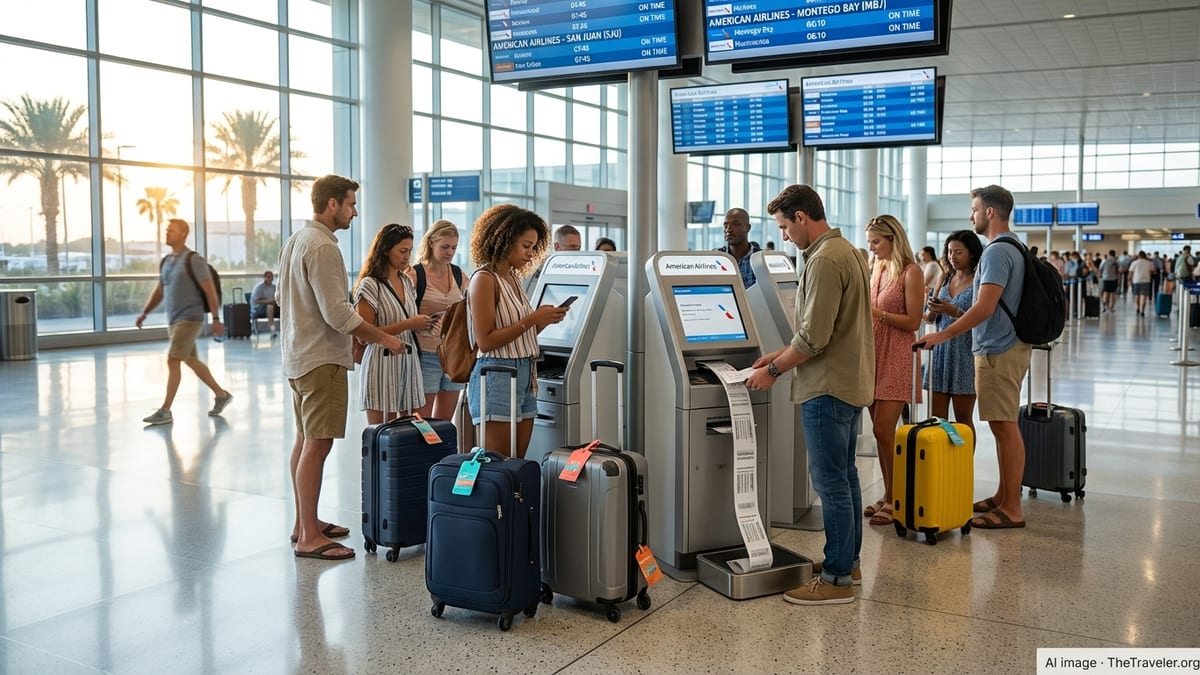
The new second bag pricing is tied to a wider push by American to move routine airport transactions into its digital channels. The airline has invested heavily over the past year in self-service bag kiosks at major hubs and key leisure airports, installing about 100 new machines at 16 locations. Customers who prepay for checked bags online can use these kiosks to print what the airline calls Express Bag Tags and proceed directly to a bag drop, bypassing full-service check in lines.
From the airline’s perspective, encouraging online prepayment and kiosk use helps reduce staffing pressure at crowded counters, shortens queues and makes it easier to handle peak seasonal flows to destinations like Florida and the Caribbean. For travelers, especially those connecting to cruises or tightly timed transfers, shaving even a few minutes off the check in process can provide welcome breathing room.
The change also reflects a broader trend in travel toward self-service, where airlines and airports deploy technology to allow customers to handle tasks that once required a staff member. In this model, travelers are nudged with price signals: pay a higher fee for in person help at the airport, or receive a discount for taking care of the transaction in advance via an app or website.
American has been gradually expanding what customers can do online before departure, from adding bags to changing seats and managing same day flight changes on certain routes. The new second bag discount fits neatly into that strategy, turning the baggage counter into a last resort rather than the default starting point for travelers flying between the United States and nearby sun destinations.
What the New Fees Mean for U.S. and Caribbean Leisure Travelers
The impact of the new second bag fees will be felt most sharply along classic leisure corridors linking U.S. cities with Caribbean islands and coastal resort regions. These routes often attract travelers who stay longer and pack more heavily, including families visiting relatives, destination wedding guests bringing formal wear and gifts, and vacationers carrying snorkeling gear, beach toys and multiple changes of clothing.
For a family of four flying from Chicago to Montego Bay or from New York to San Juan, the difference between paying at the airport and prepaying online could reach 40 dollars round trip if several passengers check a second bag in both directions. While that amount may not alter the decision to travel, it adds to the cumulative cost of a holiday that already includes higher hotel rates, resort fees and ground transfers in popular Caribbean destinations.
The adjustment also indirectly raises the stakes around baggage planning. Some travelers may choose to consolidate belongings into fewer, larger checked bags or rely more heavily on carry on luggage to avoid the second bag charge. Others may time their shopping, such as purchasing bulky souvenirs or gifts at the destination rather than packing them from home, in order to keep their checked bag count down.
At the same time, the new structure could be a minor advantage for organized travelers accustomed to using airline apps. Those who routinely check in online and track their trips digitally can fold bag prepayment into their pre departure ritual and capture the small discount almost automatically, while less frequent flyers who wait until they reach the airport will pay more for the same service.
Status, Credit Cards and Premium Cabins Still Soften Baggage Costs
American’s update to airport second bag fees does not change the underlying exemptions and perks that many loyal customers rely on to avoid checked baggage charges altogether. Travelers with AAdvantage elite status continue to receive complimentary checked bags on most American flights, and many AAdvantage cobranded credit card holders still enjoy a free first checked bag on eligible domestic itineraries, regardless of whether they prepay online or pay at the airport.
Passengers booked in premium cabins, including premium economy, business and first class on most domestic and international routes, also retain their existing complimentary baggage allowances. On many U.S. and Caribbean flights, those customers can check at least two bags at no charge, effectively insulating them from the second bag fee increase as long as they remain within size and weight limits.
Active duty U.S. military personnel continue to benefit from one of the most generous baggage policies in the industry, with multiple complimentary bags available on American flights, depending on their orders and destination. For service members traveling with families or relocating between the mainland and U.S. territories or Caribbean posts, this policy can offset hundreds of dollars in potential baggage fees.
Even for travelers without status or premium tickets, the airline’s rules around special routes and seasonal limitations can play a role in how the new second bag fees are felt. On certain flights to destinations such as Cuba or Haiti, baggage allowances and caps differ from the airline’s standard structure, and piece limitations during peak travel periods can restrict how many bags passengers are allowed to check, regardless of how much they are willing to pay.
Competitive Context: A Fee-Led Industry Shift
American’s latest second bag fee adjustment arrives after a decade in which U.S. airlines have steadily increased their reliance on ancillary revenue, particularly from checked bags. The carrier lifted its first checked bag fee on domestic routes to 40 dollars in mid 2025, and other major airlines have followed similar paths, citing inflation, higher labor and fuel costs, and the need to invest in new aircraft and technology.
The most symbolic shift came when Southwest Airlines, long known for its “bags fly free” slogan, announced that it would introduce checked bag fees in 2025 for flights booked from late May onward. With that change, every major U.S. carrier now charges for at least some checked baggage, ending a period in which travelers could count on one large airline to provide a fee free alternative for most itineraries.
For Caribbean and short haul international markets, where low cost carriers and foreign airlines also compete, baggage pricing has become a central battleground. Some competitors offer lower base fares but charge more aggressively for bags and seat assignments, while others bundle a modest baggage allowance into slightly higher ticket prices. American’s decision to keep an online second bag fee at 45 dollars while raising the airport rate to 50 dollars positions it near the middle of the pack on price while emphasizing the digital discount.
Industry analysts say the net effect of these changes is to make comparison shopping more complicated, particularly for travelers who fly infrequently and may underestimate how much their luggage plans will add to the total trip cost. For frequent travelers, however, loyalty programs, credit card partnerships and careful attention to bag rules still offer meaningful paths to keeping baggage expenses in check.
How Travelers Can Respond and Minimize Costs
With American’s new second bag fees in place, travelers flying between the United States and Caribbean or other nearby international destinations have a few clear options for limiting the financial impact. The most straightforward step is to prepay for checked bags online or via the airline’s app as soon as a trip is confirmed, locking in the lower second bag fee and gaining access to Express Bag Tag kiosks where available.
Beyond prepayment, careful packing has become more important. Choosing slightly larger checked bags that remain within the airline’s standard size and weight limits can sometimes allow couples or families to combine belongings into fewer pieces, avoiding the need for a second bag at all. Weighing bags at home with a simple luggage scale can reduce the risk of surprise overweight charges at the airport, which are often far higher than the base bag fee.
For travelers who fly several times a year, especially on American’s network of routes to Florida, Mexico and the Caribbean, it may be worth considering an airline credit card or climbing the AAdvantage status ladder to unlock complimentary bag benefits. While annual fees and spending requirements must be weighed carefully, the cumulative value of free checked bags can be significant for those who routinely travel with more than a carry on.
Travelers should also stay alert to seasonal baggage limitations to popular sun destinations, where airlines sometimes cap the number of bags allowed per person during peak holiday and summer periods. In those windows, simply being willing to pay more for a second or third bag is not enough if the route is temporarily restricted to two checked pieces per passenger.
Signals About the Future of Airline Pricing
American’s decision to tie a modest discount to online prepayment of second bags on U.S. and Caribbean routes offers a glimpse into how airlines may structure ancillary fees in the years ahead. Rather than simply raising prices across the board, carriers are increasingly using fees to steer customers toward behaviors that support their operational and digital strategies, whether that means checking in via an app, using automated bag drops or accepting more limited change flexibility on lower fares.
If the current model proves successful, travelers could see similar price differentials emerge for other add ons, such as preferred seating or priority boarding purchased online versus at the airport. The trend is already visible in some international markets, where airlines offer lower prices for advance seat selection and charge more for last minute changes made at the check in desk.
For now, the latest change from American underscores a simple reality for travelers: understanding the fine print on baggage fees is just as important as hunting for a low fare, particularly when heading to baggage intensive destinations like the Caribbean. As airlines fine tune their ancillary revenue strategies, the most informed and digitally savvy customers are likely to be the ones who keep more dollars in their wallets, even as headline fees continue to edge upward.