

More news on this day
Travelers connecting through Miami International Airport can expect a dramatically different experience in the coming years, as American Airlines and Miami-Dade County move ahead with a one billion dollar overhaul of Concourse D that will add new gates, modernize facilities and reshape how passengers move through one of the nation’s busiest international hubs.
A Landmark Investment in Miami’s Main Gateway
The newly announced project centers on the D60 area of Concourse D, American Airlines’ primary operational zone at Miami International Airport. The three-level expansion, budgeted at approximately one billion dollars, will convert what is now a ground-level operation for smaller regional jets into a full-scale concourse designed for larger, modern aircraft.
Scheduled to break ground in 2027 and be completed around 2030, the overhaul is part of a broader, nine billion dollar airport modernization program led by Miami-Dade County. Officials describe the Concourse D work as one of the most visible upgrades in a multiyear effort to refresh everything from boarding bridges and restrooms to walkways and security checkpoints across the airport.
For American, which has operated in Miami for nearly four decades, the investment underscores the carrier’s long-term commitment to its South Florida hub. The airline already accounts for more than 60 percent of passenger traffic at the airport and operates roughly 400 departures each day, making MIA a critical link in its global network.
Local leaders say the expansion will help secure Miami’s position as a premier gateway for international travel, particularly to Latin America and the Caribbean, while also supporting continued growth in transatlantic and domestic routes.
What Will Actually Change at Concourse D
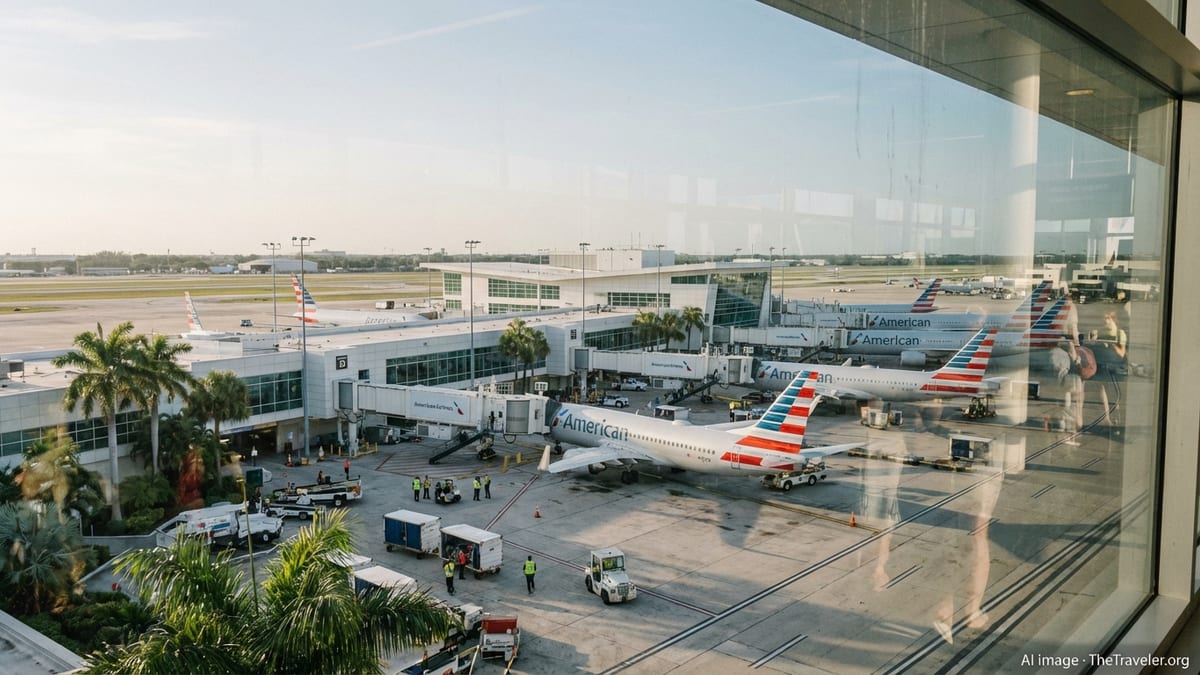
The project will transform the existing D60 gate area from a single shared boarding room with 17 ground-level parking positions for smaller regional jets into 17 full contact gates served by jet bridges. Each gate will have its own dedicated, more spacious waiting area, ending the outdoor ramp boarding that many passengers now face in this part of the terminal.
The reimagined concourse is being designed as a three-level facility with direct third-floor access to Miami International Airport’s customs and federal inspection hall. That built-in connection will allow the D60 complex to support international arrivals in the future, giving American more flexibility to route cross-border flights through its busiest concourse.
Renderings released by the airline and airport show bright, open interiors with high ceilings, natural light and indoor palm trees, along with expanded shopping and dining options. Plans also call for a modernized baggage handling system beneath the concourse and upgraded back-of-house areas to support more reliable operations during peak periods.
In addition to the new concourse infrastructure, the project is tied to American’s broader premium strategy at Miami. The carrier is planning a new Flagship Lounge, expanded Admirals Club space and enhancements such as additional self-service kiosks and biometric processing in cooperation with federal security agencies.
How the Overhaul Will Affect Your Future Flight
For passengers, the most immediate change once the new facilities open will be the boarding experience. The shift from outdoor ramp boarding to enclosed jet bridge gates should reduce weather-related discomfort, speed up loading and unloading and improve accessibility for travelers with reduced mobility or those traveling with children.
Having individual gate areas instead of a single crowded holding room is expected to ease congestion and make it easier for travelers to find seating, power outlets and clearer information about their specific flight. The expansion of concessions and lounges should also provide more places to eat, shop or relax during layovers, especially during peak bank times when American’s schedule is densest.
Operationally, the new layout is intended to help American improve its on-time performance out of Miami. More efficient aircraft parking positions, direct access to customs for eligible flights and a modern baggage system could trim turnaround times and reduce bottlenecks that currently ripple through the airline’s network when delays occur in South Florida.
Travelers should be aware, however, that these benefits will not arrive immediately. Construction is not expected to start until 2027, and work will continue into the next decade. In the interim, passengers may encounter shifting gate assignments, temporary construction zones and occasional detours as the airport prepares the site and advances other modernization projects around the terminal complex.
A Hub Positioned for Growth in Latin America and Beyond
American’s billion dollar bet on Concourse D reflects the airline’s view that demand for Miami as an international gateway will continue to grow. The carrier already serves 155 destinations from the airport, including more than 90 that are unique to its Miami network, with especially dense coverage across Latin America and the Caribbean.
This year, the airline is rolling out new service to destinations such as Milan in Italy and Bimini in the Bahamas from Miami, part of what it is billing as its largest summer schedule yet from the hub. The upgraded concourse is expected to support that evolution by giving American more flexibility in how it deploys aircraft types and manages connecting banks.
For travelers, the expansion should translate into more options for one-stop itineraries through Miami, particularly for journeys that combine domestic U.S. cities with leisure and business destinations across the Americas. With additional lounge space and upgraded facilities, the hub is also being positioned as a more attractive connecting point for premium and loyalty customers.
Airport officials emphasize that the D60 project is coordinated with other planned improvements, including a new Concourse K in the South Terminal and modernization of older areas in the Central Terminal. Together, these efforts aim to ensure that the airport’s airfield, terminal space and ground transport links keep pace with passenger growth well into the 2030s.
Sustainability, Jobs and the Passenger Experience Timeline
Beyond its impact on flights and connections, the Concourse D expansion is being framed as a catalyst for economic development and a showcase for more sustainable airport infrastructure. The three-level extension is being designed to meet stringent environmental benchmarks, with the goal of earning LEED Silver and Envision Verified certifications.
Those standards encourage energy efficient systems, resilient building practices and thoughtful use of materials, all of which are increasingly important as airports in coastal regions like South Florida plan for long-term climate risks. Features such as improved building envelopes, efficient lighting and optimized mechanical systems are expected to lower operating costs over the life of the facility.
The billion dollar investment is also expected to support construction jobs and related economic activity across Miami-Dade County over several years. American is highlighting its partnerships with local aviation schools and workforce programs as it looks to build a pipeline of talent for both construction and ongoing airport operations.
For travelers planning trips in the near term, the key takeaway is timing. The Concourse D overhaul will not disrupt flights tomorrow, but it will shape the airport experience later in the decade. Passengers flying through Miami today will continue to see incremental improvements as other elements of the modernization plan come online, from new moving walkways and renovated restrooms to upgraded boarding bridges. The full impact of American’s billion dollar concourse investment, though, will be felt gradually as gates open closer to 2030 and Miami’s role as a global hub enters its next chapter.