

More news on this day
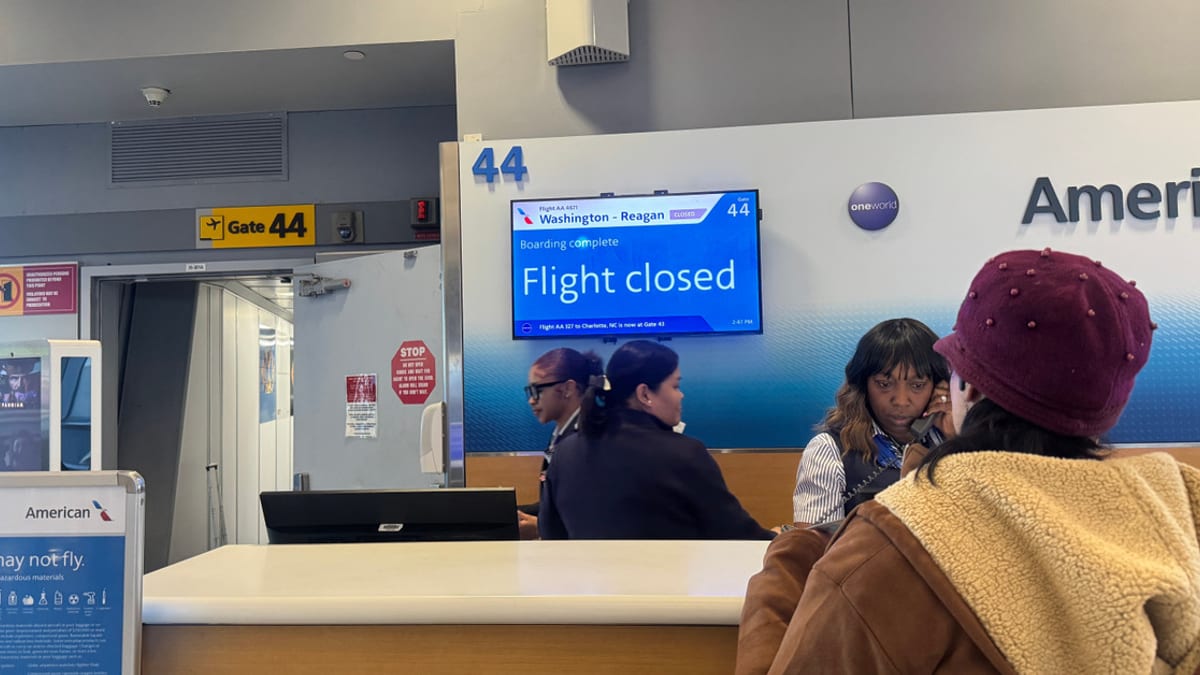
American Airlines is working to recover its schedule and reassure customers after a new round of severe storms and weather-driven air traffic controls pushed its disruptions into the four-digit range across the United States.
Get the latest news straight to your inbox!
Storm Systems Converge On Key American Hubs
Multiple storm systems sweeping across the country in late March 2026 have created a punishing operating environment for U.S. airlines, with American Airlines among the hardest hit. A major blizzard affecting the Upper Midwest, combined with bands of severe thunderstorms and heavy rain in the South and along the East Coast, has repeatedly disrupted arrivals and departures at some of American’s most important hubs. Publicly available operational data and meteorological reporting point to a volatile pattern of snow, ice, hail, and strong winds that has stretched from Texas and the central Plains to the Mid Atlantic and Northeast.
Reports indicate that the March 2026 North American blizzard and successive storm fronts forced airports in Chicago, the Great Lakes, and the central United States to cycle through ground delay programs and temporary halts to arrivals. Those constraints reduced the capacity of major hubs to accept inbound aircraft for hours at a time, leaving aircraft and crews out of position. At the same time, a separate corridor of severe weather across the Southeast and Mid Atlantic introduced additional convective storms, turbulence concerns, and low visibility, further tightening the system.
According to recent coverage of national operations, storms on March 16 alone led to more than 12,500 delayed or canceled flights across the U.S., with American and several peers recording disruptions on roughly 45 percent of their schedules that day. As the month progressed, additional systems brought fresh rounds of severe thunderstorms, rapid snowmelt, and flash flooding, culminating in more than 3,000 delays and over 100 cancellations nationwide on March 31. Within that wider disruption picture, American’s share of delayed flights pushed its total impact into four-digit territory over several days.
FAA Ground Stops Intensify Network Strain
While weather has been the core trigger, Federal Aviation Administration ground stops and ground delay programs have amplified the strain on airline networks. Publicly available FAA advisories show that key American Airlines hubs have periodically been placed under arrival or departure holds when storm cells or low visibility reduced safe operating capacity. Earlier in March, temporary ground controls were reported at Chicago O’Hare and Charlotte, two of the carrier’s busiest connecting points, as winter weather and thunderstorms converged on already congested airspace.
More recently, the effects of strong storms and saturated runways have led to extended taxi times and longer spacing between departures and arrivals at major coastal and inland airports. In some cases, ground stops have been used to meter traffic into airports dealing with flooded taxiways or runway visibility issues. These FAA measures are designed to maintain safety when weather or volume overwhelms local infrastructure, but they also force airlines to hold flights at origin airports, contributing to knock-on delays and missed connections hours later and thousands of miles away.
Industry data compiled at the end of March highlight how quickly such controls can cascade. On days when severe weather prompted multiple regional ground programs, nationwide figures climbed into the thousands of delays, with hundreds of cancellations across carriers. American’s network, anchored by large hubs in Dallas Fort Worth, Charlotte, Miami, Chicago, and Philadelphia, has been particularly susceptible when storms or air traffic restrictions affect more than one of those airports at the same time.
American Airlines Reaches Out To Impacted Passengers
In response to the escalating disruption, American Airlines has moved to expand its customer outreach and recovery options. Publicly available information on the airline’s channels indicates that American has been issuing flexible travel alerts for affected dates and regions, allowing travelers to rebook within specified windows without change fees. The carrier has also emphasized use of its mobile app and website for same day trip management, including rebooking, seat changes, and digital boarding passes, to reduce pressure on airport customer service lines.
Reports from recent disruption days suggest that American has leaned on larger aircraft where possible to consolidate passengers from multiple canceled or heavily delayed flights onto single departures once weather constraints ease. Operational tracking shows that, in some cases, the airline has managed to limit outright cancellations while accepting a higher volume of late arrivals and departures to move as many travelers as possible before crews and airport curfews become limiting factors.
Even with these measures, the scale of four digit disruptions has left many travelers facing extended layovers, missed connections, and overnight stays away from home. Consumer advocacy coverage notes that American and other large carriers have been providing hotel and meal support in situations where delays clearly fall within airline control, while weather driven disruptions remain governed by individual contracts of carriage and federal rules that do not require compensation.
Ripple Effects Across Regional And Secondary Airports
The impact of the storms and FAA interventions has not been limited to the largest hubs. Recent reporting on operations in Texas and the Southeast shows that secondary and regional airports served by American and its partners have experienced their own waves of delays and cancellations as the carrier attempted to reset its network. Airports in Dallas, Houston, and Austin, for example, have collectively recorded hundreds of delays tied to severe weather and traffic management initiatives during the final weekend of March, with ripple effects felt on connecting flights across the central and eastern United States.
Similarly, a series of severe thunderstorms and low cloud ceilings at busy midcontinent airports has led to local ground delay programs, compressing departure banks and forcing airlines to trim schedules on short notice. When flights into or out of smaller cities are reduced or pushed back, aircraft often arrive late for onward legs, amplifying disruption for passengers who may be far from the original weather hotspot.
In several recent cases, operational summaries show that American’s regional affiliates have had to cancel or significantly delay flights at outstations when mainline aircraft and crews were stranded at weather affected hubs. This has contributed to the growing tally of disrupted flights across the carrier’s network, with some passengers facing rebookings that bypass their original connecting points entirely as the airline seeks open seats wherever capacity is available.
What Travelers Can Do As Disruptions Continue
With the spring storm pattern expected to remain active into April, travel analysts suggest that passengers flying with American Airlines and other major carriers should prepare for ongoing volatility. Publicly available guidance from consumer groups and airline operations specialists encourages travelers to monitor evolving forecasts along their entire route, not just at departure and arrival airports, since storms in intermediate regions can trigger FAA traffic management actions that ripple nationwide.
Passengers are also being urged to take full advantage of digital tools. American’s app and similar platforms from other airlines typically update faster than airport monitors or phone lines when schedules shift. Same day change functions, mobile boarding passes, and proactive notifications can help travelers secure earlier rebookings and avoid long queues at service desks when disruptions spike.
Finally, experts recommend building additional time into itineraries that require critical connections, such as international departures or important events, and considering earlier flights in the day, which historically have a better chance of operating on time before storms and air traffic congestion build. As American Airlines works to restore normal operations after a bruising stretch of four digit disruptions, flexible planning and close monitoring remain the best tools available for travelers navigating a stormy U.S. aviation landscape.