

More news on this day
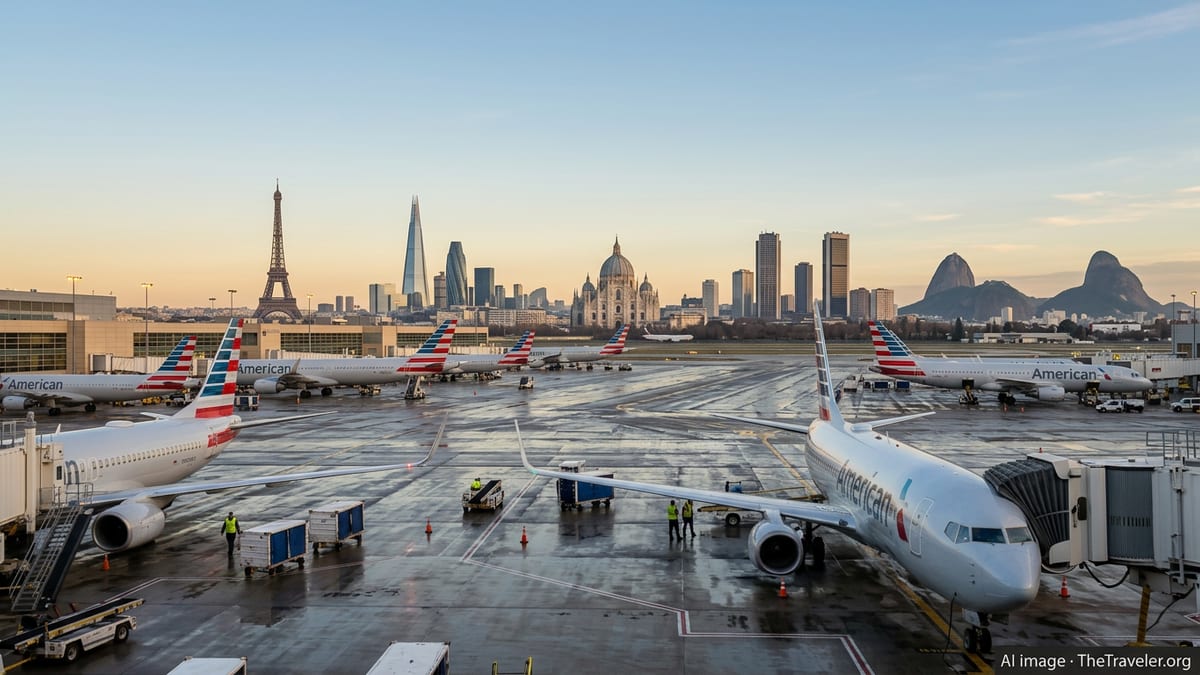
American Airlines is sharpening its focus on transatlantic and South American tourism this upcoming winter, rolling out expanded flights to marquee destinations such as Paris, Milan, Madrid, London and Rio de Janeiro as European and Brazilian partners court more U.S. travelers.
Spain Steps Forward as Madrid Gains More U.S. Lift
Spain is emerging as one of the biggest winners in American Airlines’ latest winter scheduling moves, with additional capacity feeding into Madrid at a time when the country is actively targeting higher long-haul arrivals from the United States. The Spanish capital, a key gateway for both leisure and onward connections across the Iberian Peninsula, is seeing reinforced links that align with record visitor interest in Spain’s cultural cities and coastal hotspots.
Airport data from Madrid Barajas highlights the growing role of U.S. carriers in the transatlantic mix, complementing long-established services from European partners. American’s winter emphasis is expected to support Spain’s broader tourism strategy, which prioritizes higher-spend visitors and encourages travel beyond traditional summer peaks into shoulder and winter seasons. With more Americans eyeing city breaks and culinary travel over short-haul domestic trips, Madrid is well positioned to capture demand.
Industry observers note that the expanded U.S.–Spain capacity fits a wider European trend, as countries such as Germany, Italy, the United Kingdom and France also double down on air links to North America. For Spain specifically, sustained connectivity through the winter could help smooth seasonality in destinations like Andalusia, the Balearic Islands and the Basque Country, where hoteliers are increasingly marketing mild winter climates and food-focused itineraries to U.S. visitors.
Travel trade partners say the strengthened Madrid schedule is already feeding into packaged itineraries that combine Spain with neighboring countries. Multi-country rail and air combinations, linking Madrid with Paris, Milan or southern Germany, are gaining traction with North American agencies seeking fresh winter offerings for repeat Europe travelers.
Flagship European Gateways: Paris, Milan, London and Beyond
Across Europe’s major hubs, American Airlines is leaning into what it views as proven, year-round demand corridors from the United States. Paris, Milan and London remain at the center of this strategy, with winter schedules designed to keep capacity in line with robust inbound tourism as well as strong corporate and premium leisure traffic. For many American travelers, these cities function both as final destinations and as jumping-off points for wider European exploration.
In France, Paris continues to be the primary magnet for U.S. visitors, with American’s services feeding into a dense network of domestic and regional routes operated by European partners. This connectivity supports city stays in the capital as well as winter trips to the French Alps, Burgundy and Provence. Operators report that shoulder-season trips to France, especially around Christmas markets and cultural festivals, have become a growth segment, and reliable transatlantic lift is critical to sustaining that momentum.
Italy is also benefiting as Milan solidifies its role as a northern gateway for both business and leisure travel. Enhanced winter operations into Milan from the United States are expected to support fashion and design events, as well as growing interest in food and wine itineraries across Lombardy, Piedmont and the Veneto. For travelers who might once have flown only into Rome, Milan’s expanded connectivity offers convenient access to ski resorts in the Alps and Dolomites during the peak winter sports season.
London, meanwhile, remains one of American’s most strategically important transatlantic destinations. Seasonal adjustments to frequencies and aircraft types are being calibrated to balance strong demand with shifts in competitive capacity from other U.S. and European carriers. Travel analysts say that sustained winter service into London feeds a wide range of itineraries, from short city breaks to extended tours that combine the UK with Ireland, France or the Benelux region.
Germany, France, Italy, the UK and Spain Coordinate to Attract U.S. Visitors
American Airlines’ winter plans dovetail with a broader push from European tourism boards in Germany, France, Italy, the UK and Spain to reinforce their visibility in the lucrative U.S. outbound market. These countries have collectively stepped up trade campaigns, media outreach and joint promotions with airlines to highlight off-peak city experiences, cultural programming and holiday-season events.
German tourism agencies, for instance, have leaned heavily on their network of Christmas markets and winter city experiences in Berlin, Munich and Frankfurt to entice Americans to travel outside the traditional summer window. Enhanced connectivity via major U.S. carriers, including American’s partners, plays into this narrative by making multi-stop itineraries and flexible routing more accessible for travelers booking through tour operators or online agencies.
France and Italy are similarly focused on diversifying their demand beyond classic summer beach and countryside stays. With improved transatlantic access, both countries have been promoting gastronomy, wine tourism and cultural festivals that stretch well into the winter months. American’s decision to keep capacity on high-profile routes to Paris and Milan over the colder period supports these campaigns, providing the lift needed for themed trips such as food-focused city breaks, ski holidays and winter art itineraries.
The UK and Spain, meanwhile, are capitalizing on the strength of the U.S. dollar and the appeal of English-language accessibility to draw both first-time and repeat visitors. Tourism bodies in London and major Spanish cities have been actively partnering with airlines and tour operators to highlight city attractions, museum exhibitions and sporting events that run throughout the winter season, banking on reliable U.S. air links as a cornerstone of their strategy.
Brazil and Rio de Janeiro Strengthen Links With U.S. Carriers
On the South American front, Brazil and in particular Rio de Janeiro are seeing renewed attention from U.S. airlines, with American Airlines among the carriers expanding winter-season service. New and reinforced routes into Rio align with a broader reopening of Brazil to long-haul leisure travelers, especially from North America, where beach destinations and warm-weather winter escapes remain in high demand.
Recent network announcements have highlighted increased frequencies from major U.S. gateways to Brazil, often timed around the Southern Hemisphere summer and key local events such as New Year celebrations and Carnival. American’s presence at Rio’s main international airport, alongside Brazilian and global competitors, is viewed as a key driver of inbound tourism from the United States, enabling both direct city stays and connections to coastal and Amazonian destinations.
Local tourism officials in Rio de Janeiro have framed the expanded U.S. connectivity as crucial to the city’s strategy to attract higher-spend international visitors. Enhanced winter-season schedules support a broader calendar of events, from music festivals to sports tournaments, aimed at smoothing demand across the peak summer months and into the shoulder periods. For American Airlines, the routes to Rio and other Brazilian gateways also serve significant visiting-friends-and-relatives traffic, adding resilience to seasonal leisure demand.
Travel advisors in the U.S. report a noticeable uptick in interest for Brazil itineraries that combine Rio with other iconic regions, such as the Iguazu Falls or the beaches of Bahia. Consistent winter flight options from American and its competitors allow agencies to build more complex, multi-stop journeys while maintaining reasonable travel times and connections.
What Expanded Winter Capacity Means for U.S. Travelers
For American travelers, the airline’s expanded winter capacity across Europe and Brazil translates into more choice in schedules, routings and pricing at a time when demand patterns remain in flux. Additional flights to Paris, Milan, Madrid, London and Rio de Janeiro open up greater flexibility for long weekend trips, extended stays and multi-country itineraries, particularly for travelers leveraging loyalty points or seeking competitive premium-cabin fares.
Industry analysts note that American’s strategy reflects a measured response to evolving post-pandemic travel trends. While summer remains the peak period for transatlantic flying, sustained winter interest in cultural city breaks, Christmas markets, ski holidays and winter sun escapes has encouraged carriers to maintain or even grow off-peak service on select routes. By concentrating on proven, high-profile destinations, American aims to capture this demand while avoiding overextension on weaker city pairs.
The enhanced winter links also underscore how closely airline network planning is now aligned with tourism policy in destinations like Spain, Germany, Italy, the UK, France and Brazil. As these countries fine-tune their marketing around higher-value, less seasonal travel, robust and predictable air service from the United States becomes a central pillar of their strategies. For American Airlines, the payoff lies in stronger year-round load factors, deeper relationships with tourism boards and a more diversified global network.
With booking windows for winter trips opening earlier each year, the expanded flight options are expected to influence how and where U.S. travelers choose to spend their cold-weather holidays. Paris, Milan, Madrid, London and Rio de Janeiro are set to remain front and center, not only as bucket-list destinations but also as well-connected hubs anchoring a new generation of flexible, multi-stop winter journeys.