

More news on this day
A recent American Airlines baggage damage dispute circulating on consumer forums is drawing renewed attention to U.S. Department of Transportation rules that require airlines to compensate travelers for most damage to suitcase wheels, handles and other external components, even as some carriers continue to label such harm as ordinary wear and tear.
Get the latest news straight to your inbox!
Online Complaint Spotlights Wheel Damage Dispute
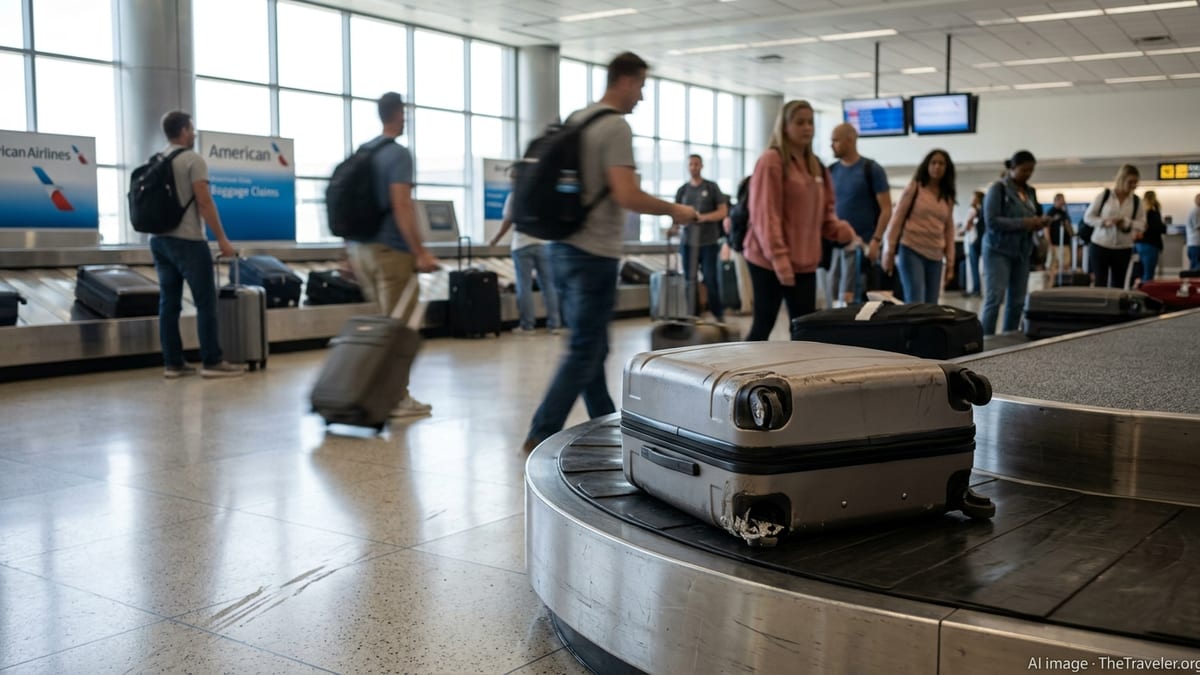
In early 2026, a traveler posting on social media and discussion forums reported that American Airlines had denied a damage claim after a checked suitcase arrived with a missing or broken wheel. The passenger said the airline characterized the problem as normal wear and tear, leaving the traveler responsible for repair or replacement despite the bag having been checked in good condition.
The complaint follows a pattern seen in multiple recent online accounts involving American Airlines, where passengers describe cracked shells, torn handles or sheared-off wheels and report that initial claims were rejected as excluded damage or attributed to pre-existing issues. While individual cases vary and details are difficult to verify independently, the recurring nature of these stories has amplified frustration around how front-line baggage staff and claims processors interpret airline liability rules.
Publicly available information on American Airlines’ conditions of carriage states that the carrier will compensate passengers for lost, delayed or damaged checked bags up to a specified monetary limit per traveler, subject to exclusions for fragile or high-value items. At the same time, customer-facing materials and responses highlighted in online posts suggest a stricter stance when damage is confined to wheels or other protruding parts, despite federal guidance that treats those components as part of the protected baggage.
The growing number of anecdotal reports is prompting some advocacy groups and legal commentators to encourage travelers to document baggage condition before and after flights, and to escalate disputes beyond the airline when claim denials appear to conflict with federal policy.
DOT Guidance: Wheels and Handles Are Covered Components
Long-standing guidance from the U.S. Department of Transportation (DOT) states that airlines are responsible for repairing or reimbursing passengers for damaged checked baggage when the harm occurs while the bag is in the carrier’s custody, up to government-set liability limits for domestic itineraries and treaty limits for most international trips. DOT consumer pages on lost, delayed and damaged baggage explain that this responsibility applies to the suitcase itself and its components, as well as to contents, except where clearly defined exclusions apply.
DOT’s baggage guidance specifically notes that although airlines are not required to cover ordinary fair wear and tear, they may not categorically exclude liability for damage to wheels, handles, straps, zippers and other external parts of checked luggage. The agency issued a detailed enforcement notice on this point after nationwide inspections found that some carriers routinely refused claims involving those components, often citing contract-of-carriage language that attempted to carve out wheels and handles from coverage.
In that notice and subsequent consumer-facing materials, regulators emphasized that blanket exclusions for damage to these parts are inconsistent with U.S. aviation consumer protection rules. Instead, carriers are permitted to deny claims only where they can reasonably conclude that damage reflects pre-existing defects, manufacturing flaws, improper packing or normal aging of luggage, rather than mishandling or impact during the journey.
This framework is intended to give airlines flexibility to reject unfounded or abusive claims while preserving meaningful recourse for travelers whose suitcases are cracked, punctured or left with bent or missing wheels that render the bag difficult or impossible to use after a flight.
American Airlines Policy and Federal Liability Limits
According to policy language in American Airlines’ publicly available conditions of carriage, the airline undertakes to pay the provable value of passenger losses when a checked bag is lost, delayed or damaged while in its care, up to a maximum liability amount that aligns with U.S. regulations for domestic travel. For most itineraries between U.S. cities, federal rules allow airlines to limit their liability for baggage to a set dollar figure per passenger, adjusted periodically; American’s policy documents reflect a cap in the several-thousand-dollar range, with higher limits available when customers declare excess value at check-in.
The carrier also lists broad exclusions for certain categories of items, such as fragile goods, electronics, cash and other valuables, which are standard across the industry and consistent with DOT allowances for domestic contracts of carriage. However, wheels, handles and similar structural elements of a suitcase are not grouped with these discretionary exclusions in DOT materials, and federal guidance underscores that carriers cannot post blanket disclaimers for damage to such parts.
Industry commentators note that tension can arise between the letter of American’s written policies, which broadly commit to compensating for damaged bags subject to limits and exclusions, and the way those policies are interpreted in individual claims. In online narratives, travelers sometimes describe being told that wheels and handles are not covered components, even where DOT has indicated otherwise. These discrepancies raise questions about how thoroughly federal rules are communicated to baggage service offices, contractors and third-party repair partners involved in evaluating damage.
Legal analysts observing these disputes point out that DOT has previously fined airlines for providing inaccurate information about baggage liability and has used enforcement powers to press carriers to align their public communication and internal training with federal requirements. That history suggests both that regulators monitor this area closely and that future disputes over wheel-related claims could invite further scrutiny.
Regulatory Backdrop: From General Baggage Rules to Disability Protections
The current debate over suitcase wheel damage sits within a broader evolution of U.S. rules on baggage and mobility devices. For standard checked luggage, DOT’s consumer protection framework has long governed how airlines must treat lost, delayed or damaged bags, including wheel and handle damage, and has clarified that attempts to undercut federal liability limits are not permitted in contracts of carriage.
More recently, the department has advanced separate rulemaking aimed at protecting passengers who travel with wheelchairs and scooters. A final rule signed in late 2024 strengthens obligations on airlines when these mobility devices are lost, delayed, damaged or insufficiently repaired, reflecting heightened concern about the impact of mishandling on travelers with disabilities. While these newer provisions focus on assistive devices rather than ordinary luggage, they underscore the department’s willingness to intervene when carriers’ practices leave travelers without adequate remedies for damage.
Together, these regulatory strands suggest that federal authorities view accurate information about baggage liability as essential to fair treatment of travelers. When airlines or their agents describe wheel or handle damage as non-compensable across the board, consumer advocates argue that such statements can undermine the protections embedded in DOT’s guidance and relevant international treaties.
For American Airlines and other major carriers, maintaining compliance involves not only publishing updated conditions of carriage but also ensuring that front-line employees, call centers and digital claim systems apply federal rules consistently when real-world damage cases arise.
Escalation Paths for Travelers Facing Denied Claims
For passengers who believe a wheel damage claim has been wrongly denied, DOT consumer materials outline several possible next steps. Travelers are advised to report damage as soon as possible after arrival, ideally before leaving the airport, and to document the condition of the bag with photographs, baggage tags and receipts. If an airline rejects a claim, passengers may pursue the carrier’s internal complaint channels and request a written explanation citing specific policy provisions.
When internal efforts do not resolve the issue, travelers have the option of filing a complaint with the U.S. Department of Transportation’s Aviation Consumer Protection office. DOT’s Fly Rights guidance explains that airlines must acknowledge written complaints within a defined period and provide a substantive response within 60 days, although the process may not always lead to compensation. Some passengers also consider alternative avenues such as credit card travel protections or small claims court, depending on the value of the damaged luggage and local legal options.
Consumer advocates emphasize that familiarity with DOT rules on damaged baggage, particularly the explicit statement that airlines cannot exclude liability for wheels, handles and straps beyond normal wear and tear, can strengthen a traveler’s position when disputing a denial. Citing official language from publicly available government resources, rather than relying solely on personal experience, may encourage carriers to revisit an initial decision.
As the American Airlines dispute over wheel damage continues to circulate online, it serves as a reminder that baggage rules are more nuanced than many travelers realize. The interaction between airline contracts, federal guidance and real-world claims handling will likely remain a point of contention, especially when visible damage to suitcase wheels is written off as unavoidable wear rather than a compensable consequence of air travel.