

More news on this day
American Airlines has again pushed back the restart of flights to Doha and Tel Aviv into 2026, prolonging uncertainty for U.S. travelers whose plans hinge on the carrier’s long-haul Middle East network.
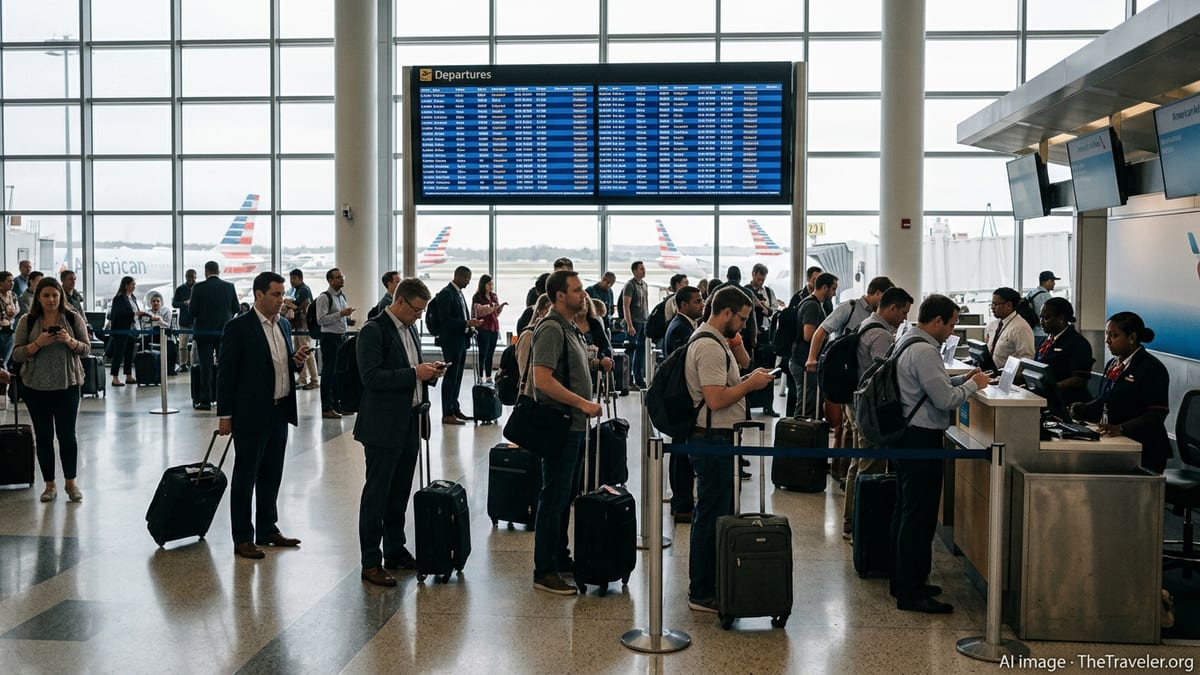
Key Middle East Routes Pushed Further Into 2026
American Airlines has confirmed that its Philadelphia to Doha service will remain suspended until at least May 7, 2026, while the relaunch of its New York John F. Kennedy to Tel Aviv route has been delayed to April 23, 2026. The airline had previously targeted late March 2026 for the return of Tel Aviv flights, aligning with the start of the northern summer schedule, but has now shifted that date nearly a month later.
The carrier’s Philadelphia–Doha route, introduced as part of its expanded partnership with Qatar Airways and the Oneworld alliance, has been on hold amid ongoing airspace restrictions and operational challenges across the region. The latest extension means that American will miss the lucrative early spring travel period on this corridor, leaving many passengers reliant on partner carriers and complex connections.
The Tel Aviv postponement comes after American had already suspended flights to Israel in 2023 and then extended that suspension several times as security conditions fluctuated. While competitors such as United Airlines and Delta Air Lines have been rebuilding capacity to Ben Gurion Airport, American’s presence in the Israeli market will now re-emerge later than initially advertised.
Airspace Restrictions and Security Concerns Drive Schedule Changes
The latest delays come against a backdrop of heightened regional tension and evolving flight-safety guidance from aviation regulators. European and Middle Eastern authorities have imposed temporary restrictions on operations over and into several countries, including Qatar and Israel, prompting carriers to reassess routing, crew safety and insurance exposure.
In Qatar, the closure of national airspace since late February 2026 has forced Qatar Airways and its partners to operate a limited schedule using narrow corridors approved by regulators. With Doha serving as a major hub for U.S. travelers connecting onward to Africa, South Asia and Southeast Asia, any suspension or reduction in service has a ripple effect across American’s joint network.
Israel has faced its own cycle of disruptions, from earlier conflict-related suspensions to more recent security incidents that have prompted airlines to pause or reduce flights. American’s decision to delay its return to Tel Aviv reflects a cautious approach in an environment where advisory notices and operational risk assessments can change quickly.
Industry analysts note that long-haul routes into politically sensitive regions are often the last to be restored, as airlines weigh not only demand but also overflight permissions, airport security procedures and crew layover arrangements. For American, the decision to push back both Doha and Tel Aviv suggests a preference for stability and predictability over speed in re-entering these markets.
Knock-On Effects for U.S. Passengers and Corporate Travel
For U.S. passengers, the latest schedule changes extend an already difficult period for planning trips to the Middle East. Travelers from the East Coast who once relied on a single-ticket journey with American now face more complex itineraries, often involving connections on partner airlines via European or alternative Middle Eastern hubs.
Corporate travel managers say the suspended Philadelphia–Doha route in particular has complicated trip planning for employees heading to energy, construction and finance projects in the Gulf region. Many are rebooking via London, Madrid or other European gateways, or shifting traffic entirely to competitors that maintain more robust schedules to the area.
Leisure travelers, including Americans visiting family in Israel or using Doha as a connection to destinations such as the Maldives, India or Thailand, are also feeling the impact. With school holidays and summer 2026 trips now within booking range, some passengers are opting to avoid itineraries that rely on American’s still-tentative restart dates.
Travel advisers report rising demand for flexible tickets and clear rebooking options, as customers seek protection against late-notice schedule changes. They are steering clients toward airlines with confirmed operations and established waivers for Middle East routes, even when that means higher fares or longer connections.
Rerouting via Partners and Alternative Hubs
American is leaning heavily on alliance and joint-venture partners to backfill lost capacity while its own metal remains off key Middle Eastern routes. Customers affected by Tel Aviv cancellations are being rerouted on British Airways via London or on other European partners, while Doha-bound passengers are steered toward Qatar Airways and selected alternative gateways where operations remain stable.
These workarounds help preserve connectivity on paper, but they often add travel time and complexity. Multi-stop itineraries can require terminal changes, overnight connections or additional security screening, all of which increase the risk of missed flights and lost baggage. For travelers accustomed to nonstop or one-stop journeys, the shift represents a noticeable downgrade in convenience.
Some frequent flyers are also voicing frustration over last-minute schedule adjustments and limited proactive communication. Reports of passengers discovering significant reroutes only days before departure have raised questions about how airlines handle notifications and customer support when entire city pairs drop off the schedule.
Despite these challenges, industry observers say partnerships remain crucial in maintaining a basic level of connectivity while American’s direct flights to Doha and Tel Aviv are on hold. Without them, U.S. passengers would face far fewer options for reaching the region on a single itinerary.
Uncertain Outlook as Summer 2026 Approaches
Looking ahead, American’s revised dates for Doha and Tel Aviv highlight the fragile nature of long-haul planning in a volatile region. Even with May 7, 2026 set as the target for the return of the Philadelphia–Doha link and April 23, 2026 marked for the restart of New York–Tel Aviv, further changes remain possible if security advisories or airspace restrictions shift again.
Airlines typically finalize their summer schedules months in advance, but the current environment has forced network planners to build in more contingencies and to issue rolling travel waivers. That means passengers booking far ahead may still face alterations closer to departure, particularly on routes touching the Middle East.
For now, travel experts recommend that U.S. passengers heading to Doha, Tel Aviv or beyond closely monitor airline alerts, consider refundable fares or robust travel insurance, and remain flexible on dates and routings. Until American can fully restore its Middle East operations, travelers are likely to continue navigating a patchwork of options, with disruptions and uncertainty an ongoing part of the journey.