

More news on this day
American Airlines will end its only route to Santa Maria, California in early May, cutting a key link between the Central Coast and its nationwide network and forcing local travelers to rethink how they reach major hubs and beyond.
Get the latest news straight to your inbox!
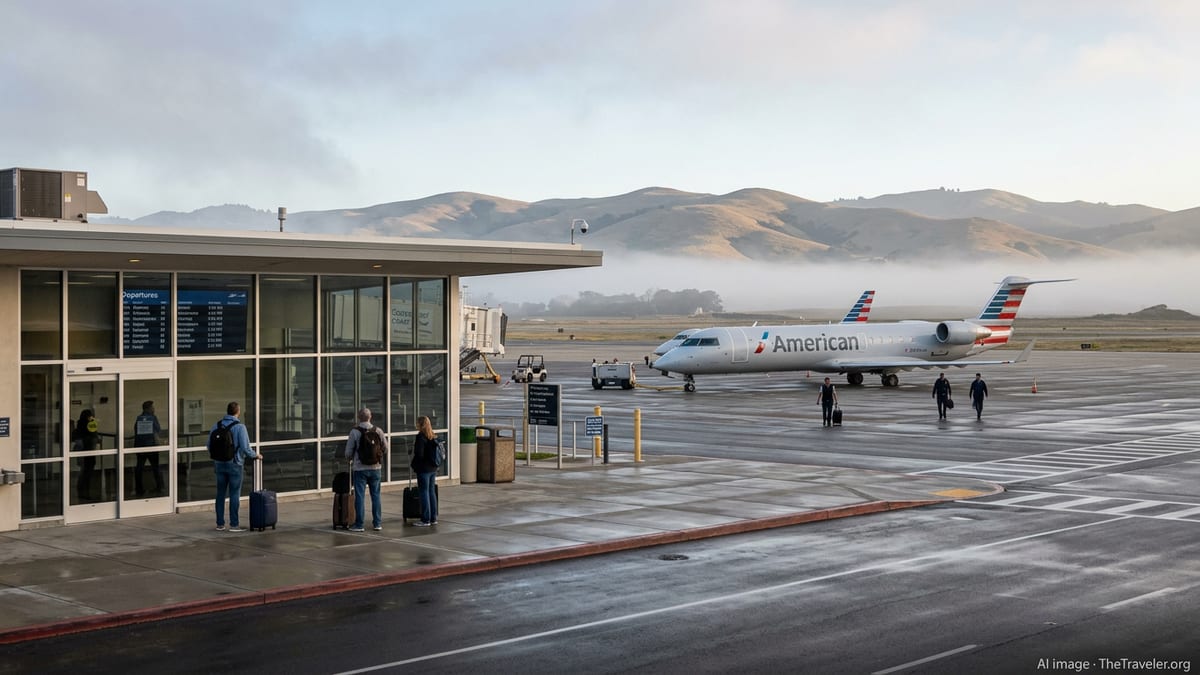
American Ends Phoenix–Santa Maria Flights This Spring
American Airlines is discontinuing its American Eagle service to Santa Maria Public Airport, its only route serving the small Central Coast city. The regional flights, operated by SkyWest Airlines and connecting Santa Maria to American’s hub in Phoenix, are scheduled to end in early May after less than a year in operation. The decision effectively removes American from the Santa Maria market and leaves the airport without a direct link to the carrier’s national and international network.
The airline cited underperformance of the route as the primary reason for exiting. Despite hopes that the Phoenix connection would draw both leisure travelers headed to Arizona and connecting passengers bound for the rest of American’s system, demand did not meet internal expectations. For American, which has been reshaping its network to emphasize profitable routes and higher-yield customers, a lightly used regional link was an increasingly hard fit.
For Santa Maria, the timing is particularly sensitive. The airport has worked in recent years to attract and retain scheduled service as nearby San Luis Obispo and Santa Barbara have added more flights and carriers. Losing American’s Phoenix route underscores how fragile small-city air service can be, especially when it depends on a single carrier and a single connection point.
The move comes as American continues to grow elsewhere in California, including new and expanded service tied to major events and stronger hub connections. That contrast highlights a wider trend in U.S. aviation: airlines are consolidating in bigger coastal and Sun Belt markets while pulling back from smaller communities that struggle to consistently fill seats.
What the Route Cut Means for Central Coast Travelers
For local travelers, the most immediate impact is the loss of a one-stop pathway from Santa Maria to American’s wider network via Phoenix. Frequent flyers who relied on the route to reach destinations across the Southwest and beyond will now have to start their journeys from alternative airports, adding drive time, parking costs, and greater competition for seats during peak periods.
Business travelers may feel the change most acutely. Many used Santa Maria as a convenient departure point for quick trips to Phoenix and onward hubs, avoiding the longer drive to San Luis Obispo, Santa Barbara, or San Jose. With the American flights gone, tight same-day itineraries will be harder to execute, and some road warriors may find themselves adjusting meeting times or opting for overnight stays instead of early-morning out-and-back trips.
Leisure travelers on the Central Coast face a different tradeoff. While nearby airports still offer a reasonable range of options, especially to major West Coast cities and key hubs, the simplicity of flying American from a hometown airport disappears. Families who used American’s Phoenix link to connect to vacation destinations in Mexico, Hawaii, or the Midwest will have to compare new routings, often connecting through Los Angeles, San Francisco, Dallas or Denver on competing carriers.
There are also loyalty implications. American AAdvantage members who built up status and miles while flying from Santa Maria now must decide whether to stay loyal and drive farther to catch American flights, or pivot to other carriers dominant at nearby airports. For some, especially occasional travelers, the convenience of a closer airport and better schedules may outweigh the benefits of sticking with a single frequent-flyer program.
Alternative Airports and Carriers for Replacing the Route
With the Phoenix connection ending, travelers on the Central Coast will need to consider a broader map of nearby options. The closest alternatives are San Luis Obispo County Regional Airport and Santa Barbara Airport, both of which host multiple major carriers and offer connections to large hubs such as Los Angeles, San Francisco, Denver, Phoenix and Dallas. These airports can, in many cases, replicate the connectivity Santa Maria residents previously accessed through American.
San Luis Obispo has become a particularly important gateway, with flights from several legacy airlines feeding into their respective hubs. Travelers loyal to American may still be able to route through Phoenix or Dallas from there, while those open to other carriers will find new options to cities across the West and Midwest. Santa Barbara, meanwhile, provides additional links to Southern California and beyond, which can be attractive for travelers heading to the East Coast or international destinations.
For certain itineraries, driving farther afield to San Jose or Los Angeles may also make sense. These larger airports offer far more nonstop choices, including to major East Coast and international gateways, at the cost of longer ground travel and busier terminals. Some travelers may decide that a three to four hour drive in exchange for a nonstop cross-country flight is preferable to a short hop and a tight connection.
It is also worth watching how low-cost carriers and regional airlines respond. When a large airline vacates a smaller market, competitors sometimes step in with limited or seasonal service, especially during popular vacation periods. While no replacement has been announced, the evolving landscape at nearby California airports suggests that opportunities could emerge over the next several seasons.
How to Rebook Smartly and Protect Your Trip
Customers already booked on American’s Santa Maria flights after the cutover date should expect to hear from the airline about options. Typically, when a route is discontinued, passengers are entitled to be rebooked on alternative American flights from a nearby airport or to receive a refund. The exact choices can vary by fare type and itinerary, but travelers should review their reservation online and, if necessary, call American to discuss the most practical solution.
When speaking with an agent, it helps to be prepared with specific alternatives. Decide in advance whether you prefer to shift your departure to San Luis Obispo, Santa Barbara or another nearby airport, and whether changing your travel dates is possible. Having concrete times and routes in mind increases the chance that an agent can accommodate you without additional cost, especially if schedule changes are significant.
Travelers whose plans hinge on important events such as weddings, conferences or once-a-year family gatherings should also build extra buffer into their journeys. With fewer flight choices from smaller airports and more reliance on connections, disruptions can cascade more quickly. Arriving a day early, choosing morning departures when possible, and avoiding very tight layovers can make the difference between a minor inconvenience and a missed milestone.
Finally, this is a moment to reconsider trip protection. Even a basic travel insurance policy or a premium credit card with built-in trip delay and interruption benefits can help cover unexpected hotel stays, meals, or alternative transportation if a connection is missed or a flight is canceled. As airlines refine their networks and small-city service continues to evolve, that extra safety net can offer valuable peace of mind.
What This Signals About Airline Networks in California
American’s exit from Santa Maria highlights a broader shift in how airlines approach California and the wider West Coast. While the state remains one of the most competitive aviation markets in the country, growth is increasingly concentrated in large coastal hubs and fast-growing interior cities. Smaller communities, particularly those served only by regional jets and a single carrier, are more vulnerable when routes underperform or when airlines redeploy aircraft to higher-demand markets.
For travelers, the pattern means more choice and frequency in major cities, but fewer nonstop options from smaller airports. As carriers invest in upgraded cabins, new international routes and special-event service to places like San Jose for marquee sports games, marginal domestic routes are scrutinized more closely. If they cannot consistently attract enough passengers at sustainable fares, they are likely to be trimmed, even if they provide important connectivity for local residents.
The Santa Maria decision also underlines the importance of regional cooperation. When a route disappears, airport officials, tourism boards and local businesses often work together to court new service, highlighting demand, economic impact and potential incentives. The coming months will reveal whether Santa Maria can attract another carrier or a seasonal route, or whether Central Coast travelers will need to permanently look to nearby airports as their primary gateways.
In the meantime, travelers can adapt by planning farther ahead, comparing multiple departure points, and staying flexible about routings. As airline networks across California continue to shift, understanding the broader trends helps individual passengers make smarter choices, even when a familiar route suddenly vanishes from the map.