

More news on this day
Reports of broken seats, damaged tray tables and denied refund claims on American Airlines flights are triggering a fresh wave of passenger anger and raising questions about whether U.S. consumer protections have kept pace with an airline industry under pressure to cut costs and keep planes full.
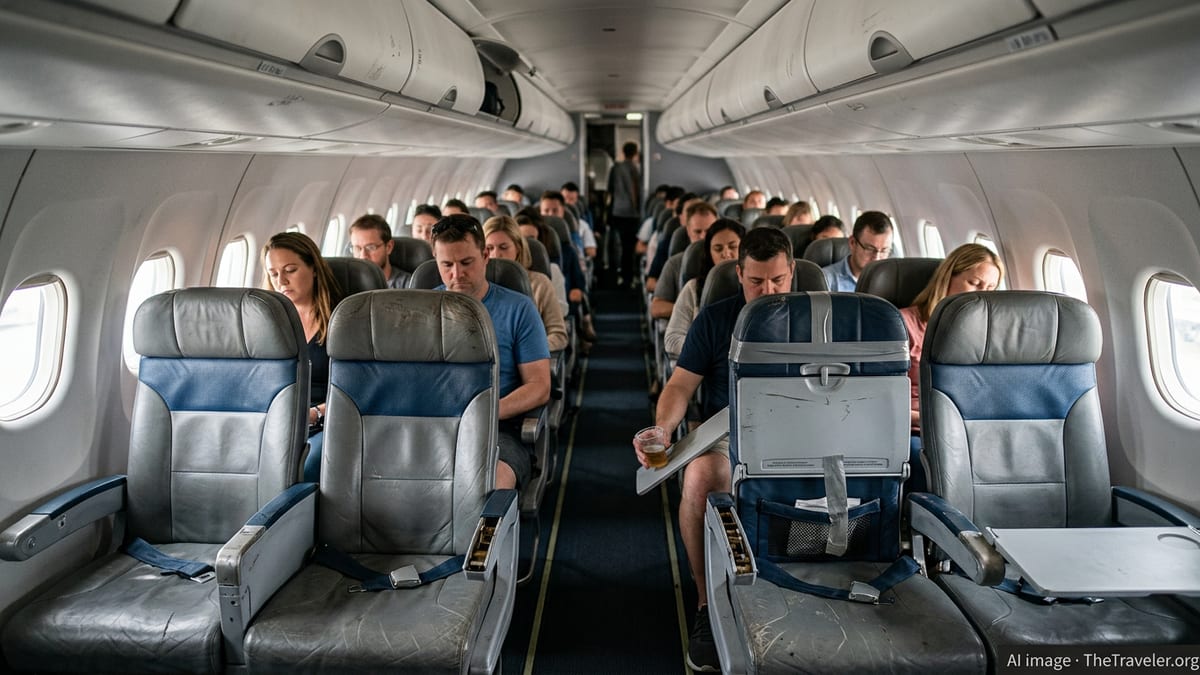
Cabin Defects Turn Routine Flights Into Frustrating Journeys
Over recent months, passengers across American Airlines’ domestic and international network have shared a growing number of complaints about malfunctioning seats, loose armrests and unusable tray tables. Travelers say these seemingly minor defects can turn long-haul flights into uncomfortable ordeals, especially when the problems affect premium cabins that command thousands of dollars per ticket.
On routes operated by Airbus A320-family jets and other narrowbody aircraft, flyers have reported seats that will not recline, headrests that will not lock in place and tray tables that are too crooked or unstable to safely hold a drink, much less a hot meal. In some cases, passengers say they discovered the problem only after boarding, when the aircraft was nearly full and alternative seats were scarce.
Such issues are not unique to one airline, but the volume and specificity of recent complaints aimed at American have drawn attention. One widely shared account involved a long-haul passenger whose business-class seat would not recline for most of an overnight flight, while another reported being moved out of a premium cabin at the last minute after being told their assigned seat was broken. Both cases fueled debate over how much compensation airlines owe when their advertised product is not fully delivered.
Industry analysts note that airlines have been running their fleets harder as travel demand recovered, which can magnify the impact of deferred or rushed cabin repairs. While safety-related defects must be addressed before a plane flies, cosmetic and comfort issues often fall into a gray area that may not ground an aircraft, but can significantly degrade the passenger experience.
Denied Refunds and Vouchers Add Financial Sting to Service Failures
Alongside complaints about physical cabin conditions, American Airlines is also facing criticism from customers who say their attempts to obtain refunds or meaningful compensation have been rebuffed. Passengers recount being offered modest vouchers or frequent-flyer miles instead of partial fare refunds when premium seats, tray tables or in-seat power did not work as advertised.
Some customers who say they were moved from higher-priced cabins into standard economy seats due to broken seating report struggling to secure the fare difference back to their original form of payment. In several recent cases that have circulated in consumer columns and online forums, travelers described receiving canned responses from the airline that cited policy language and denied that a downgrade or service failure had occurred.
The frustration is not limited to seating issues. Travelers also describe uphill battles over refunds for delayed or canceled flights, unused travel credits and baggage-related reimbursement, often after being told one thing verbally by an agent and another in follow-up correspondence. Many say the only successful path has been filing a formal complaint with the U.S. Department of Transportation, a step that can take months to yield a resolution.
Consumer advocates argue that the pattern points to a broader strategy in which airlines minimize cash refunds and steer customers toward vouchers, which are more likely to go partially or entirely unused. That dynamic, they say, leaves passengers carrying the cost of operational decisions and maintenance shortcomings that are beyond their control.
Regulators Track Rising Complaints as Pressure Builds in Washington
The controversy around broken seats and denied refunds comes as federal regulators grapple with an elevated level of airline service complaints overall. Data published by the Department of Transportation show that refund-related grievances remain substantially higher than before the pandemic, even as flight volumes have normalized, underscoring a persistent disconnect between travelers’ expectations and airline practices.
In recent years, the DOT has taken a more aggressive stance on consumer enforcement, issuing multi-million-dollar penalties against several major carriers for extreme tarmac delays and refund violations. American Airlines itself has already faced a record fine over its treatment of passengers with disabilities, with federal investigators citing years of mishandled mobility devices alongside other service failures.
Policy experts say the latest stream of complaints involving broken cabin features and contested refunds could further bolster calls in Congress for stronger automatic compensation rules. Proposals under discussion include clearer standards for when passengers are entitled to cash refunds rather than credits, as well as explicit requirements to compensate travelers when advertised seat features or cabin classes are not provided.
Lawmakers have signaled growing impatience with what they describe as a mismatch between robust airline profits and the quality of service experienced by the flying public. The backlash aimed at American Airlines is increasingly framed not just as a single-company problem, but as a test of whether existing consumer protections have real teeth.
American Airlines Cites Investments, While Passengers Report Gaps
American Airlines has responded to past scrutiny by pointing to what it describes as significant investments in customer service, fleet interior upgrades and training. The carrier has highlighted spending on new seats, cabin refresh programs and technology intended to speed up maintenance and improve communication with customers when things go wrong.
In official statements, company executives have emphasized that American aims to be a product and service leader, stressing that the vast majority of flights operate without serious issues and that only a small fraction of travelers lodge formal complaints. The airline also notes that it offers a customer service plan outlining its commitments on rebooking, refunds and problem resolution when disruptions occur.
However, the disconnect between these assurances and the lived experiences described by some travelers has become a flashpoint. Passengers say that while marketing materials and policy documents promise reliability and responsiveness, the reality on the ground can be long hold times, slow responses from customer relations departments and narrow interpretations of eligibility for refunds or credits when cabin features fail.
Current and former employees, speaking anonymously in several recent reports, have also questioned whether resources devoted to routine cabin upkeep and frontline staffing match the demands of a packed schedule. They describe tension between pressures to dispatch flights on time and the time required to address “small” but highly visible maintenance issues such as broken tray tables, loose seat covers or malfunctioning entertainment screens.
Travelers Turn to Social Media and Formal Complaints for Recourse
With traditional customer service channels often perceived as slow or unresponsive, many American Airlines passengers are turning to social media to document problems and seek redress. Photos of damaged seats, taped armrests and misaligned tray tables, along with screenshots of denied refund requests, have spread widely on platforms such as X, Facebook and TikTok.
In several high-profile incidents unrelated to seats or tray tables, viral posts have forced rapid public responses from the airline, including apologies and, in some cases, refunds and bonus miles. That pattern has encouraged more travelers to document their experiences in real time, hoping that public visibility will succeed where private complaints have failed.
Consumer lawyers and advocacy groups advise passengers facing broken seat or cabin equipment issues to preserve evidence by taking clear photographs, saving boarding passes and documenting all communications with the airline. They also encourage travelers to escalate disputes through the Department of Transportation’s aviation consumer portal if they believe refund rules have not been followed.
For now, the mounting backlash illustrates the widening gap between a travel industry trying to squeeze more efficiency and revenue from each flight and passengers who feel shortchanged when the basics of comfort and fairness fall by the wayside. As American Airlines works to contain reputational damage, the outcome could help shape how all U.S. carriers handle the next wave of complaints over the small but consequential details of life on board.