

More news on this day
American Airlines is facing intensifying criticism from flight attendants and frequent travelers as a spike in terminations, many tied to strict reserve and attendance rules, exposes growing labor tensions at the world’s largest carrier.
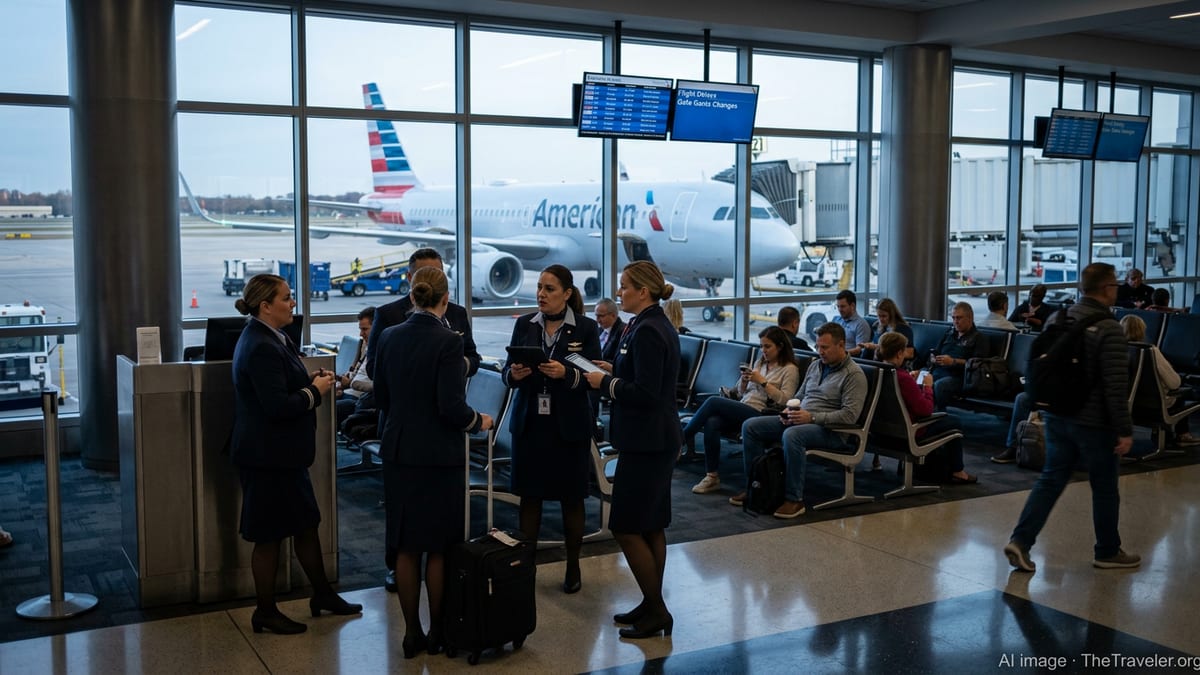
Union Grievances Highlight Rising Terminations
The latest flashpoint emerged as internal union records showed dozens of cases in which American Airlines flight attendants on reserve status were disciplined or terminated for allegedly failing to report fast enough when called to duty. According to union summaries shared with members, at least 59 grievances in the past year have challenged so-called “reserve not in position” terminations, a trend the Association of Professional Flight Attendants (APFA) says reflects a harsher enforcement culture.
Reserve crew members serve as an on-call backbone for the airline’s operation, often required to reach the airport and be ready to work within a narrow reporting window. Flight attendants say unpredictable traffic, last-minute schedule changes, and limited flexibility make compliance increasingly difficult, especially at large, congested hubs such as Dallas Fort Worth and Charlotte. The union argues that these structural hurdles, rather than willful misconduct, are driving many of the contested terminations.
APFA has urged members to document all interactions with crew scheduling and has flagged several cases in which long-serving flight attendants were removed from the seniority list after a single disputed incident. Union leaders warn that the trend is contributing to low morale and pushing experienced staff out of the profession at a time when the airline is already struggling to stabilize its operation.
American Airlines has not publicly detailed the number of terminations tied to reserve rules, but executives have repeatedly framed discipline as necessary to maintain reliability in a tightly scheduled network. The company says it expects all employees to comply with contractual obligations and safety-critical reporting standards.
No-Confidence Vote in Leadership Amplifies Discontent
The surge in grievances comes on the heels of a rare and symbolic rebuke of American Airlines management. In February 2026, the board of APFA issued a unanimous vote of no confidence in chief executive Robert Isom, citing what it called chronic underperformance, inadequate staffing, and a punitive approach to frontline workers. The union, which represents more than 28,000 flight attendants, said the airline is lagging its largest rivals while demanding more from crews without delivering comparable pay or support.
Union officials link the uptick in terminations to broader strategic pressures. They argue that cost-cutting, aggressive scheduling, and a focus on short-term financial metrics have left crews stretched thin, with little margin for delays, illness, or family emergencies. When disruptions cascade, they say, it is often the flight attendants who bear the brunt of operational failures through discipline or job loss.
American, for its part, points to record travel demand, volatile fuel prices, and ongoing air traffic control constraints as headwinds affecting the entire U.S. airline sector. The carrier has highlighted multi-year efforts to reduce debt and modernize its fleet, as well as targeted pay increases and new agreements at regional affiliates. Still, the no-confidence vote and rising public criticism from union leaders have sharpened scrutiny of how the airline treats its frontline workers.
The clash over leadership has spilled into public view in recent weeks, as frustrated employees and travelers have taken to social media and online forums to describe what they see as a noticeable decline in service quality and employee morale. Many of those accounts specifically reference fear among flight attendants that minor missteps could lead to termination in the current environment.
Operational Stumbles Draw Public and Political Attention
American’s internal labor strains are unfolding against a backdrop of high-profile operational missteps that have drawn criticism from passengers and political figures alike. In late winter, the carrier faced scrutiny after significant disruptions tied to storms and maintenance issues, prompting a senior White House official to publicly question the reliability of major U.S. airlines following his own delay on an American flight.
Travelers across major hubs have reported missed connections, prolonged tarmac waits, and confusing rebooking experiences, problems that are often exacerbated when staffing is tight and reserve crews are already stretched. Industry analysts note that when reserve rules are enforced rigidly, airlines risk thinning their bench even further by terminating or suspending the very employees relied upon to recover from irregular operations.
For flight attendants, the stakes are personal and immediate. Some say they are reluctant to take sick leave or report fatigue for fear that any absence could put their jobs in jeopardy, especially if a subsequent reserve assignment goes awry. Labor advocates warn that such dynamics can create a chilling effect that undermines both safety culture and customer experience, as exhausted or anxious crew members attempt to push through grueling schedules.
American insists that safety remains non-negotiable and that policies are designed to ensure adequate staffing for each departure. But critics counter that an overreliance on discipline as a management tool can erode trust, making it harder for crews to raise concerns or collaborate with supervisors when problems arise in the cabin or on the ground.
Negotiations, Pay Gains and Calls for Policy Reform
The backlash over terminations is unfolding while flight attendants across the industry press for better pay and working conditions. At a regional subsidiary of American, PSA Airlines, flight attendants recently reached a tentative deal that promises substantial increases in total compensation over three years, reflecting the leverage crews have gained amid a tight labor market. APFA has used such agreements to argue that American’s mainline flight attendants deserve comparable progress in their long-running contract talks.
Within APFA, some leaders are pushing not only for wage improvements but also for explicit protections around reserve rules, attendance policies, and due process in disciplinary cases. They want clearer standards for what constitutes a missed assignment, more realistic reporting times that account for airport congestion, and a robust appeals framework to prevent abrupt job losses over single incidents.
Labor experts say the dispute at American could become a test case for how large carriers balance operational reliability with fair treatment of increasingly vocal cabin crews. If the airline agrees to soften certain reserve provisions or adopt more transparent disciplinary procedures in future agreements, it could set a precedent that ripples across other U.S. airlines facing similar tensions.
Until then, union leaders are encouraging flight attendants to file formal grievances and to resist what they describe as a culture of fear. They argue that a modern airline reliant on complex schedules and high passenger volumes cannot sustain reliability by terminating experienced staff faster than it can train replacements.
Travelers Caught Between Reliability Concerns and Labor Strains
For travelers, the internal conflict at American Airlines adds a new layer of uncertainty to an already stressful flying environment. Passengers may not be aware of the intricacies of reserve call-out rules or union votes, but they experience the fallout when operational hiccups leave flights understaffed, customer service stretched thin, and tempers frayed in crowded terminals.
Consumer advocates warn that if rising terminations contribute to higher turnover and lower morale, service quality could deteriorate further, with fewer seasoned flight attendants available to manage full cabins, complex disruptions, or emergency situations. That risk is particularly acute on long-haul and premium routes where experienced crews play a critical role in both safety and the overall travel experience.
Industry watchers say the coming months will reveal whether American chooses to recalibrate its approach or continues to defend current policies as necessary for on-time performance. With union leaders promising sustained pressure and travelers paying close attention to reliability metrics, the airline faces mounting incentives to address concerns around how and why flight attendants are being shown the door.
As peak travel seasons approach, American’s handling of its flight attendant workforce will likely remain under a spotlight, serving as a barometer of the broader health of the U.S. airline industry’s labor relations and its capacity to deliver the stable, staffed operations passengers expect.