

More news on this day
American Airlines is working to steady its operation and reassure customers after multiple storm systems triggered an FAA ground stop and drove flight disruptions into four-digit territory across its network.
Get the latest news straight to your inbox!
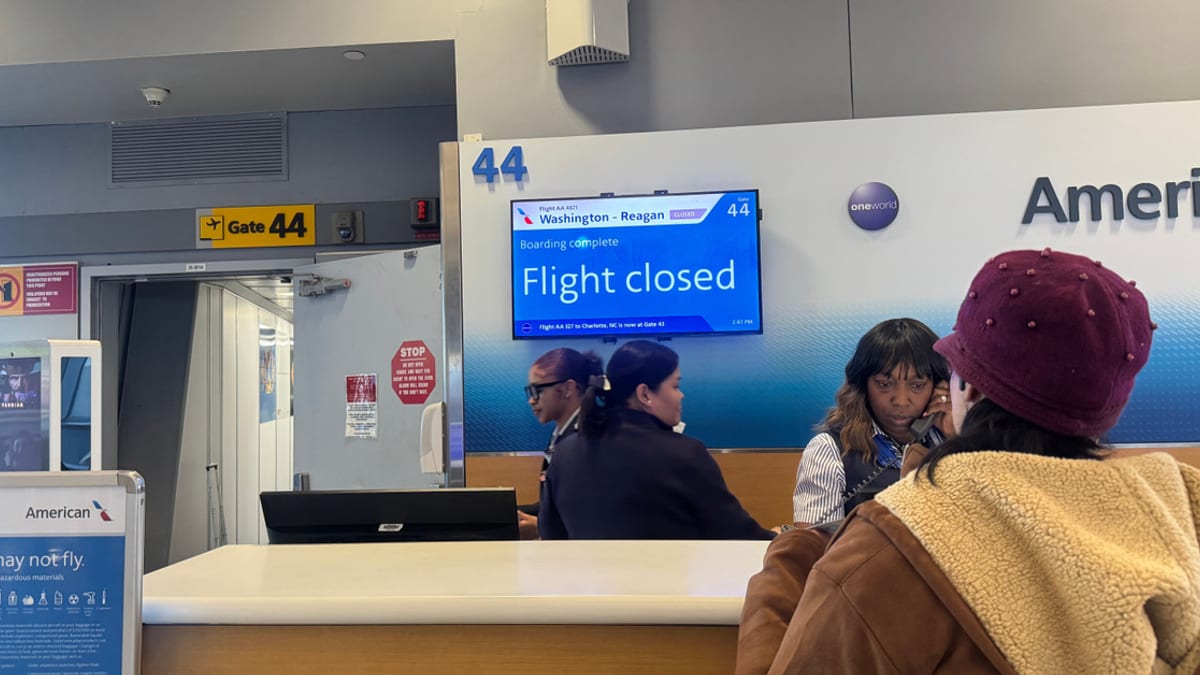
Multiple Storm Systems Snarl a Major U.S. Carrier
Publicly available flight-tracking data and news coverage from early April 2026 indicate that a cluster of severe weather systems has swept across several U.S. regions, creating a difficult operating environment for airlines. Thunderstorms, high winds, and reduced runway acceptance rates at major hubs have combined to slow departures and arrivals throughout the day.
Within this broader pattern, American Airlines has emerged as one of the hardest hit large carriers. Reports point to widespread delays and cancellations concentrated at some of its most important hubs, including Dallas Fort Worth, Charlotte, and key East Coast airports. The ripple effects have extended far beyond the immediate storm zones as aircraft and crews fell out of position, forcing further schedule reductions.
The Federal Aviation Administration responded to the deteriorating conditions by imposing a ground stop affecting segments of American’s operation, temporarily halting certain departures while storms moved through and air traffic flow was recalibrated. Ground stops are typically limited in duration, but even a brief pause can cascade into significant downstream disruption when it collides with an already tight, high-utilization schedule.
According to aggregated operational data cited in recent travel and business reports, the combination of the FAA restrictions and repeated weather holds pushed American’s total number of daily disruptions into the four-digit range, counting both delays and cancellations. For many passengers, that translated into missed connections, unexpected overnights, and hours spent in congested terminals waiting for updated departure times.
Four-Digit Disruptions and a Network Under Strain
American’s current difficulties are unfolding against a backdrop of elevated system stress across U.S. aviation. In mid-March 2026, national flight-tracking tallies already showed thousands of delays and several thousand cancellations in a single day as a powerful storm system swept the Midwest and Great Lakes region, with American, Southwest, and Delta each seeing disruption rates near or above 40 percent of their schedules. Those earlier events illustrate how quickly extreme weather can overwhelm even large airlines with sizable buffers.
The latest storm wave has followed a similar pattern but with a sharper impact on American’s network. Coverage of the disruption highlights that American’s large presence in weather-sensitive hubs such as Dallas Fort Worth and Charlotte makes it particularly vulnerable when convective storms line up along key corridors. When those storms intersect with peak travel periods, four-digit disruption totals can accumulate in a matter of hours.
Analysts note that, while weather is the immediate catalyst, the scale of the fallout also reflects the complexity of the modern hub-and-spoke model. A single canceled rotation can remove an aircraft and crew pairing from several subsequent flights, and the effect multiplies when scores of departures are paused at once. Recovery efforts often take days, not hours, as airlines work through backlogs of displaced customers and reposition aircraft to where they are most needed.
Recent academic research on National Airspace System performance has underscored that only a small share of days each year account for the most extreme levels of disruption, but those rare events can have an outsized impact on traveler perceptions. The current episode appears to fit into that category, with the combination of volatile spring weather and a network already stretched by high demand turning a typical storm day into a system-wide challenge for American.
FAA Ground Stop Adds a Regulatory Brake
The FAA’s decision to impose a ground stop affecting American’s flights came as multiple storm cells developed along major arrival and departure paths. According to air traffic advisories and media summaries, the halt was designed to ease congestion in the skies and give controllers time to manage rapidly changing weather near busy hubs. Ground stops are a blunt but effective tool used when localized delays risk spiraling into unsafe or unmanageable situations.
For American, the ground stop meant that aircraft ready to depart were held at gates or on the ramp while arrivals were metered more slowly into affected airports. Even when the formal stop was lifted, lingering thunderstorms and saturated traffic flows kept arrival rates below normal, extending delays well into subsequent banks of flights. Some aircraft were diverted to alternate airports, adding further complexity to an already strained operation.
Publicly available FAA documentation and prior case studies of ground stops at American’s primary hubs show that these events often cause a dramatic but temporary shock to schedules. However, carriers differ in how quickly they can recover, depending on spare aircraft availability, crew flexibility, and the geographic distribution of their networks. In this instance, American’s concentration of flights at a handful of large hubs created a bottleneck effect as those airports worked through backlogs of inbound and outbound traffic.
Observers point out that the current situation also reflects a longer-running tension between safety priorities and schedule reliability. The FAA has been under pressure to maintain conservative margins in the wake of several high-profile incidents in recent years, and weather events that might once have been managed through modest flow restrictions now more often result in short but sweeping ground halts.
American Reaches Out With Waivers and Updates
In response to the mounting disruptions, American Airlines has moved to reassure travelers that it is working to stabilize operations and provide additional flexibility. According to recent consumer travel coverage, the airline has issued weather-related travel waivers for certain affected airports, allowing passengers to change their itineraries without standard change fees as long as they rebook within a defined window.
American has also emphasized digital channels as a primary tool for managing the disruption. Passengers are being urged in public messaging and media reports to monitor the carrier’s mobile app and website for rebooking options, gate changes, and real-time flight status updates. In many cases, travelers are able to switch to earlier or later departures on their own devices, reducing wait times at crowded customer service counters.
Some reports indicate that American is prioritizing reaccommodation for customers with missed connections at its major hubs, using a combination of same-day rebookings, overnight hotel arrangements in limited cases, and rerouting through less congested cities when possible. However, capacity constraints and high load factors mean that not all stranded passengers can be immediately accommodated on alternative flights, especially on routes where there are only a few daily departures.
The airline’s outreach efforts are taking place in an environment of heightened scrutiny of customer service during irregular operations. After several high-visibility meltdowns across the U.S. industry in recent years, travelers have grown more aware of their rights and more vocal about what they view as inadequate communication or support when schedules collapse. American’s handling of this latest disruption is likely to be closely compared with competitor responses to similar events.
What Travelers Can Expect in the Coming Days
Travel experts and aviation analysts suggest that, even as the worst of the storms pass and the FAA loosens flow restrictions, passengers flying with American should brace for ongoing knock-on effects. Aircraft and crew imbalances do not resolve instantly, and recovery schedules can remain fragile if additional weather systems or minor technical issues emerge in the following days.
Published guidance from travel advisories recommends that customers with upcoming American flights build extra time into their itineraries, particularly if they are connecting through hubs that were heavily affected by the storms and ground stop. Allowing longer connection windows, avoiding the last flight of the day where possible, and keeping a close eye on flight status starting 24 hours before departure are all widely advised strategies.
Analysts also point to a broader trend of climate and infrastructure pressures that may make similar episodes more common. More frequent severe storms, aging airport systems, and tight airline staffing all increase the sensitivity of the network to shocks. American’s current challenges, while notable for their scale, are part of a pattern that has touched multiple carriers during peak travel periods in recent years.
For now, the focus at American is on clearing the immediate backlog and restoring something closer to a normal timetable. Passengers navigating the disruption will continue to rely on a mix of airline communication, independent flight-tracking tools, and flexible travel planning as the carrier and the FAA work through the aftermath of a stormy start to April.