

More news on this day
American Airlines is working to stabilize its operation and reassure customers after a wave of severe storms and weather-related ground stops triggered four-digit flight disruptions across the United States, snarling travel at several of the carrier’s busiest hubs.
Get the latest news straight to your inbox!
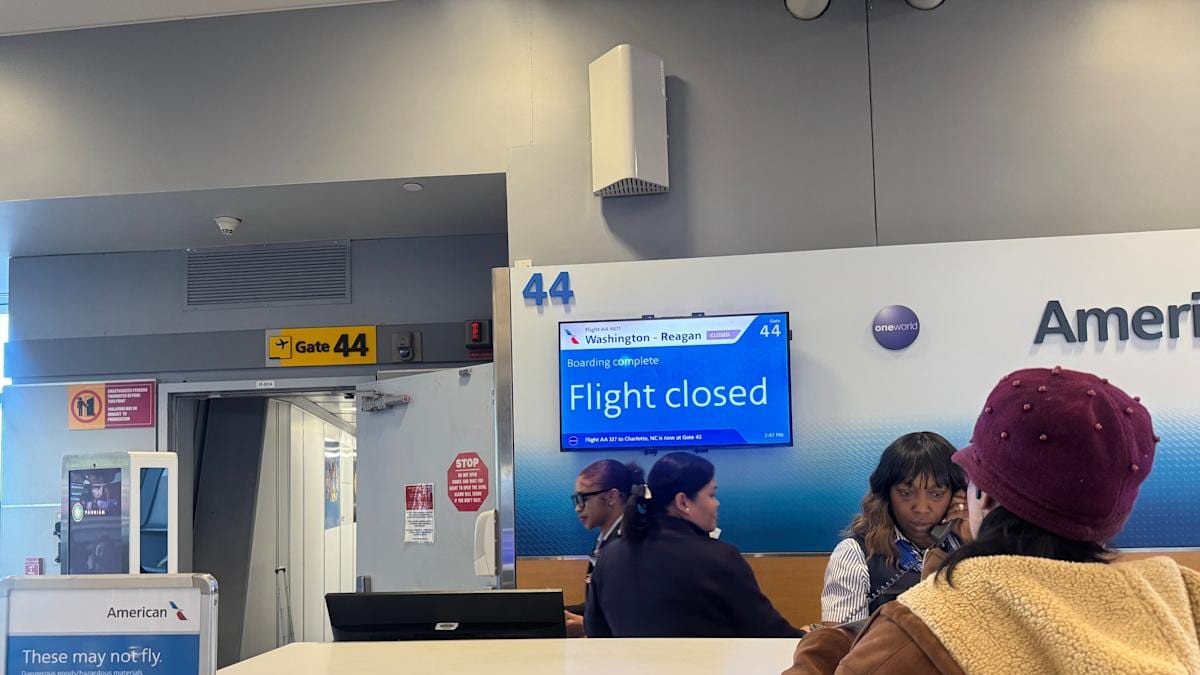
Multiple Storm Systems Collide With Busy Spring Travel
Publicly available flight-tracking data and syndicated coverage from outlets including Reuters show that a series of powerful storm systems in March 2026 converged on some of the country’s most heavily used air corridors. Thunderstorms, high winds and late-season snow combined to limit visibility, constrain runway use and reduce the capacity of key approach and departure routes.
Reports indicate that the Federal Aviation Administration responded with a mix of ground stops and ground delay programs at major hubs including Chicago O’Hare, Reagan National, Charlotte and other high-traffic airports. These measures are designed to slow or temporarily halt departures into weather-affected airspace in order to keep overall traffic at safe levels.
As the storms rippled east and south through the network, delays and cancellations mounted. By one recent storm cycle, national tallies cited in published coverage put total U.S. delays and cancellations in the tens of thousands, with American Airlines among the most affected large carriers because of its concentration at several of the impacted airports.
Industry data aggregators tracking same-day operations show that American’s network experienced four-digit disruption levels on multiple days during the worst of the weather, meaning more than 1,000 flights were delayed or canceled within a 24-hour period.
FAA Ground Stops Trigger Cascading Operational Strain
Ground stops issued by the FAA can take effect with little notice when storms intensify over a critical region. When they are in place, flights bound for the affected airport are held at their departure points until the agency determines that conditions are safe enough to resume limited operations or transition to a ground delay program.
Operational summaries from the FAA and airport status boards show that such interventions were implemented repeatedly as March storms crossed the Midwest, Mid-Atlantic and Southeast. At times, this meant that American Airlines departures were halted or significantly slowed at several hubs at once, including Chicago, Washington, Charlotte and Dallas, creating immediate aircraft and crew imbalances.
Once a ground stop lifts, airlines must re-sequence hundreds of flights while working within crew duty-time limits and gate availability. Public reporting indicates that this process often extends delays long after the worst of the weather has passed, particularly when storms affect morning bank flights that feed connections throughout the day.
According to operational analyses published by aviation data firms, American’s hub-and-spoke structure can magnify the impact of simultaneous constraints. When connecting banks are disrupted at more than one hub, passengers across the network may experience missed connections, rolling delays and same-day cancellations, even if their origin or destination is not directly in the storm zone.
American Airlines Outlines Rebooking And Travel-Flex Measures
In the wake of the latest disruptions, American Airlines has used its public channels to outline rebooking options, travel alerts and fee waivers for customers whose itineraries were affected by severe weather. Travel advisories posted by the carrier describe extended rebooking windows, allowing passengers to move to new dates and, in some cases, adjust origin or destination within a limited geographic area without additional change fees.
Publicly available guidance emphasizes that same-day standby options and automated rebooking through the airline’s app and website are central to its recovery strategy. The airline has encouraged customers to use digital tools to monitor gate changes and newly available seats, which can appear in waves as additional flights are added or larger aircraft are substituted on busy routes.
Analysts writing in trade publications note that American has also leaned on interline and reaccommodation agreements where possible, shifting some travelers to later departures or to partner carriers when seats are available. However, when four-digit disruption figures coincide with peak travel days, spare capacity across the industry can be limited, leaving some passengers facing overnight stays or multi-stop routings.
Consumer-facing advisories from independent passenger-rights organizations recommend that travelers impacted by American’s weather disruptions retain documentation of delays and cancellation notices. Such records can assist with pursuing reimbursement for out-of-pocket expenses where carrier policies or credit card protections permit.
Passengers Confront Long Delays, Tight Connections And Limited Seats
Airport accounts and social media posts from affected days describe long lines at customer service counters and crowded gate areas as American customers tried to secure new itineraries. With ground stops and traffic-flow restrictions limiting the pace of departures, many travelers reported multiple rolling departure-time changes before an eventual takeoff or cancellation.
Published coverage based on airport operations data indicates that connecting passengers often bore the brunt of the disruption. When early inbound flights were delayed or scrubbed, onward itineraries frequently lost their protected connection times, leading to missed flights and the need for rebooking onto later services that were themselves already heavily booked.
In some cases, travelers found that all remaining departures to their destination were sold out or departed too late to be practical, particularly at smaller spoke airports that rely on a small number of daily American Airlines flights. Under such circumstances, standard advice from travel experts is to explore alternative routings through secondary hubs, request rebooking on partner airlines when available, or consider ground transportation for shorter regional legs.
Airline industry commentary following the storms notes that the compounding effects of high load factors, crew duty restrictions and tight turn times have left limited slack in many U.S. airline schedules. As a result, a single morning of FAA-mandated ground stops can produce disruption waves that continue well into the next day.
What The Disruptions Signal For The Spring And Summer Travel Season
Recent statements and data visualizations published by the FAA highlight that weather remains the leading driver of flight delays across the national airspace system, far outweighing factors such as staffing or runway capacity. Spring is historically a volatile period, with strong frontal systems bringing thunderstorms, turbulence and low ceilings to wide swaths of the country.
American Airlines’ latest disruption spike underscores how quickly a modern hub-and-spoke network can be pushed to its limits when multiple storm systems and FAA flow constraints converge. Aviation analysts suggest that, with passenger volumes running at or above pre-pandemic levels, carriers may have less flexibility to absorb irregular operations without visible strain.
For travelers planning trips in the coming months, industry guidance points to a few practical steps when flying on American or other major carriers during storm-prone periods. Morning departures, longer connection windows and nonstop itineraries where feasible tend to offer more resilience when weather begins to affect the system. Monitoring forecasts not only at departure and arrival cities, but also at intermediate hubs, can provide early warning of potential complications.
While airlines and the FAA continue to invest in upgraded forecasting, air-traffic management tools and operational resilience, experts tracking the latest events caution that episodes of four-digit flight disruptions are likely to recur when severe weather patterns align with peak travel demand. For American Airlines passengers, the latest series of storms has served as an early reminder of how quickly a routine travel day can change once a ground stop goes into effect.