

More news on this day
A lesbian traveler’s account of being banned by American Airlines and forced to spend more than 1,400 dollars to get home, after staff allegedly accused her of “intimacy with a man” during a flight, is fueling a new wave of scrutiny over how major carriers apply conduct rules and handle complaints from LGBTQ+ passengers.
Get the latest news straight to your inbox!
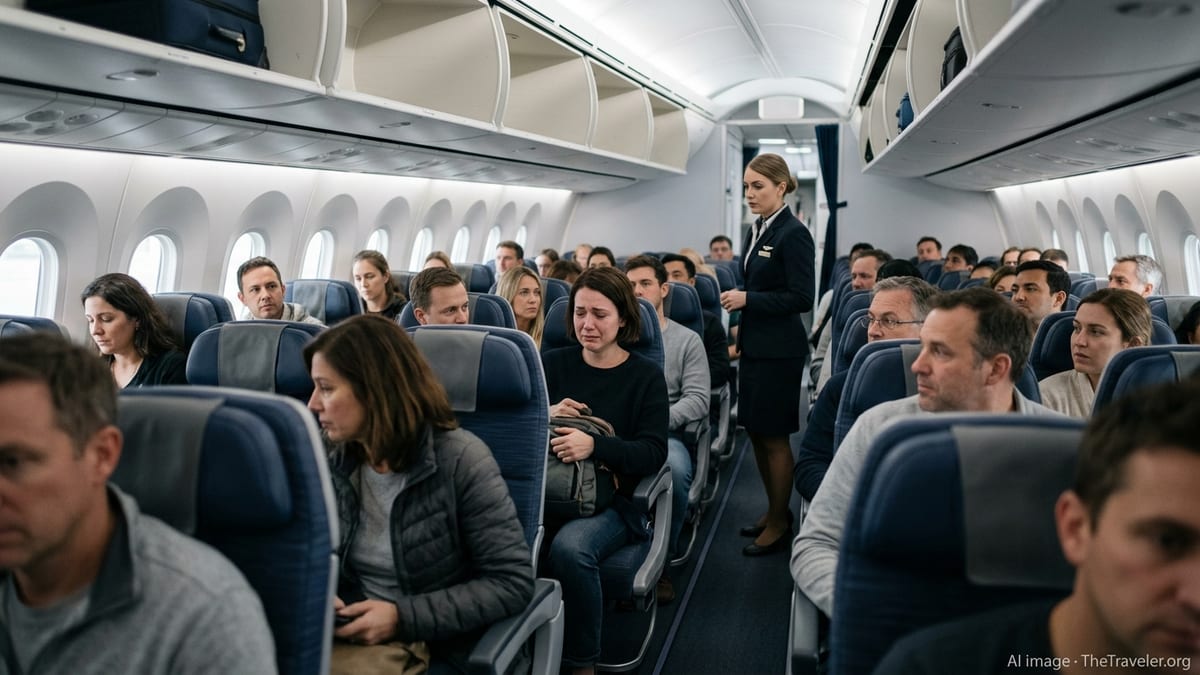
Viral Allegation Sparks Questions Over Airline Conduct Policies
According to recent online posts and media coverage, the traveler, who identifies as a lesbian, described an incident on an American Airlines flight in which crew members reportedly confronted her over what they characterized as “intimacy with a man.” She has said publicly that she considered the interaction benign and nonsexual, and that she was stunned when staff treated it as a serious conduct issue.
Accounts of the situation indicate that the dispute escalated after the passenger questioned the crew’s interpretation of her behavior. She later shared her story on social media, calling the experience “bananas” and alleging that airline personnel misread her actions through a lens of bias and stereotype rather than any clear violation of rules.
The passenger says she subsequently received notice that she was banned from flying with American Airlines, effectively stranding her away from home. With the ban in place and no alternative arrangements offered by the carrier, she reported having to purchase last-minute flights on another airline at a combined cost of more than 1,400 dollars.
Her account has since circulated widely, with travel, consumer, and LGBTQ+ outlets highlighting the case as an example of the uncertainty travelers can face when staff have broad discretion to interpret “disruptive” or “inappropriate” behavior on board.
American Airlines Policies and the Gap Between Rules and Experience
Publicly available information about American Airlines’ conditions of carriage shows that the company, like most major carriers, reserves the right to refuse transport to passengers who are considered disruptive, threatening, or engaging in behavior that interferes with crew duties or the safety and comfort of others. These rules typically encompass harassment, intoxication, refusal to follow crew instructions, and overtly sexual or lewd conduct in the cabin.
In practice, application of those policies often relies heavily on individual judgments made in real time by flight attendants and supervisors. Consumer advocates point out that this discretion can be essential for safety, but also carries the risk of inconsistent or subjective enforcement, particularly when interactions fall into gray areas rather than clearly dangerous or illegal conduct.
Reports on the American Airlines case suggest that the core dispute centers on how the crew interpreted the traveler’s interaction with another passenger and whether the response aligned with written standards. Critics observing the case have argued that, even when airline staff believe they are acting within policy, outcomes that disproportionately affect members of marginalized groups can erode public confidence and invite accusations of discrimination.
The company has general diversity and inclusion language in its public materials, emphasizing respect for all customers. The current controversy, however, is prompting questions about how those commitments are translated into day-to-day decision making in confined spaces such as aircraft cabins, where tensions and misunderstandings can escalate quickly.
LGBTQ+ Travelers Voice Unease Over Perceived Double Standards
The allegation has struck a particular nerve among LGBTQ+ travelers, many of whom already report adjusting their behavior in transit hubs and on flights out of concern that displays of affection or gender expression may draw unwanted attention. Travel-focused commentary circulating in response to the case notes that LGBTQ+ couples frequently describe being scrutinized for conduct that would be largely ignored when it involves heterosexual passengers.
Although the reported incident centers on a lesbian traveler and a man, rather than a same-sex couple, advocates say it still resonates as part of a broader pattern in which nontraditional relationship dynamics or identities are seen as suspicious or inappropriate. Some observers argue that once staff perceived the behavior as falling outside expected norms, it may have been more likely to be judged harshly.
Organizations that focus on LGBTQ+ travel safety have long documented accounts of passengers who felt singled out during security screening, boarding, or in-flight interactions. While not every disputed encounter reflects intentional discrimination, repeated stories of disproportionate scrutiny can discourage affected travelers from using certain airlines or routes and can shape perceptions of entire brands.
The American Airlines case is now being discussed within that context, with social media users and commentators questioning whether implicit bias training and clearer guidance on acceptable conduct might reduce the chances of similar conflicts in the future.
Financial and Emotional Fallout for the Passenger
Beyond the viral headlines, the traveler’s account highlights the practical consequences when a passenger is barred mid-journey. Faced with an effective ban and no immediate resolution, she says she had to secure alternative transportation home on short notice, reportedly paying more than 1,400 dollars out of pocket for replacement flights.
Consumer advocates note that last-minute fares, especially when purchased one-way, can easily reach such amounts, particularly on international or long-haul routes. For many travelers, unexpected costs of this magnitude can represent a significant financial burden, on top of the stress and logistical complications of finding lodging, rebooking connections, and rearranging work or family commitments.
The traveler has also described emotional distress, including embarrassment during the confrontation with crew and anxiety about being effectively blacklisted from a major carrier. Commentators point out that such experiences can have lasting effects on how individuals approach future travel, from choosing airlines and itineraries to modifying their behavior on board to avoid drawing attention.
As the story continues to circulate, some travelers are using it as a case study in the importance of knowing passenger rights, documenting interactions when possible, and seeking written explanations for significant penalties such as travel bans or removal from flights.
Growing Pressure for Clearer Standards and Transparency
The case is emerging at a time when airlines are already under pressure to explain how they train staff, apply conduct policies, and manage allegations of bias. Public discussion around this latest allegation is adding to calls for more precise definitions of what constitutes unacceptable “intimacy” or disruptive behavior in the cabin, and for transparent processes for reviewing crew decisions after the fact.
Travel and consumer commentators argue that clearer guidelines, shared in accessible language with passengers, could limit misunderstandings and provide a common reference point for both staff and customers. Some suggest that, in disputed situations, an internal review mechanism that includes people trained in nondiscrimination standards could help distinguish between legitimate safety concerns and overreactions rooted in misperception.
The airline industry broadly is also facing heightened scrutiny from regulators, advocacy groups, and travelers regarding equity and consistency in service. Even when specific cases remain contested and details are difficult to verify independently, recurring narratives about passengers who feel unfairly targeted can influence public opinion and purchasing decisions.
For now, the American Airlines allegation serves as another reminder of how quickly a single in-flight disagreement can evolve into a high-profile controversy, particularly when it touches on issues of identity, dignity, and the cost of modern air travel.