

More news on this day
A recent American Airlines passenger complaint over a denied claim for a broken suitcase wheel is renewing attention on how U.S. carriers handle damaged baggage, just as the Department of Transportation reiterates that airlines remain broadly liable for wheel and handle damage beyond normal wear and tear.
Get the latest news straight to your inbox!
Passenger Dispute Highlights Ongoing Friction Over Damaged Bags
Reports circulating on consumer forums and social media in early 2026 describe a traveler whose checked bag arrived on an American Airlines flight with a wheel torn off, only for the carrier’s claims contractor to classify the problem as normal wear and tear and deny compensation. The case mirrors a pattern of complaints in which passengers say clear impact damage is being written off as routine deterioration.
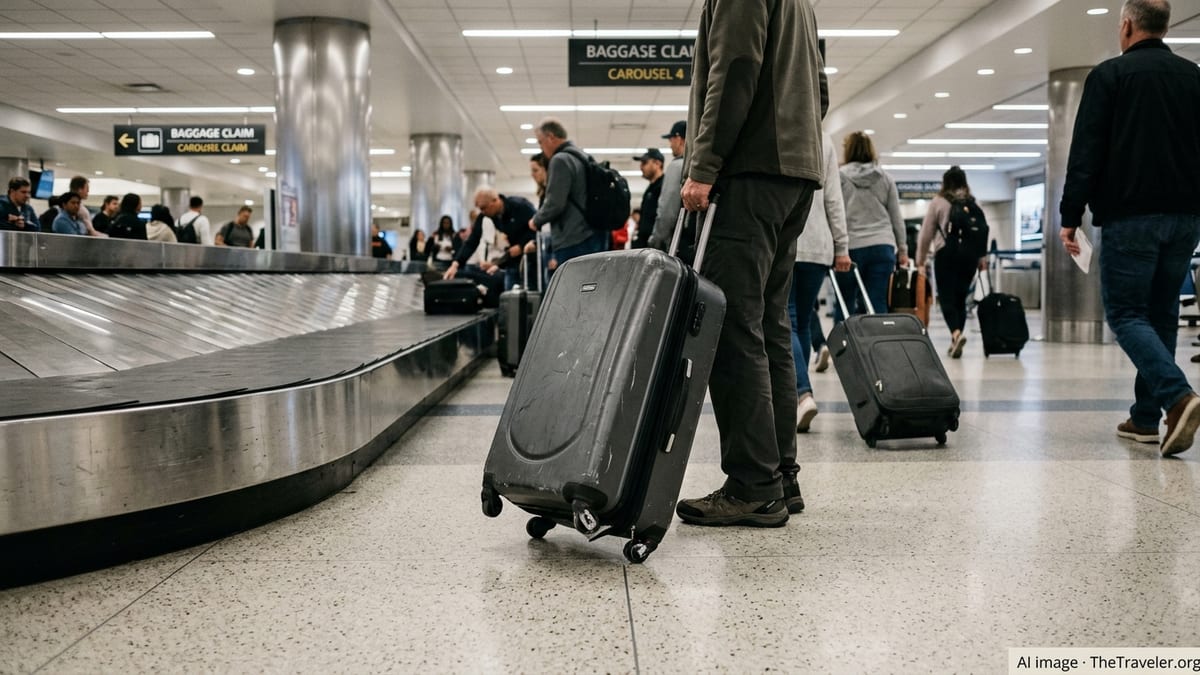
The latest dispute focuses on a hard-sided suitcase that reportedly could no longer roll properly after arrival. The traveler filed a claim through American’s established baggage channels, submitting photographs and documentation, but received a rejection stating that the airline had no liability for the damaged wheel. Similar experiences have been described by other American Airlines customers whose bags have lost wheels, handles, or structural components after checked-in handling.
Publicly available information shows that American works with third-party repair and replacement companies to assess many baggage claims, which can lead to additional frustration when the contractor’s assessment conflicts with a traveler’s understanding of the damage. Travelers say this arrangement can leave them navigating multiple layers of review and communication when they seek redress for broken luggage parts.
While individual cases differ, the growing cluster of accounts suggests that wheel and handle damage has become a flashpoint between travelers’ expectations, airline contract language, and federal protections that are intended to govern what carriers must cover when baggage is harmed in transit.
DOT Guidance: Wheels and Handles Are Generally Covered
The U.S. Department of Transportation issued a notable enforcement notice in 2015 reminding airlines that they cannot categorically exclude liability for damage to specific parts of checked baggage, including wheels, straps, zippers, and handles, except where normal wear and tear is clearly involved. The agency stated that blanket exclusions in contracts of carriage conflict with federal baggage rules and, for international journeys, with obligations under the Montreal Convention.
The DOT guidance explained that carriers must consider each case individually and compensate passengers when damage to these components results from mishandling, rather than relying on broad disclaimers that all wheel or handle issues fall outside their responsibility. The enforcement office characterized routine refusals to even accept damage reports for these parts as an unfair practice under U.S. consumer protection law.
For domestic flights, federal regulations also establish a monetary ceiling for airline liability per passenger when baggage is lost or damaged, and DOT has periodically adjusted that cap for inflation. Within that limit, however, airlines are expected to reimburse provable direct losses, including repair or reasonable replacement costs, when customers can show that damage occurred while bags were in the carrier’s custody.
Consumer advocates note that this framework is intended to ensure that luggage components most vulnerable to rough handling, such as spinner wheels and telescoping handles, are not arbitrarily carved out from protection. The current dispute involving the American Airlines passenger underscores how, in practice, travelers may still face denials that appear at odds with the spirit of the DOT’s longstanding position.
American Airlines’ Published Policies and Recent Regulatory Pressure
American Airlines’ publicly posted baggage policies state that the carrier will compensate passengers for damaged checked luggage up to a stated maximum liability amount on domestic itineraries, subject to verification of the claim. The airline also indicates that it does not cover normal wear and tear, and some customer-facing language and past contract provisions have separated out items such as wheels, handles, and exterior components for more limited consideration.
In parallel, American’s liability pages for international flights reference the Montreal Convention, which governs compensation for destruction, loss, damage, or delay of baggage on covered journeys. Under that treaty, airlines can limit their total financial exposure per passenger, but they remain generally responsible for damage that occurs while bags are in their charge unless certain defenses apply.
The carrier’s handling of mobility devices has already drawn intense scrutiny. In October 2024, the Department of Transportation announced a landmark 50 million dollar penalty against American Airlines for repeated violations related to the treatment of passengers using wheelchairs and other mobility aids between 2019 and 2023. The enforcement action cited widespread problems with mishandling and delayed or inadequate remediation, and it was described as the largest DOT fine of its kind.
As part of that settlement, a significant portion of the penalty was earmarked for investments in better equipment, tracking, and customer support to reduce incidents of wheelchair damage and delay. Although wheelchairs are treated under separate disability protections, the case reinforced federal expectations that American and other carriers handle passengers’ property with greater care and respond swiftly when failures occur.
Tension Between Airline Screening and Passenger Protections
American Airlines and other carriers emphasize that they must screen baggage claims to prevent fraudulent or exaggerated requests and to distinguish genuine mishandling from gradual wear. Airline representatives routinely point to the high volume of checked luggage and the expectation that bags will sustain scuffs, minor abrasions, and cosmetic marks as they move through conveyor systems and aircraft holds.
Travelers, however, argue that the distinction between wear and mishandling is often drawn too narrowly. A suitcase that arrives with a wheel snapped off, a handle torn out of its housing, or a corner crushed can render the bag unusable, yet passengers report being told that such damage is inherent to air travel. The reliance on third-party repair shops or claims processors can further complicate matters, as their assessments may be perceived as favoring the airline’s financial interests.
Publicly available DOT materials indicate that passengers who believe a denial conflicts with federal policy can escalate their concerns by filing a complaint directly with the department. Such complaints allow regulators to monitor patterns across carriers, including whether company policies or internal guidance might effectively nullify protections that federal rules are meant to guarantee.
The American Airlines case involving the damaged wheel illustrates how routine incidents can evolve into flashpoints when airline messaging, claims outcomes, and regulatory expectations do not align. As more travelers share their experiences, questions continue to arise about whether internal practices fully reflect the pro-consumer stance outlined in earlier DOT enforcement notices.
What Travelers Can Expect as Oversight Evolves
In the wake of recent enforcement actions and proposed updates to passenger rights rules, industry observers expect continued pressure on airlines to better document how they evaluate damaged baggage claims. For American Airlines, the combination of a record disability-related fine and renewed public discussion of luggage damage has raised the stakes for how its customer service systems respond when a suitcase emerges from the carousel with missing parts.
Travel experts say that passengers are likely to see more emphasis on timely reporting and documentation, with carriers urging travelers to inspect bags before leaving the airport and to obtain written acknowledgment of any damage. At the same time, federal guidance still places responsibility on airlines to avoid using internal rules or contractor determinations to sidestep liability for broken wheels, handles, and other critical components.
As oversight continues, the balance between operational realities and passenger protections remains in flux. For now, the dispute involving American Airlines and the denied wheel damage claim has become part of a broader conversation about how consistently U.S. carriers abide by the liability standards that regulators have spent the past decade working to define and enforce.