

More news on this day
An American Airlines flight traveling from New York to Chicago diverted to Detroit Metropolitan Wayne County Airport after reports of a disruptive passenger on board, with the FBI later indicating there was no ongoing threat to the public.
Get the latest news straight to your inbox!
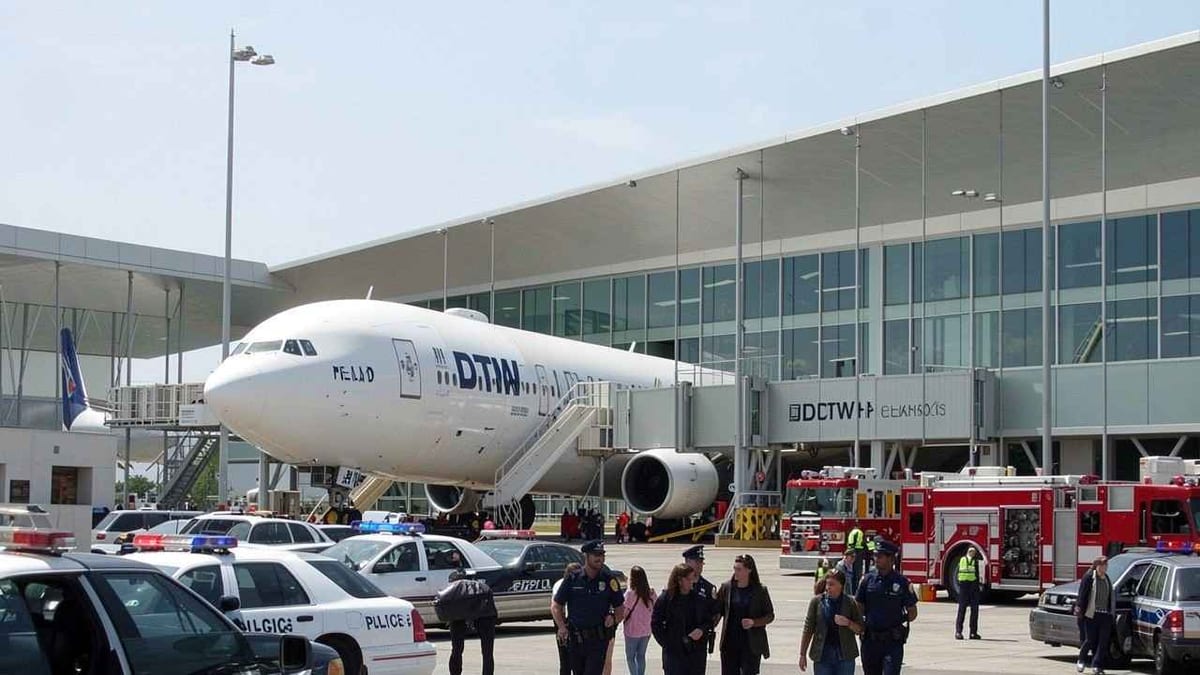
Image by Travel And Tour World
Midday Flight From New York to Chicago Makes Unscheduled Stop
Publicly available flight tracking information indicates that American Airlines Flight 2819 departed John F. Kennedy International Airport on the morning of March 29, bound for Chicago O’Hare. Midway through the journey, the aircraft diverted to Detroit Metropolitan Wayne County Airport, where it landed shortly after late morning local time.
Coverage from regional media describes how the aircraft was directed to a remote area of the airfield after landing in Romulus, Michigan. Ground vehicles and law enforcement units positioned around the aircraft as standard safety and security protocols were put into place.
The airline stated in publicly released information that the diversion was linked to the behavior of a “disruptive customer” on board. Details about the specific conduct that triggered the diversion had not been made public as of March 30, and reports indicate that no injuries were immediately reported among passengers or crew.
Operational data suggests the flight was expected to continue to Chicago later the same day once security checks were completed and a new departure time could be arranged.
Coordinated Response at Detroit Metro Airport
According to published coverage, the aircraft was held away from regular terminal operations while procedures unfolded at Detroit Metro. Passengers were eventually moved off the plane and into the terminal while security personnel examined the cabin and baggage compartments.
Reports indicate that the Federal Bureau of Investigation and airport police were involved in the response, consistent with typical handling of in-flight disturbances that prompt an unscheduled landing. The coordinated approach at the airport followed long-established emergency and security playbooks used when there is uncertainty about conditions on board an arriving flight.
Publicly available information from airport operations guides shows that diverting an aircraft to a designated area, surrounding it with emergency vehicles, and conducting a thorough inspection are common steps when there is a potential security concern or serious passenger disturbance. These actions are designed to limit risk to other airport users while facts are gathered.
Observers noted that, despite the visible presence of law enforcement vehicles around the aircraft, there were no indications of broader disruption to other flights at Detroit, and regular operations at the terminals continued.
FBI: No Ongoing Threat to Public Safety
In statements cited in multiple news reports, the FBI indicated that there was no ongoing threat to the public following the diversion and subsequent checks of the aircraft. This assessment effectively framed the episode as a contained onboard disturbance rather than part of a wider security incident.
Publicly available information shows that when federal investigators characterize an event in this way, it generally signals that any risk was limited to the individual flight, and that no credible evidence has surfaced of a broader plot or danger to aviation infrastructure.
Even when no continuing threat is identified, an incident of this kind typically remains subject to review by federal and local agencies. Outcomes can range from no further action to potential criminal charges against an individual passenger, depending on what investigators determine about behavior in the cabin and any disruption to airline operations.
In this case, investigative steps and any potential legal proceedings had not been fully detailed in public reporting by March 30, but the assurance that there was no ongoing threat provided reassurance to travelers using Detroit and Chicago airports over the weekend.
Impact on Passengers and Airline Operations
Travelers on Flight 2819 experienced an unplanned stop in Detroit in place of a nonstop journey between New York and Chicago. According to media reports, passengers disembarked and waited in the terminal while the aircraft was searched, adding hours of delay to a route that normally takes less than two hours in the air.
Publicly available airline statements emphasized appreciation for passengers’ patience and highlighted the professionalism of the crew in managing the diversion. For passengers, however, the experience of an unexpected landing, visible law enforcement presence, and uncertainty about onward travel can be stressful and disruptive, particularly for those with tight connections or time-sensitive plans in Chicago.
From an operational standpoint, diversions caused by passenger behavior can ripple through an airline’s network, affecting aircraft utilization, crew scheduling, and downstream flights. Industry analyses note that airlines must quickly reassign aircraft and personnel, secure new departure slots, and arrange care and rebooking options for affected travelers.
While individual diversions remain relatively rare compared with the overall volume of commercial flights in the United States, each event underscores the logistical complexity of maintaining schedules when an aircraft is pulled unexpectedly out of its planned route.
Unruly Passenger Incidents Remain a Focus of Aviation Safety
The diversion to Detroit fits into a wider pattern of disruptive passenger incidents that have drawn attention in recent years. Publicly available summaries from aviation regulators and industry groups point to an uptick in cases involving aggressive behavior, interference with crew duties, or refusal to follow safety instructions.
Airlines and regulators have responded with clearer communication on cabin rules, stronger enforcement of penalties, and closer coordination with law enforcement when behavior threatens safety or significantly disrupts a flight. Incidents that trigger diversions are often among the most serious, given the cost, complexity, and potential risk involved in altering a flight plan.
For travelers, the Detroit case serves as another reminder that individual actions in the cabin can affect hundreds of people and multiple flights. Aviation safety specialists frequently note that cooperation with crew instructions and early reporting of concerning behavior to flight attendants are key components in keeping flights running smoothly and safely.
As Flight 2819 prepared to continue on to Chicago after security checks and operational arrangements were completed, the episode highlighted both the vulnerability of air travel to isolated disruptive acts and the capacity of airports and airlines to respond quickly, contain potential risks, and return operations to normal once investigations rule out an ongoing threat.